How To Avoid Overdraft Fees: A Complete Guide
 Written by
Rudri Bhatt Patel, CFHC™
Written by
Rudri Bhatt Patel, CFHC™
 Edited by
Melanie Grafil, M.A., CFHC™
Edited by
Melanie Grafil, M.A., CFHC™

Commitment to Our Readers
GOBankingRates' editorial team is committed to bringing you unbiased reviews and information. We use data-driven methodologies to evaluate financial products and services - our reviews and ratings are not influenced by advertisers. You can read more about our editorial guidelines and our products and services review methodology.

20 Years
Helping You Live Richer

Reviewed
by Experts

Trusted by
Millions of Readers
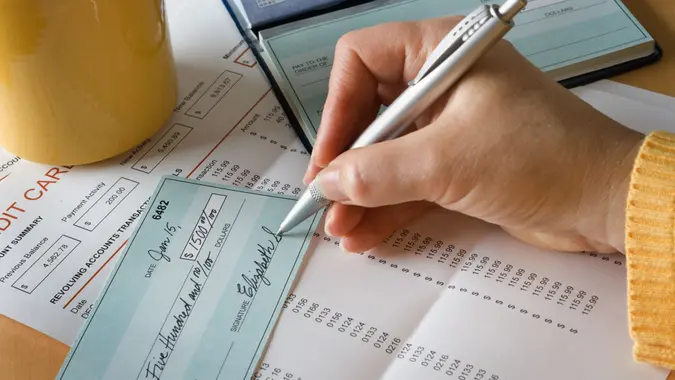
An overdraft occurs when you write a check or initiate a debit card purchase, and your account doesn’t have enough money to cover the transaction. The bank will cover the difference to process the transaction and charge an overdraft fee. The average overdraft fee is $35.
Banks charge this fee because of the revenue it generates. According to the Consumer Financial Protection Bureau, overdraft fees cost consumers about $5 billion annually. Also, the banks charge this overdraft fee to protect themselves against the negative balance in your account.
How To Avoid Overdraft Fees: 5 Strategic Approaches
Here are five ways to avoid overdraft fees:
1. Actively Monitor Your Account
A proactive measure is to actively monitor your account. Regularly check your balance. You can use a mobile app or the computer.
You can also set up low-balance alerts to help monitor your account. For example, you could request a notification when your account balance falls to $100. If you receive that alert, you’ll know to be careful about your transactions until your account is replenished.
2. Use Your Bank’s Protection Tools
Most banks have an overdraft protection program that allows you to opt in for one-time debit card purchases and ATM withdrawals.
You can also link your checking account to a savings account or line of credit. If your primary checking account doesn’t have enough funds, it will automatically draw from your savings account or line of credit. The fees associated with this type of transfer are typically lower than an overdraft fee.
3. Take Control of Your Spending
Having financial discipline can help with your spending. One approach is to have a clear grasp of your budget. This can help avoid overdrawing your account, because you’ll know exactly how much you have available to spend. You Need a Budget (YNAB) is one helpful budgeting tool that helps you keep track of every penny, which helps avoid accidentally overspending.
Checks don’t always have predictable clearing times, so one way to avoid overdraft fees is to use peer-to-peer payment apps like Zelle, Venmo, PayPal or CashApp since these often clear funds immediately or instantly.
4. Automate Your Finances
Instead of manually transferring funds to your savings account on a random basis, consider setting up an automated transfer from your checking account to your savings account. Choose an amount that won’t put you at risk of an overdraft.
In addition to protecting you from an overdraft, automating your savings allows you to build up a brighter financial future one transfer at a time.
5. Switch to a More Forgiving Account
If you consistently pay overdraft fees, you may want to consider switching to a bank that doesn’t charge one.
| Banks That Don’t Charge Overdraft Fees |
|---|
| Capital One |
| Discover Bank®, Member FDIC |
| Chime® |
| SoFi® |
| Axos |
Another option is to use prepaid debit cards to pay for purchases. Since a prepaid debit card isn’t tied to an account, there will not be a risk of an overdraft fee. Your transaction will likely be declined if there are not enough funds on the prepaid debit card.
What To Do If You’ve Been Charged an Overdraft Fee
Don’t panic if you’ve been charged an overdraft fee. You can do the following:
Step 1. Deposit Funds Immediately
If you deposit funds, it prevents further fees on subsequent transactions and account closure. You can deposit funds on the bank’s app or via mobile banking.
Step 2. Contact Your Bank
It’s best to contact a representative over the phone or in person to let them know an overdraft fee has been charged. Explain the situation and be polite as the customer service representative asks a question. If you have a longstanding history with the bank and this is your first overdraft fee, ask for a refund.
Step 3: Understand the Consequences
You want to bring your account into the positive as soon as possible. If you fail to do so, your account could be closed. It could also negatively impact your credit score, especially if your account is sent to collections. This negative history could also appear on your ChexSystems Report, which is the credit bureau equivalent for checking and savings accounts.
Take Charge of Your Finances and Avoid Overdraft Fees
If you want to avoid overdraft fees, you need to implement strategies like account alerts, regular monitoring of your accounts and opting in for overdraft protection.
You need to engage in proactive management of your finances. By taking preventive measures, you not only avoid paying fees, but also take control of your finances.
FAQs: Your Overdraft Questions Answered
- How long can my account be overdrawn?
- The time your account can be overdrawn varies from bank to bank. However, most banks require your account to be positive between five and 30 days.
- Do overdraft fees hurt my credit score?
- Overdraft fees are not reported to the three credit bureaus, and therefore do not affect your credit score. However, if your account is constantly overdrawn, the unpaid balances may be sent to collection. Third-party collection activity will show up on your credit report and directly impact your score.
- Can I opt out of overdraft coverage?
- You need to give consent, or "opt-in" so that banks can provide overdraft protection for ATM withdrawals and one-time debit card purchases. However, banks do not need your consent to charge an overdraft fee for checks, recurring debit card charges and ACH payments.
All information about Discover® Cashback Debit has been collected independently by GOBankingRates. Discover® Cashback Debit is no longer available through GOBankingRates.
Our in-house research team and on-site financial experts work together to create content that’s accurate, impartial, and up to date. We fact-check every single statistic, quote and fact using trusted primary resources to make sure the information we provide is correct. You can learn more about GOBankingRates’ processes and standards in our editorial policy.