What’s the Difference Between Investigative Consumer Reports and Credit Reports?
 Written by
Christina Lavingia
Written by
Christina Lavingia

Commitment to Our Readers
GOBankingRates' editorial team is committed to bringing you unbiased reviews and information. We use data-driven methodologies to evaluate financial products and services - our reviews and ratings are not influenced by advertisers. You can read more about our editorial guidelines and our products and services review methodology.

20 Years
Helping You Live Richer

Reviewed
by Experts

Trusted by
Millions of Readers

Although an investigative consumer report and a credit report do share some similarities — including being regulated through the Fair Credit Reporting Act — the differences between the two reports are significant. Knowing these differences can be helpful to any consumer, as both reports evaluate you for risk and can be performed by financial institutions and potential employers.
Read: What Is the Difference Between a Secured Loan vs. an Unsecured Personal Loan?
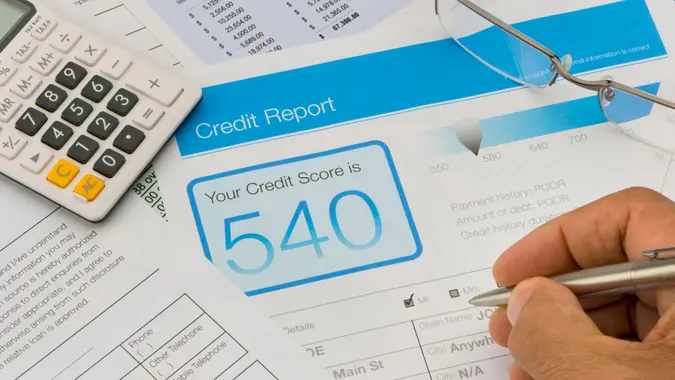
What is a credit report?
Your credit report is a collection of data that’s gathered from your creditors and summarizes your credit history. When you apply for a new line of credit or a loan, your bank, credit card company or mortgage lender uses your credit report to evaluate the potential risk of lending money to you.
A credit report provides your credit details, including:
- Identifying information: Employment details, Social Security number, date of birth, address, etc.
- Credit accounts: Auto loans, credit cards, mortgages and the respective credit limits, loan amounts, account balances and payment history
- Credit inquiries: A list of everyone who accessed your credit report within the last two years
- Public record and collections: State and county court information including bankruptcies, foreclosures, suits and information on overdue debts from collection agencies
Job seekers should be aware of the fact that credit reports can be used by potential employers to help them make hiring decisions. Credit reports can also be used by law enforcement and in court orders.
Credit reports are provided by the three main credit bureaus — Experian, Equifax and Transunion — and are available for free from AnnualCreditReport.com once per year upon your request. Credit reports provide a comprehensive, detailed summary of the credit that has been extended to you and whether you’ve paid it back on time.
Keep in mind that a credit report is not the same as a credit score; a credit score summarizes the information on your reports into a three-digit number used for evaluation purposes.
Related: How FICO Score 9 Updates Could Raise Your Credit Score
What is an investigative consumer report?
An investigative consumer report is more like a detailed background check. Facts that create a picture of who you are as a person are included in this kind of report, and the gathering of that information might even include interviews with your neighbors, friends and associates.
An investigative consumer report summarizes information about your:
- Character
- General reputation
- Personal characteristics
- Way of living
One important distinction to make is that investigative consumer reports will not include any information about your credit record obtained directly from a creditor or from you. An investigative consumer report cannot and will not be used as part of an application to grant credit. Normally, the use of investigative consumer reports is limited to certain specific uses, such as employment background checks or insurance applications.
You will be notified in writing if someone chooses to perform an investigative consumer report on you. If someone requests an investigative consumer report for employment purposes, federal law requires that the person obtain permission from you first. If your application for employment is rejected as a result of an investigative consumer report, the employer must give you a copy of the report.
If your application for insurance is rejected after an investigative consumer report is performed on you, you can contact the credit reporting agency for more information. The credit reporting agency is not required to reveal the sources of its information, though.
Investigative consumer reports are effective methods of evaluating a person, especially for employment. Federal law regulating investigative consumer reports is strict, but state laws governing background checks and credit checks vary from state to state.
Investigative Consumer Report Compliance Requirements
Employers must comply with the FCRA to use an investigative consumer report to determine an employee’s promotion, retention or reassignment. To comply with the FCRA, a consumer reporting agency must prepare the report. Employers must also follow these steps before requesting an investigative consumer report, according to the Bureau of Consumer Protection:
- Notify the job applicant or employee that the company will be using his consumer report to determine employment. The notification must be given in writing and cannot be in an employment application.
- Receive written permission from the applicant or employee to use his consumer report. If this is to be an ongoing agreement throughout the employment term, it must be noted as such.
- Bring all documents to the consumer reporting agency to verify the company’s FCRA compliance and certify that the employer won’t discriminate in the hiring process based on information contained in a consumer report as pertains to federal and state equal opportunity laws.
Consumers should be aware of the distinction between credit reports and investigative consumer reports, as it’s often easy to confuse the two and wonder why employers need to know your credit history or FICO score. An investigative consumer report gives employers and insurance companies more relevant information than a credit report, and the FCRA ensures that you have the ability to deny a company access to this information.
Read: 12 Things You Should Never Do With Your Money
Ruth Sarreal contributed to the reporting for this article.