Cash vs. Credit Card: The Original Paper or Plastic Debate
 Written by
Sarah Sharkey
Written by
Sarah Sharkey
 Edited by
Emily Gadd, CCC™
Edited by
Emily Gadd, CCC™
Commitment to Our Readers
GOBankingRates' editorial team is committed to bringing you unbiased reviews and information. We use data-driven methodologies to evaluate financial products and services - our reviews and ratings are not influenced by advertisers. You can read more about our editorial guidelines and our products and services review methodology.

20 Years
Helping You Live Richer

Reviewed
by Experts

Trusted by
Millions of Readers
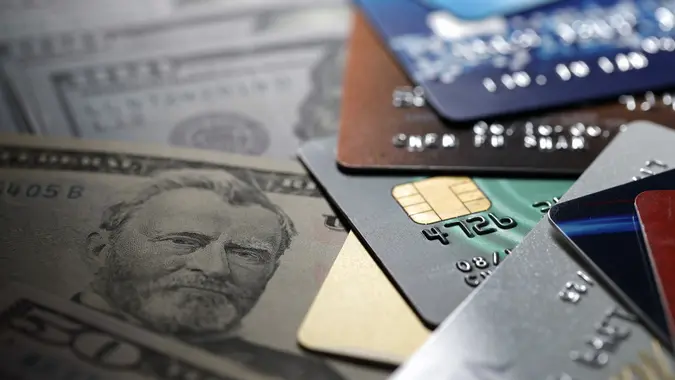
Almost everyone makes purchases every single day. But the best way to complete the payment varies. For some, swiping a credit card offers peace of mind and access to extra perks. For others, the control that comes with physical cash is preferable.
Cash vs Card: What’s the Difference?
- Cash: Physical money to be used for purchases
- Debit card: Direct withdrawal of funds from a checking account
- Credit card: Borrowed funds that must be repaid later. Purchases often come with protection and rewards
When It Makes Sense to Use Cash
In one form or another, cash has been around for centuries. Although it’s an older method of payment, it’s still a reliable way to pay for your purchases. Here’s a look at some of the key benefits of this tried-and-true spending method:
- Accepted almost everywhere: It’s rare to find a retailer that doesn’t accept cash.
- Helps to limit overspending: When you run out of cash in your wallet, it’s difficult to go over budget.
- No debt: You won’t take on any debt when paying with cash.
- Make the most of your funds: Some retailers charge fees for using cards, which you can avoid by paying with cash. Also, cash is easy to use for tips.
When to Use a Debit Card
A debit card is connected to your checking account. Here’s a look at some of the key benefits:
- Budget-friendly: If you want to stick to a budget, opting for a debit card limits how much you can spend because it’s tied to the amount in your checking account.
- No debt: You are unlikely to get into significant debt when using your debit card. While a bank might allow you to overspend your checking account by some amount, financial institutions often limit overspending from a checking account.
- Easier to track spending: If you like to know where your money is going, the automatic tracking possibilities of a debit card are worthwhile. You can use spending tracking tools to help you stay on budget with a debit card.
- Less potential for lost cash: If you lose physical cash, it’s unlikely you’ll get it back. If you lose a debit card, you can likely prevent future transactions from that card. While debit cards come with fewer protections than credit cards, they offer more security measures than cash.
When Credit Cards Are the Smarter Choice
Credit cards involve a revolving line of credit, which allows cardholders to make a purchase using the line of credit. At some later point, they’ll have to repay the debt, sometimes with interest.
Some of the benefits of using a credit card for purchases include:
- Fraud protection: Most credit cards have strong fraud protections and purchase dispute rights built in. This offers a greater level of financial protection for many users.
- Perks: Many credit cards offer perks to cardholders, including the ability to earn rewards like cash back and travel points.
- Opportunities to build credit: When using a credit card responsibly, credit cardholders have an opportunity to build credit over time.
- Easy to track spending: Like debit cards, you can track your credit card transactions automatically to help you monitor your budget.
- Access to line of credit: Cardholders can spend up to their credit limit, which may come in handy during an emergency or when making a larger purchase.
Pros and Cons of Cash, Debit and Credit
Every spending method has advantages and disadvantages to consider. Below is a look at what to keep in mind.
| Pros | Cons | |
|---|---|---|
| Cash | – Immediate payment – No debt – Easy to control budget |
– Immediate payment – No debt – Easy to control the budget |
| Debit card | – Convenient – No debt – Easy to track spending electronically |
– Bank overdraft risks, including potential fees – Less fraud protection than credit cards |
| Credit card | – Potential to earn rewards – Fraud protection built-in – Opportunity to build credit – Easy to track spending electronically |
– Risk of debt – May face interest charges |
Factors to Consider When Choosing Cash or Card
When choosing to carry a card or cash, the right choice varies based on your situation. Some key factors include:
- Spending habits: If you have a solid handle on your spending and rarely go over budget, then opting for a credit card’s security could make more sense. But if you struggle to stay on budget, sticking with the confines of physical cash could help.
- Security concerns: The possibility of losing cash could easily derail your finances. If you are concerned about the possibility of losing cash, consider sticking with the relative safety of a plastic card.
- Rewards opportunities: For those looking to optimize their spending, the allure of credit card rewards is enticing. If you can use a credit card without overspending in pursuit of rewards, then opting for a rewards card might make sense.
- Tracking your budget: If you want to track your budget, the electronic options tied to a credit card or debit card could make your life easier.
- Risk tolerance: If you want to tap into the most protection against fraud, a credit card might make the most sense.
Best Practices for Using Cash, Debit and Credit Cards
The reality is that many of us use multiple payment methods. Regardless of the option you usually whip out for purchases, keep the following best practices in mind:
- Set spending limits: Regardless of your spending method, set spending limits for yourself.
- Pay credit card balances off in full each month: If using a credit card, do your best to pay off the balance each month.
- Monitor bank account and credit card statements each month: When using debit or credit cards, reviewing your transaction details each month can help you spot any errors.
- Lean on cash for categories where you overspend: If you overspend in a particular area, consider imposing a cash budget for that category. For example, if you overspend on dining out each month, consider setting a cash limit on what you can spend at restaurants.
- Use credit cards for certain purchases: When making a large purchase or an online purchase, consider using a credit card for the added fraud protection.
Final Thoughts
When it comes to choosing a spending method, there is no one-size-fits-all answer. The right option varies based on your unique situation. For many, using a combination of cash, debit, and credit offers the opportunity to maximize convenience, rewards, and financial stability.
FAQ
- Should I use cash, debit, or credit for everyday expenses?
- The right choice between cash, debit, and credit varies based on your unique situation. If you understand your numbers and almost never go over budget, spending with a credit card can offer an increased level of financial security. But if you tend to overspend, opting to pay with cash or a debit card could help you stick to your budget.
- Is it better to pay with cash or card to save money?
- For some, the physical nature of paying with cash makes it easier to save money. For others, careful tracking of spending with a card makes it easier to save money. Ultimately, you'll need to decide what works best for your unique situation.
- How does using a credit card help build credit?
- When used responsibly, a credit card can help you build credit over time. As you use the credit limit, pay off your expenses, and make on-time bill payments, you may see your credit score rise over time.
- Are debit cards safer than carrying cash?
- In some ways, debit cards are safer than carrying cash. If you lose your debit card, you can potentially cancel future transactions from that card to safeguard your funds. If you lose cash, it's unlikely you can recover those funds.
- When should I avoid using a credit card?
- If you tend to overspend, making purchases with a credit card could mean going over budget. For some, it's easier to stop spending when they run out of physical cash or don't have additional funds in the checking account connected to their debit card.