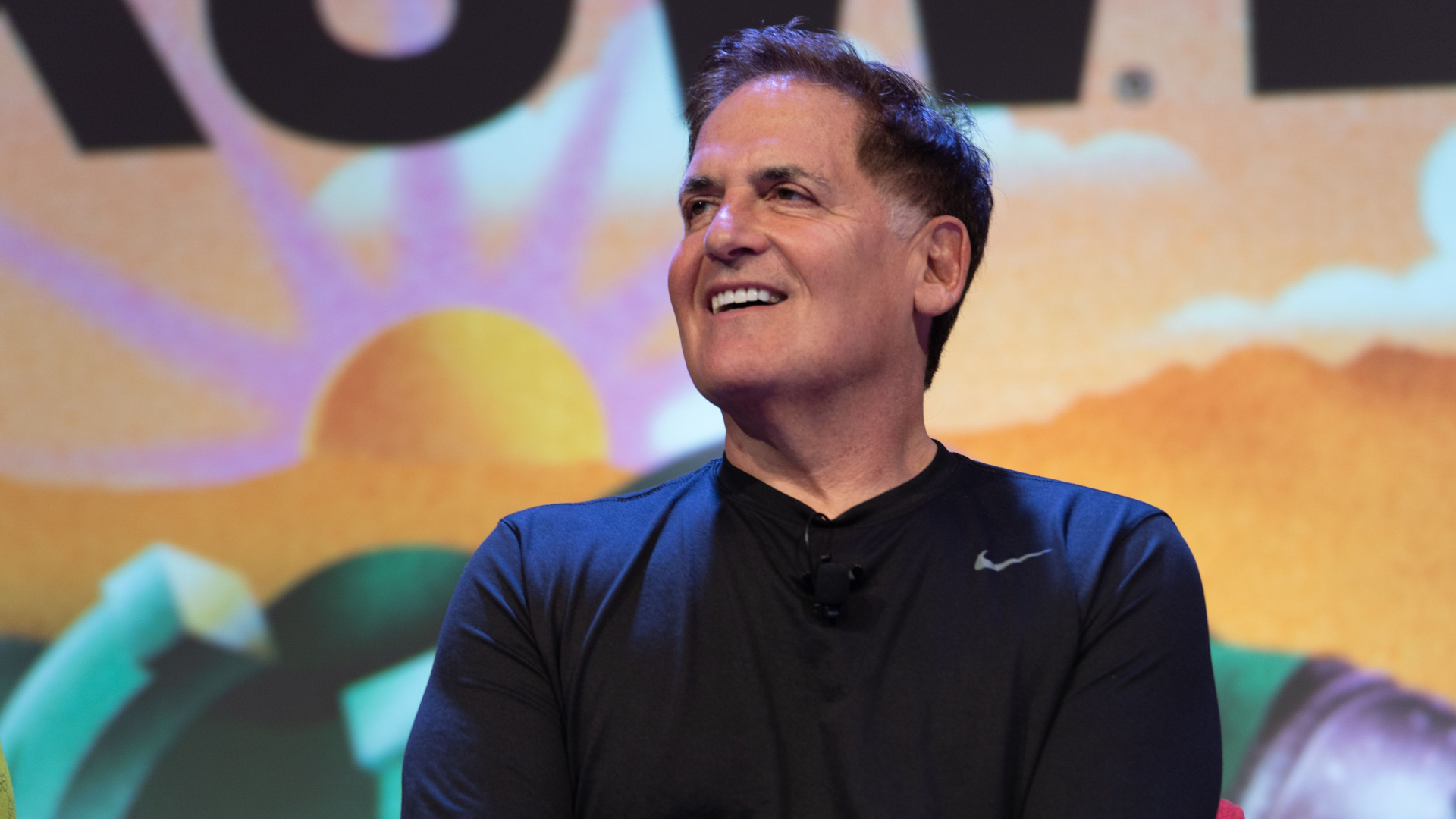
Thomas J. Feeney has been in the investment industry for over four decades. As the chief investment officer of both Marathon Asset Management Co. and Mission Management & Trust Co., there isn’t much of the financial world he hasn’t seen. As much as his schedule allows, he also breaks down his thoughts and strategies on his blog, Measure of Value.
Every other week, we’ll tap Tom’s insights to get a deeper perspective of what’s going on in the market and see through his eyes what the smart money is thinking.
Having worked extensively with religious, charitable and other not-for-profit organizations in those early years, in 1978 I decided to establish Thomas J. Feeney & Co., an investment consulting firm, to serve that not-for-profit clientele. At the urging of several consulting clients, in December 1985 we began the asset management function and founded Marathon Asset Management Co. The two companies were based in La Jolla, California.
In 1994 my wife Carmen Bermúdez founded Mission Management & Trust Co., a full service trust company, in Tucson, Arizona. After three years of commuting weekly from Tucson to La Jolla, I opted to relocate Marathon to Tucson. Mission’s initial chief investment officer retired in 1997, and I assumed that role. Since that time I have served as chief investment officer for both Mission and Marathon, and we run the firms side by side in the same offices.
HT: When it comes to investing, what is the strategy you generally favor for your clients? What factors do you consider when determining the right investment strategy?
TJF: I have long disagreed with the investment industry’s two-part prescription for investment success:
1. Set an appropriate asset allocation mix and regularly re-balance it
2. Buy and hold stocks and bonds for the long run
Instead, our investment staff and I work daily to identify securities that represent real value. We rely on quantitative processes that evaluate current securities data and relate those data to valuation ranges that have prevailed over most of the past century. Unless precluded by client inability to withstand the risk of concentration, we are willing to invest large percentages of our portfolios in either stocks or bonds when they present compelling value.
At the other extreme, we are equally willing to shun stocks and bonds and hold portfolios largely in cash equivalents when compelling valuations are absent. I strongly agree with Warren Buffett’s comparison of investing to a baseball player taking batting practice: You can’t be called out on strikes. You can let as many pitches go by as you wish. You can wait just for pitches that are particularly attractive.
We also differ from the common wisdom of our industry by not benchmarking to any market index. We pursue absolute, not relative returns. That approach has been especially valuable over the past dozen years or so. We have not felt compelled to hold large allocations of common stock in an era of historically high valuation measures.
That stance was extremely helpful through the destructive stock market decline from 2007 to 2009. Our Controlled-Risk Flexible Allocation investment approach, which most of our clients employ, has earned positive returns in 23 of our first 24 years. We barely missed a clean slate by suffering a minimal loss of a fraction of one percent in 2008, when the S&P 500 lost over 37 percent.
HT: For investors who saw half their portfolios disappear during the recession, putting their money back in the market again can be very scary. This is especially true if they’re nearing retirement. How do you recommend investors cope with that fear of the market? Is that fear justified?
TJF: Fear is as justified today as it has ever been. While government and monetary authorities rescued our financial system from imminent implosion less than two years ago, a great many domestic and international risks remain. Subsequent to the massive rescue efforts applied to our domestic economy, dangers of default have been recognized in Dubai, Portugal, Italy, Ireland, Greece, Spain and Hungary.
In our own country, numerous states and municipalities are in precarious financial shape. At the individual level, foreclosures and unemployment are at or near modern historic highs. The average household balance sheet has been badly damaged in recent years and portends little resilience should the economy not recover soon.
Notwithstanding the myriad dangers, which legitimately justify concern, investment markets could still do well. The government and the Federal Reserve Board may succeed in rescuing and stimulating the economy, and investors may rediscover lost confidence and push securities prices higher. Much depends on whether or not confidence can be rekindled.
Investment markets have advanced nicely over the past year and a half on the back of inventory rebuilding and capital expenditures. That advance will grind to a halt, however, if we consumers don’t start to spend regularly. Because consumer balance sheets are still well below where they were three years ago, it is an open question as to whether a new-found frugality will constrain such spending.
HT: There are a lot of questions right now about the economy, the stock market and the general stability of our country’s financial system. What are your thoughts about the current state of the markets?
There is no easy answer for investors, especially those in or near retirement. While they can ill afford to lose more capital, they need income in an atmosphere in which safe income is hard to come by.
Almost anything an investor or saver does in this environment has the potential to be very wrong. Assets invested in equities could do well if the government and Fed rescue efforts succeed and especially if printing massive amounts of new money should float financial asset prices far higher. On the other hand, if QE2 (second round of quantitative easing) or another round of stimulus efforts should fail to raise consumer and investor confidence, stock prices could retreat significantly from current levels.
Investors and savers will be rewarded for taking the more conservative path in highly secure bonds or cash equivalents if the economy continues to slow and especially if collapsing debt and de-leveraging lead to deflation. Those same investors and savers, however, could be seriously damaged if the flood of new rescue money should lead to runaway inflation. Which scenario might unfold will be determined by many future actions of governments, regulators and private citizens. Many of those actions are simply unforecastable.
Although hardly satisfying to investors seeking guidance, I offered my strongest recommendation in the August 13 post titled, Keep Your Job on Thomas J. Feeney’s Measure of Value.
Be sure to check back again for more of Tom’s thoughts. If you have any questions or thoughts regarding his answers, feel free to share them in the comments. If they’re relevant, we may use them in a future post.