Saving Money on Gas
 Written by
GOBankingRates Staff
Written by
GOBankingRates Staff
Commitment to Our Readers
GOBankingRates' editorial team is committed to bringing you unbiased reviews and information. We use data-driven methodologies to evaluate financial products and services - our reviews and ratings are not influenced by advertisers. You can read more about our editorial guidelines and our products and services review methodology.

20 Years
Helping You Live Richer

Reviewed
by Experts

Trusted by
Millions of Readers
Saving money on gas has become increasingly challenging. Unlike shopping at a flea market, the prices on gas are non-negotiable and you have to pay what the sign tells you to. However, there are some different strategies you can utilize to eek the most mileage out of a tank of gas.
Before going to the gas station be aware of the additional charges or higher rates that different gas stations charge depending on whether you pay in cash or by credit card. Some service stations promote the same price regardless of what form of payment is used, but then charge an additional amount of money for using a credit card. For example, .45 cents may not seem like a lot of money, but if the gas station right across the street is charging the same amount per gallon (and there is no fee associated with using a charge card) why would you choose to pay more when you can pay less?
If you are going to use a credit card for gas, make sure you use one that actually pays you back for your gas purchases, such as a rewards card or a gas credit card. You can earn anywhere from 3%-5% back on the initial cost of the fuel with the right gas back credit card in your wallet.
Once your car is fully pumped, how you decide on getting the most for your gas money is up to you. Some ideas to increase your mileage and save money on gas include:
- Maintaining the air pressure in your car’s tires
- Clean out your car to remove any additional weight from your vehicle
- Drive the speed limit as the faster you drive the more fuel you burn
- When driving down a hill, don’t press on the gas
- Car pool to work and split the cost of gas with your coworkers
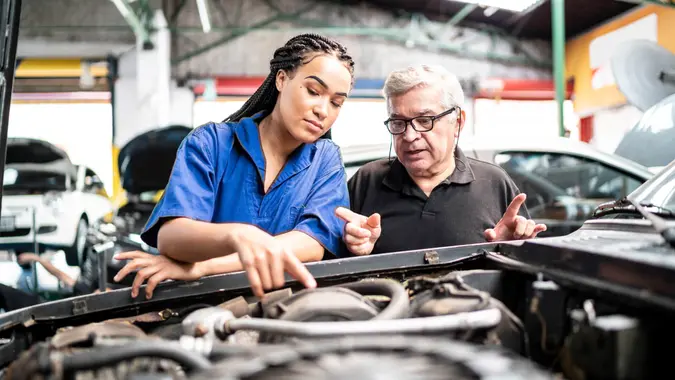
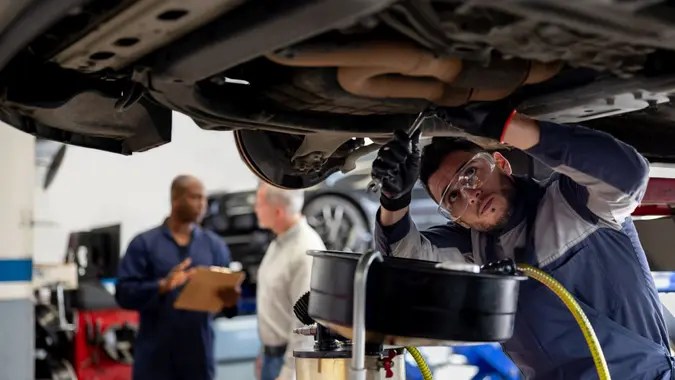
- Make sure to properly maintain your vehicle
- If you are in your car waiting for some one, shut the engine off
- Make sure you buy the appropriate grade gas for you vehicle
By taking precautions and paying attention to your car’s maintenance needs you should be able to get good mileage out of your car which in turn will help you to save on gas as well.