3 Top Things Boomers Should Fix Now Before They Become Expensive Problems
 Written by
Jordan Rosenfeld
Written by
Jordan Rosenfeld
 Edited by
Molly Sullivan
Edited by
Molly Sullivan
Commitment to Our Readers
GOBankingRates' editorial team is committed to bringing you unbiased reviews and information. We use data-driven methodologies to evaluate financial products and services - our reviews and ratings are not influenced by advertisers. You can read more about our editorial guidelines and our products and services review methodology.

20 Years
Helping You Live Richer

Reviewed
by Experts

Trusted by
Millions of Readers
Many boomers only deal with major home repairs or health-related upgrades when something finally breaks. If it’s still working, the thinking goes, why rush into a costly fix?
Financial advisors, contractors and aging experts say that logic often backfires. Across homes and health, the most expensive problems are rarely sudden. They’re usually the result of long-delayed decisions that turn manageable upgrades into emergencies. Experts explained which fixes tend to spiral the fastest when postponed, and why timing matters more than most people realize.
1. An Aging Furnace
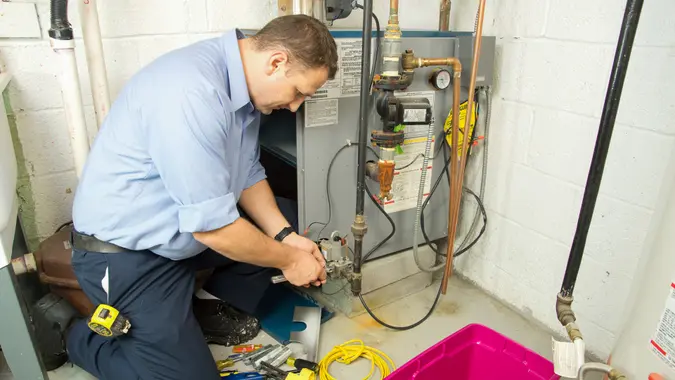
For many boomers, an aging furnace is the classic “one more season” gamble. A furnace that’s past its expected lifespan is one of the most common upgrades boomers delay because they hope to squeeze out a little more time. According to Glenn Gault, the CEO of Gault Heating & Cooling, those delays tend to end badly and at the worst possible time.
“Failures almost always happen during extreme weather, turning a planned replacement into an emergency install with long wait times, a much higher price, frozen pipes risk and simply a cold house,” he said.
One reason people wait is that replacing a system that still works feels unnecessary. However, an unexpected furnace replacement is “quite expensive” Gault warned, in the $6,000 to $10,000 range.
Waiting until a system fails can also introduce risks beyond the replacement cost itself. If a furnace goes out during extreme cold, homeowners may face frozen pipes, reliance on space heaters and potential insurance disputes tied to preventable neglect, Gault said.
2. Roof and Foundation
Roof and foundation problems rarely announce themselves loudly — but their financial consequences can be severe. While HVAC failures are dramatic, roof and foundation deterioration often stay hidden until the financial damage is severe. Cody Schuiteboer, president and CEO of Best Interest Financial, said these are some of the most destructive delays he sees.
For example, he said, consider a boomer who discovers a roof leak. At 68, she defers the $12,000 replacement. Three years later, she must pay for mold and water damage remediation, which costs $8,000 to $15,000, and insurance may deny coverage.
“Homes with deferred maintenance are increasingly difficult to obtain insurance for because companies either draw the line administratively and refuse to renew policies or place homeowners in high-risk pools with 200% to 400% premium increases,” he said.
What looks like savings often becomes a hidden drain. “A boomer who thinks they saved $12,000 by deferring a roof replacement actually incurs $2,400 to $3,600 in higher insurance premiums each year.”
For that reason, Schuiteboer advised treating roof and foundation repairs as nonnegotiable expenses rather than optional maintenance.
3. Bathroom Safety
Bathroom safety is one of the most overlooked areas where small upgrades can prevent major financial and health consequences. Neal K. Shah, CEO of CareYaYa and an aging researcher at Johns Hopkins University, sees the “downstream costs” daily.
When small home and health issues get postponed, they can lead to “falls, ER visits or forced moves.”
Bathrooms, in particular, are a high-risk area for falls. When budgets are tight, Shah said fall prevention should come first, because even one incident can trigger a cascade of medical costs and loss of independence.
Contractor Ryan Alexander, owner at AFD Construction and Painting, agreed, explaining that many homes were never designed for aging. “These bathrooms may look fine, but they are often the first place where balance and mobility issues begin to appear.”
Alexander stressed that proactive upgrades are far easier and “far more affordable when planned ahead rather than rushed after an injury.”
Warning Signs That a ‘Minor Issue’ Is About To Get Expensive
Experts said many costly problems offer warning signs well before they become emergencies. The challenge is recognizing them early.
Gault pointed to aging equipment and performance changes. “A furnace itself that is more than 15 to 20 years old is already a warning sign … when it starts making unusual noises, running much longer than it used to, or heating the house unevenly.”
Schuiteboer flagged structural and moisture indicators such as watermark stains on ceilings, cracks greater than one-quarter inch in the foundation, declining water pressure and musty odors that suggest mold.
Subtle changes in daily behavior can also signal rising risk. If boomers notice they are doing things like grabbing walls or towel bars for support, struggling to step into the tub, slipping even once or avoiding showering at night due to poor lighting, these are all signals that a small issue may be becoming a bigger risk, Ryan warned.
How To Prioritize Fixes When You Can’t Do Everything at Once
When resources are limited, the experts recommended addressing issues that can trigger cascading damage first.
“These include the furnace, the water heater, the roof and main plumbing lines,” Gault said.
Schuiteboer reminded boomers that this also helps preserve assets. “When budgets are tight, boomers must first address roof and foundation issues, as they threaten the entire asset and insurance viability.”
In essence, Shah positioned the thought process boomers need to take as not “what’s broken” but “What’s the next thing that will break me?”
Experts agreed that waiting for something to fully fail almost guarantees higher costs, more stress and fewer choices. For boomers planning their next decade, it’s wiser to be fix even small problems before those problems decide for you.
More From GOBankingRates