Pros and Cons of Buying a Foreclosed Home: Is It Worth the Risk?
 Written by
Carley Clark
Written by
Carley Clark
 Edited by
Joe Evans, CFHC™
Edited by
Joe Evans, CFHC™
Commitment to Our Readers
GOBankingRates' editorial team is committed to bringing you unbiased reviews and information. We use data-driven methodologies to evaluate financial products and services - our reviews and ratings are not influenced by advertisers. You can read more about our editorial guidelines and our products and services review methodology.

20 Years
Helping You Live Richer

Reviewed
by Experts

Trusted by
Millions of Readers
With home prices staying high and mortgage rates still above 6.8% as of mid-2025, many buyers are exploring alternative ways to enter the housing market. One option that continues to spark interest is buying a foreclosed home.
But before jumping in, it’s important to understand the pros and cons of buying a foreclosed home, because while the price may be lower, the process isn’t always simple.
In this guide, we’ll break down what a foreclosure is, the benefits and risks of buying one and what you should know before making an offer.
What Is a Foreclosed Home?
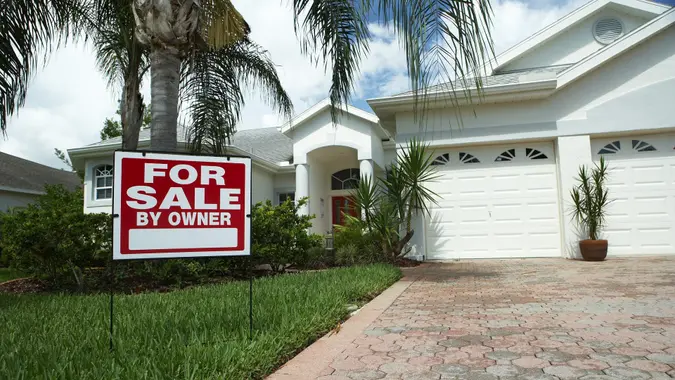
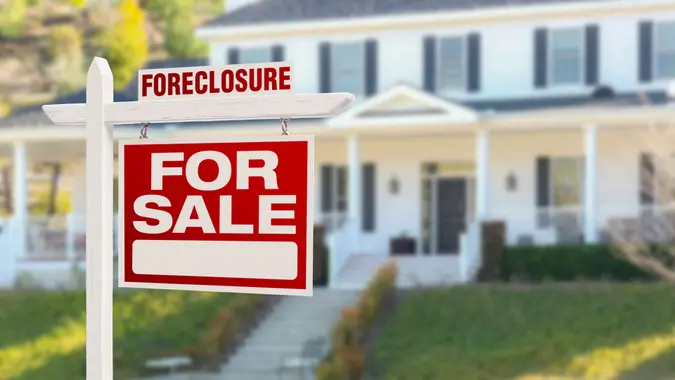
A foreclosed home is a property the lender takes back after the owner falls behind on their mortgage payments. Once repossessed, the lender typically tries to sell the home — often at a discount — to recover the loan balance.
You may come across different types of foreclosures:
- Bank-owned (REO): Homes that didn’t sell at auction and are now owned by the lender.
- Auction properties: Sold to the highest bidder, often with little to no inspection time.
- Short sales: Properties sold for less than what’s owed, with the lender’s approval.
- Government-owned homes: Repossessed homes backed by FHA, VA or USDA loans.
Pros of Buying a Foreclosed Home
Buying a foreclosed property can be a smart financial move — if you’re prepared.
Lower Purchase Price
Foreclosed homes often sell well below market value. A Federal Housing Finance Agency study found foreclosures tend to sell for 10% to 20% less than traditional listings.
Built-In Equity Potential
Because you’re starting at a lower price point, there’s more room to gain equity through renovations or market growth.
Median home prices in the U.S. have climbed more than 35% since 2020, reaching $417,700 in Q2 2025. That means homes bought under market value could see strong appreciation.
Motivated Sellers
Banks are not emotionally attached to the property — they want it off their books. This can give buyers an edge when it comes to negotiation.
Possible Faster Closing
In some cases — especially with auctions — closings can happen quickly, though timelines vary depending on the type of foreclosure.
Cons of Buying a Foreclosed Home
Not all foreclosures are a bargain. There are real risks to consider.
Property Condition Issues
Foreclosed homes are sold “as-is,” which means any damage or neglect becomes your responsibility. Some may need serious repairs before they’re livable.
Limited Inspection Opportunities
Especially at auctions, you may not get to inspect the home at all before buying, making it a bit of a gamble.
Competitive Bidding
Foreclosures often attract cash investors and flippers, especially in hot markets. This can drive up the price and limit your negotiating power.
Complex or Delayed Closings
REO — or bank-owned — homes often have delays due to title issues or slow bank response times. The process may be more complicated than a traditional purchase.
Hidden Costs
Foreclosed homes can come with unpaid property taxes, liens, or HOA fees. Be sure to do a title search and factor in these extra costs.
Quick Comparison Table
| Pros of Buying a Foreclosed Home | Cons of Buying a Foreclosed Home |
|---|---|
| Lower purchase price | May need significant repairs |
| Room for equity and profit | Risk of buying “as-is” |
| Potentially faster closing | Limited or no inspections at auction |
| Bank may be open to negotiation | Complicated purchase process |
| Opportunity for rental or resale income | Competition from seasoned investors |
How To Buy a Foreclosed Home
Thinking of taking the plunge? Here’s how to get started.
1. Learn the Foreclosure Types
Understanding the type of foreclosure — short sale, auction or REO — helps you know what to expect.
2. Get Pre-Approved for Financing
If you’re not paying cash, get pre-approved for a loan. If the property needs work, an FHA 203(k) loan can cover both the purchase and renovations.
3. Work With a Certified Foreclosure Specialist
Look for a real estate agent with a Short Sales and Foreclosure Resource (SFR) designation or Certified Distressed Property Expert (CDPE) certification.
4. Do Your Due Diligence
- Order a title search to check for liens
- Try to get a home inspection — if allowed
- Research neighborhood values and renovation costs
Foreclosed Homes vs. Traditional Homes
| Factor | Foreclosed Home | Traditional Home |
|---|---|---|
| Price | Often discounted | Reflects full market value |
| Condition | Usually needs repairs | Typically move-in ready |
| Inspection | May be limited or unavailable | Depends on the seller’s situation |
| Negotiation | More room with lenders | Depends on seller’s situation |
| Timeline | Can be faster or slower | More predictable closing process |
Tips for First-Time Buyers
- Budget for repairs: Don’t stretch your budget just to buy — you’ll likely need extra cash to fix things.
- Get a home inspection: If you’re buying an REO or short sale, always inspect when possible.
- Understand the risks: You might be dealing with vandalism, unpaid taxes or title issues.
- Stick to your budget: Auctions can move fast — don’t get caught in a bidding war.
Who Should Consider Buying a Foreclosed Home?
- Real estate investors looking for rental income or flip opportunities.
- DIY-savvy buyers who can handle renovations.
- Budget-conscious buyers wanting a lower entry point to homeownership.
Just keep in mind: what you save upfront might cost more in repairs and stress later on.
Final Take: Is Buying a Foreclosed Home Worth It?
If you’re weighing the pros and cons of buying a foreclosed home, it comes down to how much risk you’re willing to take — and how much time, money and effort you’re ready to put in.
If you’re handy, financially prepared and have a solid team behind you, buying a foreclosed home can be a great way to build equity or save money. But if you need a move-in-ready home or a smooth process, a traditional home purchase might be a better fit.
Before you buy, talk to a knowledgeable agent, get pre-approved and do your homework. A good deal is only a deal if it works for you.
FAQ
Here are the answers to some of the most frequently asked questions about the pros and cons of buying a foreclosed home and how it works:- Can I finance a foreclosed home?
- Yes, many types of mortgages apply. FHA 203(k) loans are popular for fixer-uppers.
- Are foreclosed homes always a good deal?
- Not always. While the price may be low, repairs and legal risks can add up quickly.
- What risks should I watch out for?
- Poor condition, lack of inspection access, unpaid liens and title issues are common concerns.
- Can I negotiate the price?
- Often, yes -- especially with bank-owned properties that have sat unsold.
- How do I find foreclosed homes?
- Try HUDHomeStore.gov, Zillow’s foreclosure search, Realtor.com, bank websites or work with an experienced agent.
Data is accurate as of July 31, 2025, and is subject to change.
Our in-house research team and on-site financial experts work together to create content that’s accurate, impartial, and up to date. We fact-check every single statistic, quote and fact using trusted primary resources to make sure the information we provide is correct. You can learn more about GOBankingRates’ processes and standards in our editorial policy.
- Federal Reserve Bank of St. Louis "Median Sales Price of Houses Sold for the United States"
- Federal Reserve Bank of St. Louis "30-Year Fixed Rate Mortgage Average in the United States"
- Federal Housing Finance Agency "The Value of Foreclosed Property: House Prices, Foreclosure Laws, and Appraisals"
- Zillow "Buying a Foreclosed Home: What You Need to Know"
- National Association of Realtors "Short Sales and Foreclosure Resource"
- CDPR.com "Certified Distressed Property Expert"