





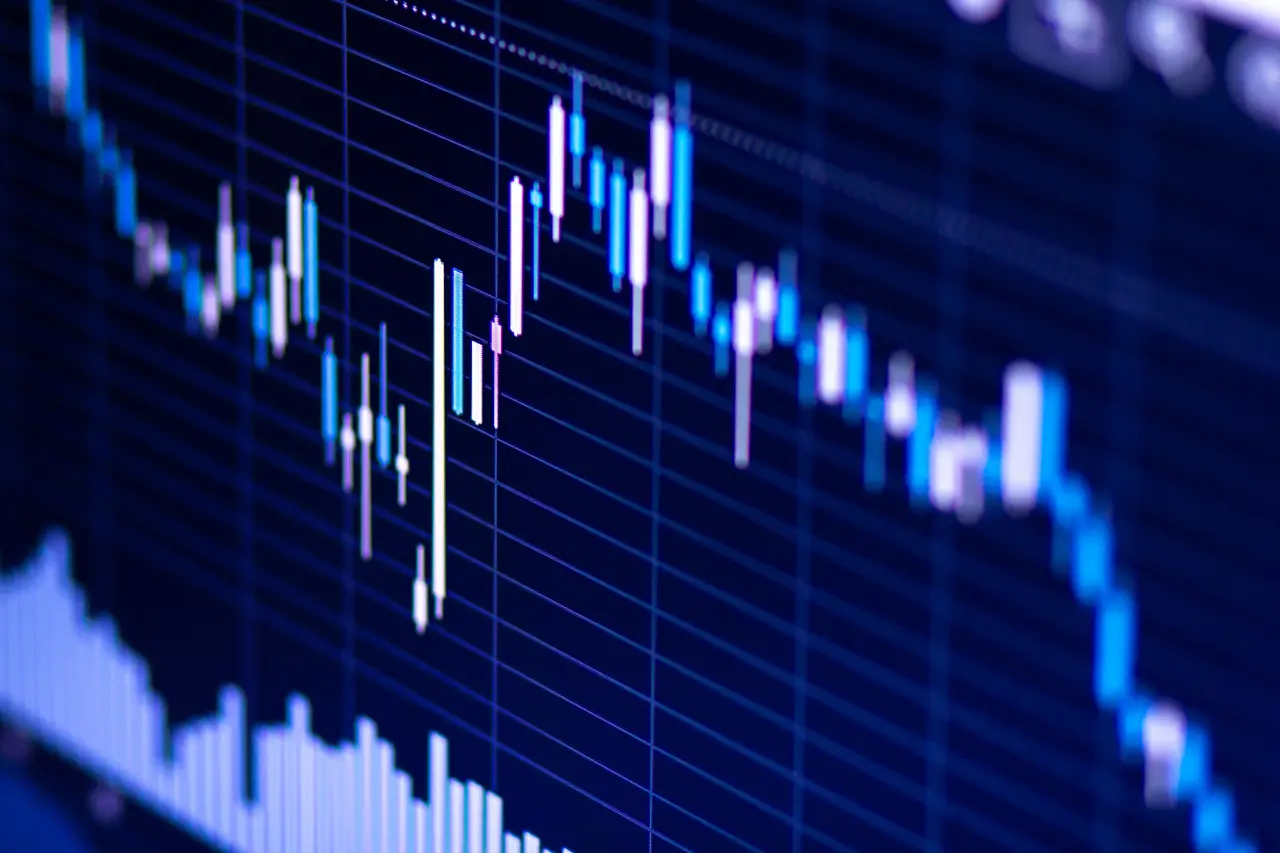


A candlestick chart is a type of financial chart used to track price movements over a specific period — anything from one minute to one month. Originally developed by Japanese rice traders in the 1700s, candlestick charts are now a global standard in technical analysis.
What Are the Parts of a Candlestick Chart?
Each candle has three main components:
| Part | What It Shows |
|---|---|
| Body | The range between what the asset traded at when the market opened (open price) and when it closed (close price) |
| Wick/shadow | The high and low prices reached during the period |
| Color | Whether the price went up (typically green) or down (red) |
- A green or hollow candle means the close was higher than the open. This is also known as bullish.
- A red or filled-in candle means the close was lower than the open. This is also known as bearish.
The length of the body and the shadows also tell you how volatile the market was during that time.
Understanding How to Read Candlestick Patterns
A single candlestick can offer clues — but patterns formed by multiple candles are often more powerful. These patterns fall into two categories:
- Reversal patterns, signaling a potential change in direction
- Continuation patterns, suggesting a trend will continue
Common Candlestick Chart Patterns
Candlestick chart patterns are separated between single and multiple candle patterns:
Single-Candle Patterns
1. Doji
- A doji forms when the open and close prices are nearly the same
- Indicates market indecision and potential reversal, especially after a strong trend
2. Hammer
- Short body at the top, long lower wick
- Appears after a downtrend and suggests a bullish reversal
3. Shooting Star
- Short body at the bottom, long upper wick
- Appears after an uptrend and signals a bearish reversal
Multiple-Candle Patterns
1. Engulfing Pattern
- A small candle followed by a larger one that “engulfs” it
- Bullish engulfing appears after a downtrend
- Bearish engulfing appears after an uptrend
2. Morning Star & Evening Star
- Morning Star: Bullish three-candle pattern signaling the end of a downtrend
- Evening Star: Bearish version appearing at the top of an uptrend
3. Three White Soldiers & Three Black Crows
- Three white soldiers: Three long bullish candles mean strong upward momentum
- Three black crows: Three long bearish candles mean strong downward pressure
Pro Tip
Never trade based on candlesticks alone — always look at broader market trends and use additional data.
Why Traders Use Candlestick Charts
- Quick visualization: Candlesticks show price trends and momentum at a glance
- Market psychology: Each candle reflects trader behavior — greed, fear, indecision and more
- Pattern recognition: Identifying specific candlestick patterns can help predict future price movement
Compared to line or bar charts, candlestick charts offer a richer view of the price story by combining open, high, low and close (OHLC) data into a single “candle.”
Real-World Examples of Candlestick Charts
Imagine you’re looking at a 1-day chart of a tech stock like Apple (AAPL). You see:
- A long green candle with a small upper wick means strong bullish momentum.
- The next day, a doji appears means the market may be stalling.
- On day three, a long red candle forms means a possible reversal ahead.
This sequence — green candle, doji, red candle — is a classic Evening Star pattern, signaling a potential downtrend.
Trading Strategies With Candlestick Charts
You don’t need to be a professional day trader to apply candle chart strategies. Here are a few ways beginners use them:
Day Trading
- Use 5-minute or 15-minute charts to spot rapid shifts
- Look for short-term patterns like engulfing candles or dojis near key price levels
Swing Trading
- Use daily charts to identify trend reversals and plan multi-day trades
Risk Management
- Always set stop-loss orders just below recent support (for bullish trades) or above resistance (for bearish trades)
- Confirm every signal with volume or another indicator to avoid false patterns
Mistakes To Avoid When Reading Candlestick Charts
Even though candlestick charts are powerful, they’re not magic. Watch out for these common beginner mistakes:
- Relying on single candles without context
- Ignoring trading volume and overall trends
- Overtrading based on patterns without confirmation
- Forgetting to manage risk with stop-losses
Why Candlestick Charts Matter
Candlestick charts are one of the easiest and most effective tools for understanding price action, identifying patterns and making better trading decisions. Whether you’re dabbling in day trading, planning to invest in gold or building a long-term stock portfolio, this visual format can help you see what the market is doing.
Even if you’re not actively trading, learning how to read a candlestick chart adds a valuable layer of insight into the behavior of assets you already own or plan to buy.
You don’t need to memorize every candlestick pattern overnight. Start by:
- Looking at real stock charts
- Identifying basic candles (doji, hammer, engulfing)
- Watching how prices move afterward
Want to level up your trading knowledge? Explore our beginner’s guide to stock trading or learn more about investment strategies here. The more you practice, the more these candlesticks will start to tell you a story — one candle at a time.
FAQs About Candlestick Charts
Knowing how to read a candlestick chart is a great tool to have on your investment journey. Here are some common questions and concerns that might pop up while looking into them:- What is a candlestick chart, and how does it work?
- It’s a chart that shows open, high, low and close prices for an asset within a specific period using “candles” made of bodies and wicks.
- How do I spot a bullish or bearish pattern?
- Green or hollow candles are usually bullish (price went up), while red or filled-in candles are bearish (price went down). Patterns like engulfing or hammer provide deeper context.
- Are candlestick charts good for beginners?
- Absolutely. Once you understand the basics, they’re an intuitive way to view price movement and trends.
- How accurate are candlestick patterns in predicting price movement?
- No pattern is perfect. Candlestick charts offer probability-based signals, not guarantees. That’s why you should always use them with other tools.
Editorial Note: This content is not provided by any entity covered in this article. Any opinions, analyses, reviews, ratings or recommendations expressed in this article are those of the author alone and have not been reviewed, approved or otherwise endorsed by any entity named in this article.