





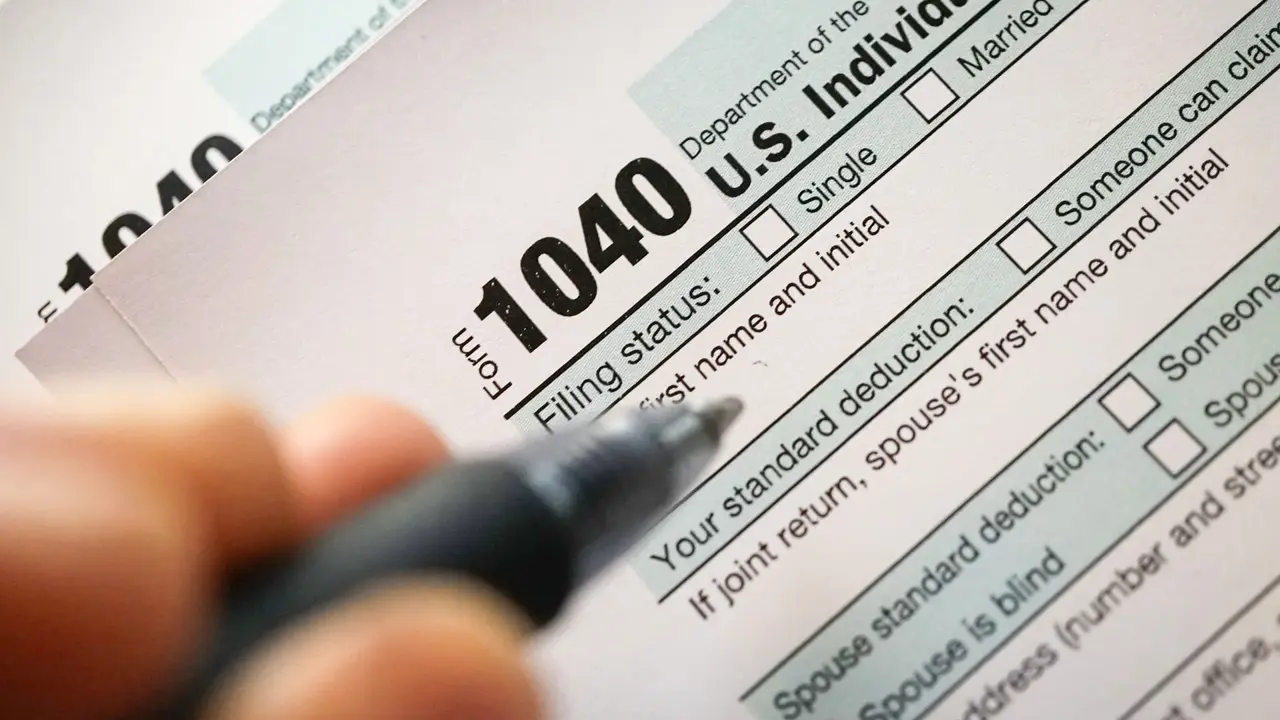


Form 1040 is the standard federal income tax return most Americans use to report income, claim deductions and credits, and calculate whether they owe taxes or get a refund. It’s the core IRS form for individuals, and nearly every taxpayer files some version of it each year.
The math on Form 1040 ultimately determines your bottom line — refund or tax bill — based on your income, adjustments, credits, and payments. Here’s how it works and what you should know before filing.
What Is IRS Form 1040?
IRS Form 1040, U.S. Individual Income Tax Return, is the standard federal tax form most Americans use to file their annual income tax return. It’s where you report your income, claim deductions and tax credits, calculate your total tax liability, and determine whether you’ll receive a refund or owe money.
Form 1040 has served as the primary individual income tax return since the modern federal income tax system began in 1914.
Who Needs to File a 1040 Tax Form?
Most U.S. citizens and naturalized citizens must file Form 1040 if their income exceeds the annual filing threshold. That threshold is generally tied to the standard deduction and varies based on your filing status, age, income sources, and whether you can be claimed as a dependent.
In 2026, filing thresholds range from $16,100 for single filers under age 65 to $35,500 for married couples filing jointly when both spouses are 65 or older.
Even if your income falls below the threshold, certain situations require you to file. For example, you may need to submit Form 1040 if you have self-employment income, owe alternative minimum tax, or need to reconcile advance premium tax credits.
And in many cases, filing is still worthwhile — even when it’s not required — because you could claim refundable credits or receive a refund of taxes that were withheld from your paycheck.
Do I Need to File Form 1040? (Quick Decision Guide)
You must file Form 1040 if your income exceeds the annual filing threshold or if you earned certain types of income, such as self-employment pay. Even if you’re not required to file, submitting a return can help you claim a refund or valuable tax credits.
Use this quick checklist to decide:
1. Did You Earn Income?
If you did not earn income, skip to Question 3.
If you did earn income, ask yourself whether it was more than the standard deduction for your filing status.
- If your income was higher than the standard deduction, you’re required to file.
- If your income was below the standard deduction, continue to Question 2.
2. Were Federal Taxes Withheld From Your Pay? (Check W-2, Box 2.)
- If yes, you should file — even if you’re not required to — because the IRS may owe you a refund. You won’t receive that money unless you submit a return.
- If no, continue to Question 3.
3. Are You Eligible for Refundable Credits, Such as the Earned Income Tax Credit or Child Tax Credit?
- If yes, you should file. Refundable credits can generate a refund even if you owe $0 in taxes.
- If no, continue to Question 4.
4. Did You Receive Special Income?
You’re required to file if any of the following apply:
- You had $400 or more in self-employment or gig income.
- You had Marketplace health insurance and received advance premium tax credits.
If none of these situations apply, you likely do not need to file — though filing may still benefit you if you’re due a refund.
What Information Is Reported on Form 1040?
Form 1040 pulls together your income, deductions, credits, and tax payments to determine whether you owe money or get a refund. Think of it as the master summary of your financial year for tax purposes.
Here’s what goes on it:
1. Your Income
You’ll report all taxable income, including:
- W-2 wages and salaries
- Self-employment income (Form 1099-NEC)
- Interest and dividends (Forms 1099-INT and 1099-DIV)
- Capital gains from selling investments like stocks
- Other income, such as unemployment benefits, gambling winnings, and retirement distributions
2. Adjustments That Lower Your Income
These are often called “above-the-line” deductions because they reduce your gross income before anything else is calculated. Examples include:
- HSA contributions
- Student loan interest
After these adjustments, you’re left with your adjusted gross income (AGI) — a key number that affects many other tax calculations.
3. Deductions and Credits
Next, you claim:
- The standard deduction or itemized deductions
- Tax credits, such as the Child Tax Credit or Earned Income Tax Credit (EITC)
Deductions reduce the income you’re taxed on. Credits reduce your tax bill dollar for dollar.
4. Taxes You’ve Already Paid
You’ll also report payments already sent to the IRS, including:
- Federal income tax withheld from paychecks
- Estimated quarterly tax payments
- Other payments made during the year
Common Schedules Used With Form 1040
Tax schedules are specialized IRS forms attached to Form 1040. They’re used to calculate specific credits, deductions and income sources that aren’t detailed on the primary form. Taxpayers use them to itemize expenses, calculate business profit and report investments.
Examples include:
- Schedule 1 (additional income and adjustments)
- Schedule 2 (additional taxes)
- Schedule 3 (credits)
- Schedule A (itemized deductions)
- Schedule C (self-employment)
- Schedule D (capital gains)
How to File a 1040 Tax Form
Most taxpayers file Form 1040 electronically, and the IRS strongly encourages e-filing because it’s faster, safer, and less prone to errors. Electronic returns are processed more quickly, which usually means faster refunds.
Many people can file for free using the IRS Free File program. Some tax software companies also offer free federal filing for simple returns, while paid versions provide additional features, guidance, or audit support. If your situation is more complex, you may prefer to work with a tax professional.
Paper filing is still an option, but it typically takes longer to process and can delay your refund.
No matter which method you choose, you’re responsible for filing on time and making sure your information and calculations are accurate.
Can I File Form 1040 for Free?
Yes, many taxpayers can file Form 1040 at no cost through the IRS Free File program. If your adjusted gross income (AGI) is $89,000 or less in 2026, you can use guided tax software provided by IRS partner companies to prepare and submit your federal return for free.
The IRS itself doesn’t create the software. Instead, it partners with reputable third-party providers that walk you through the process step by step.
Free File works for more than just simple W-2 returns. It can handle situations involving:
- Self-employment income
- Investment income
- Multiple income sources
However, if your return involves more complicated issues — such as multi-state income, overseas earnings, or a mix of business structures — you may benefit from paid software or working with a tax professional.
Special Situations to Know About
Form 1040 covers all individual tax scenarios, but certain situations require extra forms, schedules, or planning. Here are a few to keep in mind:
- Living or working abroad. U.S. citizens must report worldwide income on Form 1040, even if they live overseas. You may qualify for foreign income exclusions or foreign tax credits to reduce double taxation.
- Filing jointly vs. separately. Your filing status affects tax brackets, deduction limits, and credit eligibility. The right choice can significantly impact your refund or tax bill.
- Dependents and students. Claiming dependents — or being claimed as one — can change your filing requirements and unlock education credits or child-related tax benefits.
- State taxes. Most states start with your federal Form 1040 information but apply their own tax rates and rules. You’ll typically need to file a separate state return.
1040 Filing Checklist
- Verify personal information. Confirm that names, addresses, birth dates, and Social Security numbers are correct for you, your spouse, and any dependents. Even small errors can delay processing.
- Choose the right filing status. Make sure you’ve selected the correct status — single, married filing jointly, married filing separately, or head of household — since this affects your tax brackets and eligibility for credits.
- Confirm all income documents are included. Double-check that you’ve received and entered every required form, including W-2s, 1099s, and any other income statements you’re expecting.
- Review bank details for direct deposit. Carefully verify your routing and account numbers to avoid refund delays or rejected deposits.
- Sign and date your return. If filing a joint return, both spouses must sign. An unsigned return isn’t considered valid and won’t be processed.
Taking a few extra minutes to review these details can help prevent costly delays, IRS notices, or missed refunds.
Common Schedules Overview
The IRS uses schedules to amend Form 1040 to accommodate certain types of income, credits and deductions.
- Schedule A: Itemized Deductions (medical expenses, mortgage interest, charitable gifts).
- Schedule B: Interest and Ordinary Dividends.
- Schedule C: Profit or Loss from Business (sole proprietorships, freelancing and gig work).
- Schedule D: Capital Gains and Losses (sale of stocks or other assets).
- Schedule E: Supplemental Income (rents, royalties, K-1s from partnerships).
- Schedule 1: Additional Income
- Schedule 2: Additional Taxes
- Schedule 3: Additional Credits
Tax Documents You’ll Need Before Filing Form 1040
Having your paperwork organized before you begin will make filing smoother and help prevent mistakes. Gather these documents before you start your return:
- Personal identification. A government-issued ID and Social Security numbers for you, your spouse, and any dependents.
- Income forms. W-2s, 1099-NEC or 1099-MISC, 1099-INT and 1099-DIV, 1099-G, and any other income statements you received.
- Deduction and expense records. Forms such as 1098 (mortgage interest) or 1098-T (tuition), plus receipts for charitable donations or other deductible expenses.
- Business records (if applicable). Mileage logs, home office documentation, and receipts for equipment, supplies, or professional services.
- Prior-year tax return. A copy of last year’s return for reference and identity verification when e-filing.
Key 2026 Tax Filing Deadlines to Know
Knowing the major tax dates can help you avoid penalties and last-minute stress. Keep these deadlines in mind:
- Jan. 15. Final deadline for the fourth estimated quarterly tax payment for 2025.
- Jan. 26. IRS begins accepting and processing 2026 individual tax returns.
- Feb. 2. Deadline for employers to issue W-2s and most businesses to send 1099 forms.
- Early March. Earliest expected refunds for taxpayers claiming the Earned Income Tax Credit (EITC) or Additional Child Tax Credit (ACTC).
- March 16. Filing deadline for S corporations and partnerships.
- April 15. Tax Day. Final day to file your 2025 return or request an extension, make first-quarter 2026 estimated payments, and contribute to a 2025 IRA or HSA.
What Happened to Form 1040A and 1040EZ?
TheForms 1040A and 1040EZ were discontinued after 2018, and all individual taxpayers now use a single Form 1040. The IRS simplified the system to make filing more consistent and flexible.
Previously, there were three versions of the individual tax return:
- Form 1040EZ for the simplest tax situations
- Form 1040A for moderately complex returns
- Form 1040 for more detailed filings
As part of a tax reform overhaul, the IRS eliminated Forms 1040EZ and 1040A and redesigned Form 1040 into a more streamlined, “building block” format. Instead of choosing a different form based on complexity, all filers now start with the same core Form 1040 and attach additional schedules only if their situation requires it.
Today, Form 1040 serves every individual taxpayer, regardless of income level or tax complexity.
Bottom Line: What Form 1040 Means for You
Form 1040 is the foundation of your federal tax return and the document that determines your final tax outcome. Nearly every taxpayer uses it to report income, claim deductions and credits, and calculate whether they owe money or receive a refund.
Once you understand how the form flows — income first, then deductions and credits, followed by payments — it becomes far less intimidating. If you qualify, guided software or IRS Free File can simplify the process. And if your situation feels complex, a tax professional can help ensure accuracy and peace of mind.