Advertiser Disclosure
GOBankingRates works with many financial advertisers to showcase their products and services to our audiences. These brands compensate us to advertise their products in ads across our site. This compensation may impact how and where products appear on this site. We are not a comparison-tool and these offers do not represent all available deposit, investment, loan or credit products.
7 Things Retirees Must Do If Their Savings Drop Below $100,000
Written by
Jordan Rosenfeld
Edited by
Levi Leidy

Commitment to Our Readers
GOBankingRates' editorial team is committed to bringing you unbiased reviews and information. We use data-driven methodologies to evaluate financial products and services - our reviews and ratings are not influenced by advertisers. You can read more about our editorial guidelines and our products and services review methodology.
20 YearsHelping You Live Richer
Reviewed by Experts
Trusted by Millions of Readers
No matter how prepared you are for retirement, unforeseen circumstances can lead to financial surprises and emergencies that require dipping into your savings, sometimes beyond what you’d planned to spend.
While every person and couple is unique, if your savings dip below $100,000 you may be heading toward financial trouble.
Financial experts explain what retirees must do if their savings drop below $100,000.
The Amount Varies
First, it’s important to understand that there is no one-size-fits-all approach; the amount of retirement savings needed varies for each individual based on their unique circumstances, lifestyle and financial situation, according to Isabel Fliss, a financial advisor at McKague Financial.
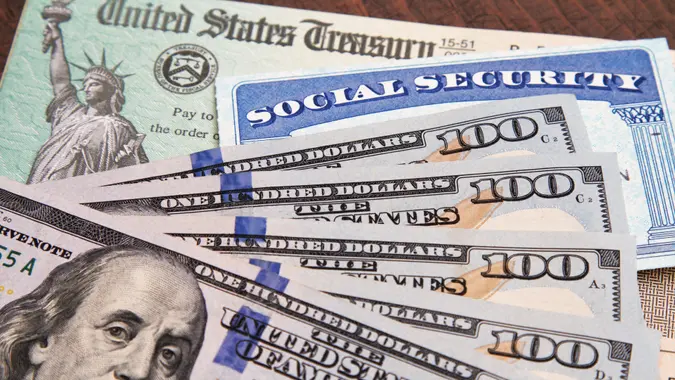
Several factors play a crucial role in determining the amount of retirement savings required for an individual or household, she explained, such as Social Security and pension benefits, investment returns and risk tolerance as well as expected retirement expenses and debt obligations.
“The critical juncture in retirement savings occurs when retirees’ expenses exceed both their income and the planned withdrawals from investments, especially considering a lifespan projected to age 100.”
However, with the golden rule of emergency savings being three to six months’ worth of the costs of your non-negotiable bills, a dip below $100,000 can bode poorly, according to Jeff Rose, CFP and founder of GoodFinancialCents.com.
Ann Martin, director of operations of CreditDonkey, goes with a higher figure, $200,000, factoring in that “many people are living well into their 80s, which is wonderful for longevity but challenging financially.”
Trim the Fat
“The first step is to trim the fat from your budget,” Rose said. “Look at your monthly expenses and cut back on nonessentials. This isn’t about living on ramen noodles — unless you’re into that — but more about distinguishing between wants and needs. Do you really need that cable package, or can you switch to a cheaper streaming service?”
Don’t Make Hasty Decisions
Maintaining composure and refraining from making hasty decisions about investments is also key, Fliss said.
“Retirees may find it beneficial to seek advice from financial advisors or retirement planners who can provide personalized guidance and solutions based on their specific circumstances,” she suggested.
If the drop in savings is due to poor investment performance, retirees should review their investment strategy with a financial advisor, Fliss said. “They may need to rebalance their portfolio or consider safer investment options that prioritize principal protection and minimize risk.”
Do an Expense Analysis
One way to determine your needs is to do an expense analysis by determining your annual living expenses, Rose said.
“This includes regular spending on necessities, discretionary spending and potential future costs like healthcare. The difference between your expenses and fixed income — think Social Security and pension — will help determine how much you need to withdraw from savings each year.”
Rebalance Your Investment Portfolio
If your savings are low, you might need to evaluate or rearrange your investment portfolio, Fliss said, potentially shifting from riskier to safer options, to protect your principal.
“This might involve reallocating assets from high-risk investments, such as stocks, equity mutual funds with high fees or alternative investments to more conservative options like fixed indexed investments, fixed income ETFs, bonds or stable dividend-paying stocks.”
You might also need to increase allocations to cash reserves or money market funds to provide stability and mitigate potential market volatility, Fliss said.
Supplement Your Income
Erika Kullberg, attorney and personal finance expert and founder of Erika.com, suggested that should your savings drop too low, “an option to consider is freelance or part-time work to help supplement your retirement income or perhaps exploring Social Security options to see if you can strategically delay payments to give higher payments later in life.”
Evaluate Withdrawal Strategies
It’s also important to evaluate your withdrawal strategies from retirement accounts such as 401(k)s, IRAs and pension plans, Kullberg said, and consider adjusting your withdrawal rate to minimize your rate of depletion.
“Experts recommend withdrawing 4% of the total in your first year of retirement, then adjusting each year based on inflation.”
Seek Other Forms of Support
If making up the financial difference isn’t an option, consider other avenues, according to True Tamplin, certified educator in personal finance and founder of Finance Strategists.
“Don’t forget to explore government and community resources available for seniors. There might be benefits or assistance programs you weren’t aware of that can help ease financial strains,” Tamplin said.
“Lastly, think about family support. It’s not easy to ask for help, but involving family in financial planning discussions can open up solutions you hadn’t considered.”
While a financial shortfall can feel scary, if you take proactive steps, you can get ahead of it.
More From GOBankingRates
- Nearly 1 in 3 Americans Hit by a Costly Holiday Scam, Norton Survey Shows -- How To Avoid This
- Here's What Retirees Wasted the Most Money On in 2025 -- and How To Avoid It in 2026
- How Middle-Class Earners Are Quietly Becoming Millionaires -- and How You Can, Too
- 6 Safe Accounts Proven to Grow Your Money Up to 13x Faster
Share This Article:
You May Also Like
6 Extremely Simple Ways Young Adults Can Secure a Stress-Free Retirement Starting Now
December 24, 2025
5 min Read
I Asked ChatGPT for Safe and Beautiful Retirement Spots on $2K a Month: These 6 Surprised Me
December 26, 2025
5 min Read
Will Social Security Cuts and Inflation Shrink Your Retirement Benefits? 4 Factors To Consider
December 24, 2025
5 min Read
Greece Tops the List for Affordable Retirement Abroad in 2026: How Much It Costs
December 17, 2025
5 min Read
I Asked ChatGPT To Compare Retiring With $500K vs. $1 Million -- The Difference Is Huge
December 24, 2025
5 min Read
4 New-Year Money Resolutions To Help You Retire Early -- From an Expert Who Actually Did It
December 19, 2025
5 min Read
5 US Cities for Retirees That Are as Cheap as Mexico, Portugal and Costa Rica
December 23, 2025
5 min Read
I Asked ChatGPT How Much Money I'll Need To Retire in 5 Years: Here's What It Said
December 22, 2025
5 min Read
Here's the Salary You Need To Make To Get the Maximum Social Security Benefit
December 23, 2025
5 min Read
90% of Americans Plan To Skip This Social Security Advice -- and It Could Cost Them
December 23, 2025
5 min Read
3 Ways the Trump Administration Can Increase Retirement Costs in the Next 3 Years
December 23, 2025
5 min Read
- How Long Will My Money Last?
- How Much Do You Need To Retire?
- How To Prepare For Retirement
- How To Save For Retirement Without A 401K
Learn More About Early Retirement Planning
Make your money work for you
Get the latest news on investing, money, and more with our free newsletter.
By subscribing, you agree to our Terms of Use and Privacy Policy. Unsubscribe at any time.

Thanks!
You're now subscribed to our newsletter.
Check your inbox for more details.

Sending you timely financial stories that you can bank on.
Sign up for our daily newsletter for the latest financial news and trending topics.
For our full Privacy Policy, click here.
Looks like you're using an adblocker
Please disable your adblocker to enjoy the optimal web experience and access the quality content you appreciate from GOBankingRates.
- AdBlock / uBlock / Brave
- Click the ad blocker extension icon to the right of the address bar
- Disable on this site
- Refresh the page
- Firefox / Edge / DuckDuckGo
- Click on the icon to the left of the address bar
- Disable Tracking Protection
- Refresh the page
- Ghostery
- Click the blue ghost icon to the right of the address bar
- Disable Ad-Blocking, Anti-Tracking, and Never-Consent
- Refresh the page