Spring Grocery Prices Are Up 2.7% — How Trump’s Border Policy Is Driving Costs
 Written by
Heather Altamirano
Written by
Heather Altamirano
 Edited by
Angela Corry
Edited by
Angela Corry
Commitment to Our Readers
GOBankingRates' editorial team is committed to bringing you unbiased reviews and information. We use data-driven methodologies to evaluate financial products and services - our reviews and ratings are not influenced by advertisers. You can read more about our editorial guidelines and our products and services review methodology.

20 Years
Helping You Live Richer

Reviewed
by Experts

Trusted by
Millions of Readers
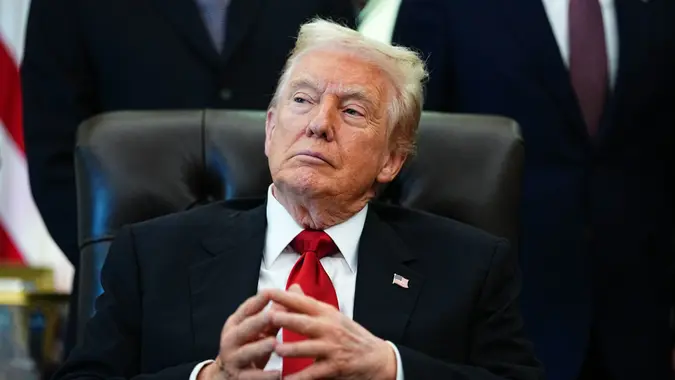
Food prices are rising again, and while there are several reasons for the uptick, President Donald Trump’s border policy is emerging as one of the factors.
The president campaigned on a tighter border and implemented a crackdown on deportation and unauthorized border crossing when he stepped back into office, which has caused a spike in grocery prices. Here’s how.
What’s Actually Happening to Grocery Prices?
Americans have been paying higher food prices again. According to the latest data from the U.S Department of Agriculture, food costs were 2.7% higher in March 2026 than in March 2025. Additionally, food prices are expected to rise 2.9%, per the USDA. The extra difference you’re paying is due to a combination of reasons.
- Higher labor costs and a shortage of agricultural workers.
- Extreme weather and livestock diseases.
- Iran conflict-the closure of the Strait of Hormuz caused fuel, transportation and fertilizer prices to soar.
The first factor, labor, is where Trump’s immigration policy comes into play.
How Trump’s Border and Immigration Policies Affect Food Costs
Farmers are typically dependent on immigrant workers, including undocumented labor, which accounts for nearly 50%, according to the USDA. With the labor pool drastically cut by government policy, higher prices emerge because there are fewer workers, production becomes more expensive and supply tightens.
Under Trump’s policy, three things are happening at once that are contributing to pressure on grocery prices:
1. Mass deportations
Raids and aggressive enforcement of the policy have removed or scared off farm workers, causing shortages across farming, dairy, seafood and food processing, The Guardian reported. There’s no concrete figure for how many agricultural workers have been deported; however, Axios reported that 442,000 people were deported in fiscal year 2025, though not all worked in food-related industries.
2. Labor shortages
The mass deportation has pushed farmers to the breaking point. The U.S. Labor Department itself has warned that the “near total cessation of the inflow of illegal aliens” is threatening “the stability of domestic food production and prices for U.S. consumers.”
Additionally, former USDA officials wrote a letter detailing how the policy is “wreaking havoc” on dairy, fruit and produce and meat processing, causing food to go to waste and “driving up food costs for consumers,” which was reported in the New York Times.
3. Policy whiplash on the legal guest-worker program (H-2A)
While undocumented laborers are being deported, the administration has made changes to the H-2A visa program to make it easier and less expensive for farms to hire temporary foreign labor. However, the Economic Policy Institute notes that farmers could lose as much as $3 billion in annual revenue because suppressed wages don’t address shortages.
This matters because the mix of policies directly affects how much food gets produced, how reliably it reaches stores, and what you pay for it.
Bottom Line
While Trump’s immigration policy isn’t the only contributing factor to sticker shock at the grocery store, it’s not helping.
Editor’s note on political coverage: GOBankingRates is nonpartisan and strives to cover all aspects of the economy objectively and present balanced reports on politically focused finance stories. You can find more coverage of this topic on GOBankingRates.com.
More From GoBankingRates