I’m a Real Estate Expert: 6 Places To Avoid Buying a Townhouse in 2026
 Written by
Nicole Spector
Written by
Nicole Spector
 Edited by
Jenna Klaverweiden
Edited by
Jenna Klaverweiden
Commitment to Our Readers
GOBankingRates' editorial team is committed to bringing you unbiased reviews and information. We use data-driven methodologies to evaluate financial products and services - our reviews and ratings are not influenced by advertisers. You can read more about our editorial guidelines and our products and services review methodology.

20 Years
Helping You Live Richer

Reviewed
by Experts

Trusted by
Millions of Readers
Have you noticed more and more townhouses hitting the market in various U.S. cities? It’s not your imagination. Active listings climbed in 2025, and in some regions, townhouse inventory is growing. If you’re looking to buy a home but can’t afford (or don’t want the financial commitment of) a single-family house, a townhouse can be the ideal choice, especially if you want to live in a popular city with higher-than-average cost of living.
A townhouse may be the right option for you, but is it the right investment for you? When purchasing property, you have to carefully consider your location and think big picture to avoid making a massive decision you’ll one day regret. GOBankingRates talked to two real estate experts to find out what places you should avoid buying a townhouse in 2026.
1. San Francisco
San Francisco is one of the most expensive cities in the U.S. Housing is an unfathomable fortune (think $1.3 million for a townhouse that doesn’t even span 1,500 square feet). And it might not be worth it.
“Housing fundamentals have softened as the technology sector loses some of its momentum and people leave for lower-cost areas,” Ryan Wright, a real estate investor and CEO of The Investor’s Edge, said of San Francisco. “Townhomes appreciate less quickly than single-family homes when demand falls.”
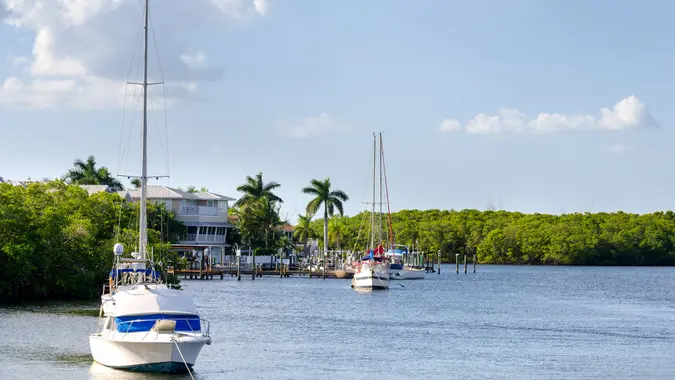
2. Cape Coral/Southwest Florida
Thinking of buying a townhouse for a Florida retirement this year? Think again.
“This market has gone from pandemic over-expansion to oversupply, high insurance costs and slow demand,” Wright said. “Townhomes are likely to suffer longer vacancies and lethargic resales as the supply continues to build.”
3. Phoenix
Wright also sees momentum dying down in Phoenix too.
“The pandemic-fueled growth is slowing, and supplies are outpacing demand, leading to softer pricing and longer lease times for townhouse projects,” he said.
4. Nashville, Tennessee
Over in Nashville, a townhouse isn’t the smartest long-term investment in 2026.
“A strong growth has cooled, and increasing expenses are making townhomes less liquid, leading to longer holds and a slower appreciation for buyers,” Wright said.
5. Baltimore
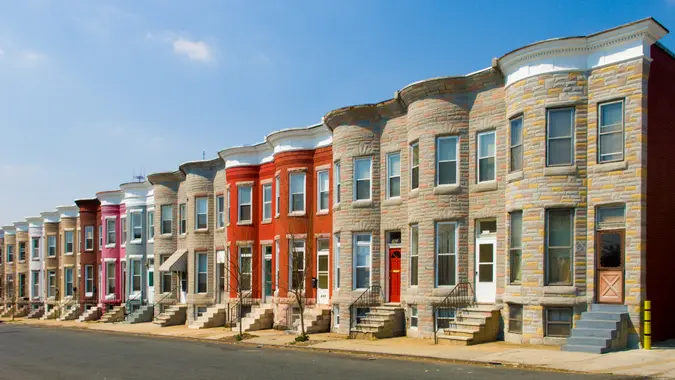
You have to think about not only affordability but livability factors like crime. Take Baltimore, for example. “Higher crime levels, slower-growing prices and higher taxes and insurance make investing in townhomes riskier than single-family homes,” Wright said.
6. Austin
During the peak of the pandemic, when remote work became, for many, a way of life, homebuyers flocked to Texas. Austin saw a huge influx of residents. Despite its growing popularity as a place to call home, townhouses in Austin aren’t looking like a smart buy in 2026. The problem here is oversupply.
“I’d advise clients in Austin to steer clear of townhomes in certain corridors,” said Levi Rodgers, real estate broker and founder of VA Loan Network in San Antonio. “There has been a huge spate of townhome builds in certain areas of town on the outskirts, where developers have tried to quickly exploit first-time homebuyer interest, so those neighborhoods have developed opportunistic oversupply, where dwellings sit long enough to have had multiple price chops.”
More From GOBankingRates