New Federal-Style Retirement Plan With a $1K Match: Who Could Qualify and How Much It Might Add to Your Nest Egg
 Written by
Gabriel Vito
Written by
Gabriel Vito
 Edited by
Jenna Klaverweiden
Edited by
Jenna Klaverweiden
Commitment to Our Readers
GOBankingRates' editorial team is committed to bringing you unbiased reviews and information. We use data-driven methodologies to evaluate financial products and services - our reviews and ratings are not influenced by advertisers. You can read more about our editorial guidelines and our products and services review methodology.

20 Years
Helping You Live Richer

Reviewed
by Experts

Trusted by
Millions of Readers
Workers without employer retirement plans could soon get help building their savings.
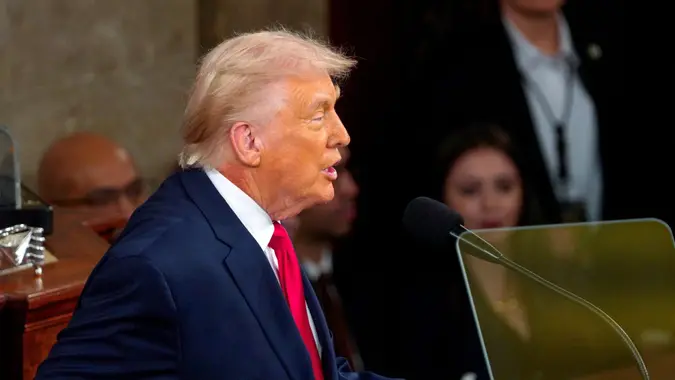
During his State of the Union address, President Donald Trump announced a proposal to offer a federal-style retirement account with a government match of up to $1,000 per year.
“Half of all of working Americans still do not have access to a retirement plan with matching contributions from an employer,” Trump said. “To remedy this gross disparity, I’m announcing that next year my administration will give these oft-forgotten American workers … access to the same type of retirement plan offered to every federal worker. We will match your contribution with up to $1,000 each year.”
For workers who save on their own, that match could mean extra money annually toward retirement.
Who Could Qualify
The proposal targets workers whose employers do not offer retirement plans. That group could include freelancers, gig workers, part-time employees and small-business workers.
About 56 million workers lack access to employer-sponsored retirement plans, according to The Pew Charitable Trusts.
Without payroll deductions or employer matches, many workers struggle to save consistently. Pew research shows workers are more likely to save when contributions happen automatically through their paychecks.
How the Match Could Work
Full program details have not been released. Trump said the government would match contributions up to $1,000 each year.
Axios reported that the White House said the proposal would expand on the SECURE 2.0 Act, which created a federal saver’s match program scheduled to begin in 2027.
If the program follows common matching structures, savers would need to contribute their own money to receive the full match.
How Much It Could Add to Your Retirement
A $1,000 annual match could make a meaningful difference over time.
Twenty years of full matches would equal $20,000 in government contributions alone. With investment growth, that amount could grow significantly and help boost a worker’s retirement nest egg. Even modest matches can encourage participation.
What To Watch
Key details remain unclear, including eligibility rules and rollout timing.
If implemented, the plan could give millions of workers a simpler way to start saving and build long-term financial security.
Editor’s note on political coverage: GOBankingRates is nonpartisan and strives to cover all aspects of the economy objectively and present balanced reports on politically focused finance stories. You can find more coverage of this topic on GOBankingRates.com.
More From GOBankingRates