Why Downsizing No Longer Saves Money — and What Retirees Can Do Instead
 Written by
John Csiszar
Written by
John Csiszar
 Edited by
Nick Friedman
Edited by
Nick Friedman

Commitment to Our Readers
GOBankingRates' editorial team is committed to bringing you unbiased reviews and information. We use data-driven methodologies to evaluate financial products and services - our reviews and ratings are not influenced by advertisers. You can read more about our editorial guidelines and our products and services review methodology.

20 Years
Helping You Live Richer

Reviewed
by Experts

Trusted by
Millions of Readers
Downsizing was always a popular option in the senior toolbox, but thanks to persistently high mortgage rates, it no longer saves most retirees money.
Selling the big family house, moving to something smaller and unlocking equity was always the path to lower monthly costs. Today, that math simply doesn’t add up.
The Mortgage Dilemma
According to the Mortgage Bankers Association, the national median mortgage payment reached $2,061 in February 2026. Per data from the Federal Reserve, the culprits are average home prices, which have risen roughly 30% since 2020, and a 30-year mortgage rate still hovering around 6.37%.
Whether you paid off your home, have a low mortgage balance or purchased during the price declines of 2020, taking on a new mortgage today will likely result in a higher monthly payment, even on a smaller property. That’s not the type of downsizing that retirees can look forward to.
Alternatives to Downsizing
When it comes to finances, there are always options. But in the current market environment, retirees might have to think outside the box. Here are some options for financial relief that avoid dramatic changes like moving to another state.
Rent Instead of Buy
Renting can make more sense than buying, especially for seniors. In addition to potentially reducing your monthly payment, you can also avoid ancillary costs like property taxes, homeowners’ association (HOA) fees, maintenance and repairs.
On a national basis, monthly rent averages just $1,740 per month according to RentCafe, a figure that might be significantly lower than your current all-in homeowner expenses.
Accessory Dwelling Units
Accessory dwelling units (ADU) offer a variety of benefits, according to AARP, but one of the most important might be the ability to generate income for seniors. Renting out an ADU can help create more financial margin in retiree budgets, allowing them to stay in their own home while saving additional money.
Multigenerational Living
Sharing housing costs with adult children or other family members has become an increasingly practical solution that benefits multiple generations simultaneously. Harvard University’s Joint Center for Housing Studies touts both financial and emotional upside, potentially boosting even health and satisfaction for older adults.
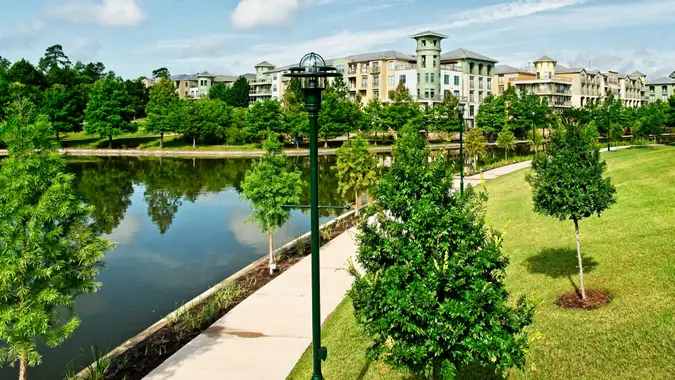
55-Plus Communities
Communities built for those 55 and up provide features specifically designed for older adults. According to Rocket Mortgage, these can include accessible buildings, on-site health facilities and add-on services like meal delivery, housekeeping and transportation.
They also typically offer community events and services that address the social aspect of getting older as well. Financially, they substitute mortgage and homeowner expenses with a simple monthly rental payment, potentially boosting cash reserves for retirees.
Final Take To GO
When you look at all of these options, the pattern is clear. In a high-rate environment, the goal shouldn’t necessarily be finding a smaller mortgage. It might be eliminating the mortgage payment altogether. For retirees focused on cash flow, that shift in thinking could open up more options than traditional downsizing ever would.
More From GoBankingRates