Trump’s Tariff Revenues Just Crashed by $3B: 5 Everyday Items That Will Cost Less
 Written by
Travis Woods
Written by
Travis Woods
 Edited by
Rebekah Evans
Edited by
Rebekah Evans
Commitment to Our Readers
GOBankingRates' editorial team is committed to bringing you unbiased reviews and information. We use data-driven methodologies to evaluate financial products and services - our reviews and ratings are not influenced by advertisers. You can read more about our editorial guidelines and our products and services review methodology.

20 Years
Helping You Live Richer

Reviewed
by Experts

Trusted by
Millions of Readers
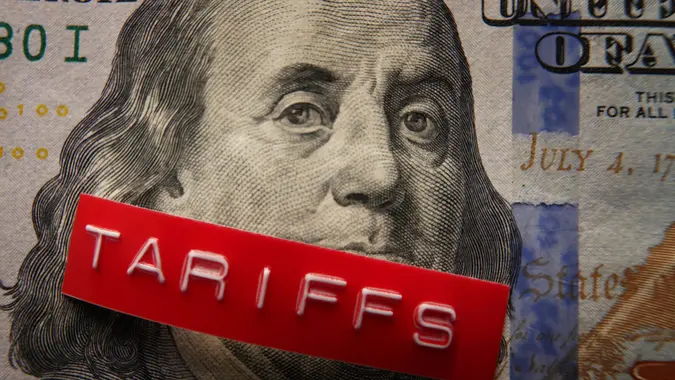
President Donald Trump’s controversial tariff profits data. As reported by Yahoo Finance, America collected approximately $27.9 billion worth of tariff revenues in December, which was down from $30.8 billion in November — that’s a steep drop of nearly 10%.
While 2025’s tariff revenues soared to new levels overall (setting a record of $264 billion, up from the $79 billion collected in 2024 before President Trump’s aggressive tariff policy was enacted), the December numbers indicate a larger trend downward in Trump’s tariffs. This downturn follows Trump’s decision in the fall of 2025 to ease and roll back certain tariffs and the overall decrease in tariff revenues could cause everyday items to increase in cost as markets continue to adjust.
Even though a drop in tariff revenues doesn’t directly impact prices on consumer goods, such a slowdown does signal that import volumes are decreasing and tariff rates are adjusting and that can change the prices of everyday goods. A general trend to be expected from the rolled back tariffs is lower inflationary pressure on retail prices. As such, here are everyday items that may begin to cost less.
Trump Wants To Replace Income Taxes With Tariffs: 2 Impacts on the Middle Class
Rolled Back Tariffs: 5 Everyday Items That Will Cost Less
- Clothing and Apparel: Costs of clothing may decrease — or, at the very least, rise more slowly — if tariffs decrease and continue to be rolled back. Previously, tariffs had increased clothing prices.
- Smartphones and Electronics: Reduced tariff pricing could ease upward pressure on smartphone costs.
- Toys: Prices could stabilize or rise at a slower rate in the face of a tariffs downturn.
- Furniture: Imported furniture could also see slower price increases.
- Shoes and Footwear: Much like clothing, prices could react to tariff changes by reducing or at least growing at a far slower rate.
Editor’s note on political coverage: GOBankingRates is nonpartisan and strives to cover all aspects of the economy objectively and present balanced reports on politically focused finance stories. You can find more coverage of this topic on GOBankingRates.com.
More From GOBankingRates