What AI Predicts About the Future of Inflation — and Your Wallet
 Written by
Dawn Allcot
Written by
Dawn Allcot
 Edited by
Jenna Klaverweiden
Edited by
Jenna Klaverweiden
Commitment to Our Readers
GOBankingRates' editorial team is committed to bringing you unbiased reviews and information. We use data-driven methodologies to evaluate financial products and services - our reviews and ratings are not influenced by advertisers. You can read more about our editorial guidelines and our products and services review methodology.

20 Years
Helping You Live Richer

Reviewed
by Experts

Trusted by
Millions of Readers
Artificial intelligence (AI) isn’t always right about everything. It can shift from annoyingly condescending to being your greatest “yes-man,” depending on the platform you choose. Plus, it’s still prone to hallucinations, although it’s improving and not fabricating sources as frequently.
Given the skillset and limitations of generative AI platforms like ChatGPT and Claude, can you use them to check the pulse of the economy and predictably forecast things like inflation? GOBankingRates asked ChatGPT and Claude: “What do you predict for the future of inflation and people’s wallets, short term over three months and then six months and then a year? Keep it relatable but back up your information with sources and facts.”
Here’s a summary of their responses, what they got right and what landed off the mark.
Also see three things inflation will make much more expensive in 2026.
Near-Term Predictions
Both ChatGPT and Claude quoted recent consumer price index data of 2.7%, noting that this is above the U.S. Federal Reserve target rate of 2%.
“Prices are still climbing each year, but not at the double-digit pace seen in 2022-23,” ChatGPT said. “Your groceries, rent and bills are still more expensive than pre-pandemic, but the rate of price increases has slowed significantly.”
ChatGPT noted that Fed’s decision to keep interest rates stable in January 2026 is another marker that inflation hasn’t cooled as much as the Fed would like.
“Your wallet will likely feel continued pressure,” Claude said, blaming tariffs as “the biggest culprit” in inflation. “Think of everyday items: furniture, appliances, electronics and clothing are all getting more expensive. Many businesses stockpiled goods before tariffs hit, but those inventories are running out, meaning price increases are coming as they restock at higher costs,” Claude said.
What Experts Say
Various online sources note that tariffs had only a “moderate” impact on prices in 2025. “When you look at what the tariffs have done, they’ve raised about $300 billion in revenue, they’ve helped close the budget deficit, and yes, they’ve probably raised the prices of goods a bit, but it hasn’t been nearly as impactful as most people thought,” Commerce Bank chief economist Scott Colbert told local NBC affiliate Wood TV in Grand Rapids, Michigan.
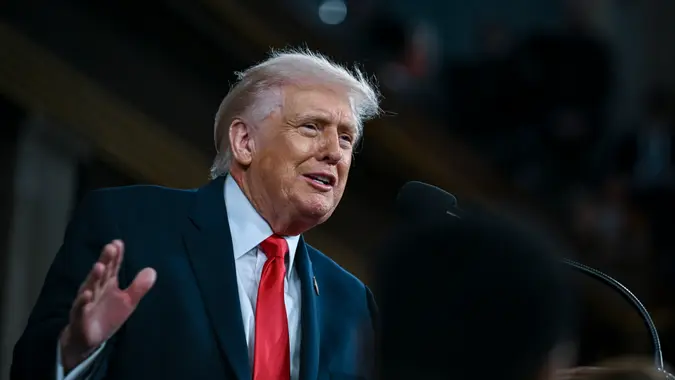
There’s also a chance many of the tariffs won’t stick, CNN reported. First, there’s a possibility President Donald Trump may back down on tariff policies, which he’s done before through carve-outs and exemptions. The Supreme Court could also overturn some of Trump’s tariffs. Finally, business owners could decide to eat costs again, sacrificing margins for sales as Americans struggle with managing rising costs and may put off purchases like new vehicles, appliances and furniture.
Inflation: Six Months Down the Line
Claude predicted that inflation costs could peak through July 2026. “Spring and summer 2026 could be the toughest period for your budget,” it said. It attributed the inflation to tariffs.
ChatGPT disagreed, saying, “Most professional forecasts see inflation drifting down further, but not getting all the way back to the Fed’s 2 % target by mid-year.” It did acknowledge potential upside risks from tariffs “that could keep price pressures a bit higher.”
It also highlighted consumer spending and wages. “Consumer spending may decelerate if wage gains don’t keep pace with lingering costs, especially for essentials.” This, in turn, could slow inflation.
The bottom line from ChatGPT? “Six months from now, daily expenses should feel a bit more stable than a year ago, but costs haven’t collapsed, and borrowing costs may be sticky,” it said.
What Experts Say
Experts online toed the line between Claude’s pessimism and ChatGPT’s cautious optimism.
“Our view is that inflation will surprise to the downside in 2026,” Longview Economics global economist and chief market strategist Chris Watling told Yahoo Finance. Experts attribute “cheap oil prices” and “easing shelter costs” as a sign inflation might cool mid-year, according to Yahoo Finance.
One-Year Forecasts
Once again, ChatGPT was optimistic about inflation through the end of 2026, pointing out that some forecasts show inflation cooling to 2.4% by year-end.
However, it said, “If inflation stays above 2%, it continues to erode purchasing power slowly — you get a little less goods and services for the same dollar over time … Meaningful relief for cost pressures is possible but not dramatic.”
Claude pulled from the same J.P. Morgan source as ChatGPT, citing inflation at roughly 2.4% by the end of 2026.
“You should see some relief, but it’ll be modest … The reality is that even at 2.4% to 2.8% inflation by year’s end, your purchasing power won’t suddenly bounce back. Prices that went up won’t come back down — they’ll just stop rising as fast. Wages will need to outpace inflation for a sustained period before households feel they are getting ahead New York Fed, and we’re not quite there yet by December 2026.”
Claude echoed ChatGPT: “By late 2026, you’ll likely feel things stabilizing rather than improving dramatically. The squeeze will ease, but you won’t forget it.”
What Experts Say
The one-year forecast was well-sourced by both platforms, so the AI predictions were in line with media sources. For instance, J.P. Morgan predicted that inflation could drift down to 2.4% by the fourth quarter of 2026.
Editor’s note on political coverage: GOBankingRates is nonpartisan and strives to cover all aspects of the economy objectively and present balanced reports on politically focused finance stories. You can find more coverage of this topic on GOBankingRates.com.
More From GOBankingRates