Advertiser Disclosure
GOBankingRates works with many financial advertisers to showcase their products and services to our audiences. These brands compensate us to advertise their products in ads across our site. This compensation may impact how and where products appear on this site. We are not a comparison-tool and these offers do not represent all available deposit, investment, loan or credit products.
6 Expensive Beach Towns You May Not Want To Consider for Retirement
Written by
Jennifer Taylor
Edited by
Chris Cluff

Commitment to Our Readers
GOBankingRates' editorial team is committed to bringing you unbiased reviews and information. We use data-driven methodologies to evaluate financial products and services - our reviews and ratings are not influenced by advertisers. You can read more about our editorial guidelines and our products and services review methodology.
20 YearsHelping You Live Richer
Reviewed by Experts
Trusted by Millions of Readers
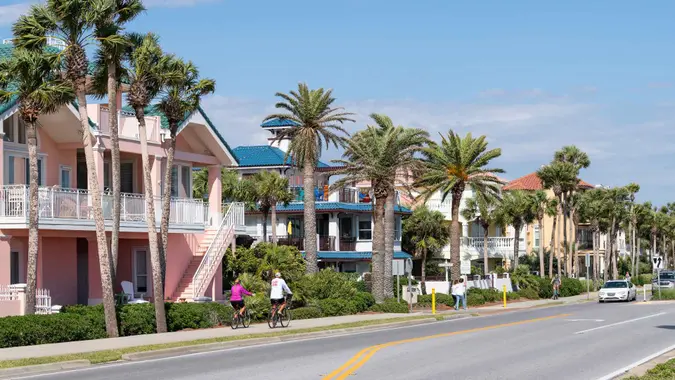
If you’re like many people, you’re thinking about spending your golden years on the beach. However, maybe think twice about which beach town you set your sights on once you reach retirement age.
While all beach towns have sand and the ocean in common, living in some comes with a much higher price tag than others. Whether you’re retiring in a few years or decades, it’s never too early to start figuring out which towns are too expensive to be considered as your future locale.
According to Zillow, the average U.S. home value is $347,716. It’s probably not surprising that many beach towns have a much higher average home value, but there’s plenty left around this mark.
It’s possible your first — or even first several — choice beach town won’t be a realistic choice for your budget. Therefore, it’s important to be as flexible as possible, as this will increase your chances of making your dream of retiring at the beach a reality.
Of course, housing prices aren’t the only value to look at when searching for beach towns to move to. You’ll want to gauge the total cost of living in the area — i.e., food, utilities, transportation, healthcare and entertainment — to understand whether the town would best fit your retirement budget.
There’s no time like the present to start preparing for your retirement at the beach. To help you do so realistically, here’s a look at six expensive beach towns you might want to cross off your list, along with alternatives to consider.
Malibu, California
- Average Home Value: $3.5 million
Whether you’re a Los Angeles resident hoping to retire local or simply want to enjoy the California dream from one of the state’s most famous beach cities, Malibu isn’t the most economical choice.
“Malibu is renowned for its affluent neighborhoods, celebrity residents and exclusive beachfront properties, resulting in sky-high housing prices and a high cost of living,” said Mehdi Khachani, co-founder and CEO at Miami Beach-based JMK Property Management.
If you have your mind set on a Southern California beach town, there are other, somewhat more affordable options.
Alternative: “Consider Oceanside, California, which offers a more affordable coastal lifestyle while still providing beautiful beaches and a range of amenities,” Khachani said.The average home value in Oceanside is $850,185.
Palm Beach, Florida
- Average Home Value: $2.1 million
“Palm Beach is synonymous with luxury living, upscale shopping and multimillion-dollar estates, driving up property prices and the cost of living,” said Khachani.
There’s no need to get discouraged because Florida has other affordable options on the Atlantic Ocean.
Alternative: “Look into Vero Beach, Florida, which provides a more budget-friendly option with a laid-back atmosphere, beautiful beaches and a lower cost of living,” said Khachani.
The average home value in Vero Beach is $371,903.
Maui, Hawaii
- Average Home Value: $1 million
Wanting to retire in Maui is understandable, but it might not make sense financially.
“Maui’s stunning landscapes, world-class resorts and high demand from tourists and wealthy buyers contribute to its expensive real estate market and high cost of living,” Khachani said.
However, you don’t have to give up your dream of retiring to a Hawaiian paradise.
Alternative: “Consider Hilo, Hawaii, located on the Big Island, which offers a more affordable option with a slower pace of life, lush surroundings, and access to beautiful beaches,” he said.
The average home value in Hilo is $490,904.
Martha’s Vineyard, Massachusetts
- Average Home Value: $1.5 million (Dukes County)
If a beach town in a year-round climate isn’t your ideal spot, you might have your sights set on Martha’s Vineyard.
“Martha’s Vineyard is a popular summer destination known for its upscale communities, historic charm and exclusive atmosphere, resulting in pricey real estate and a high cost of living,” said Khachani.
If Martha’s Vineyard isn’t in your budget, he said another nearby beach town might be a better fit.
Alternative: “Look into Cape Cod, Massachusetts, which offers a more affordable beach lifestyle with picturesque coastal towns, scenic beaches and a variety of recreational activities,” said Khachani.The average home value in Cape Cod (Barnstable County) is $695,447.
Sanibel Island, Florida
- Average Home Value: $961,909
“Sanibel Island’s pristine beaches, abundant wildlife and tranquil setting make it a desirable destination for retirees, driving up property prices and the cost of living,” Khachani said.
If you’re willing to move to the northeast side of the state instead, he recommended another chic, yet more affordable, option.
Alternative: “Consider St. Augustine Beach, Florida, which offers a more affordable option with historic charm, beautiful beaches and a range of amenities suitable for retirees,” Khachani said.
The average home value in St. Augustine is $451,076.
Marco Island, Florida
- Average Home Value: $920,536
Located in South Florida, Marco Island offers warm beaches, waterfront dining, high-end shopping and a plethora of golf courses — just to name a few of its many benefits. The largest of the Ten Thousand Islands, this Paradise Coast enclave is located on the Gulf Coast entrance to Everglades National Park.
Unfortunately, living on this chic island isn’t exactly cheap, but there’s another great option up the coast.
Alternative: Just over two hours north, the Sarasota coastline is home to six islands, meaning you’ll have your choice of beaches. Rich in culture, there’s also a plethora of museums, art galleries and performing arts venues, guaranteeing you’ll never be bored.
The average home value in Sarasota is $459,013.
Share This Article:
You May Also Like
Social Security's Max Benefit for Everyone 62 to 70 for the Rest of 2026
February 04, 2026
6 min Read
5 Ways Your Retirement Could Be Impacted by the End of Trump's Second Term
February 03, 2026
6 min Read
Would Trump's Australian-Style Retirement Be Better or Worse Than the U.S. Plan?
January 30, 2026
6 min Read
I'm a Certified Financial Planner: Here are 5 Best Retirement Perks You May Not Know You Qualify for
February 02, 2026
6 min Read
90% of Americans Plan To Skip This Social Security Advice -- and It Could Cost Them
February 03, 2026
6 min Read
Top 5 Things Boomers Should Always Sell in Retirement -- Even If It's Begrudgingly
February 03, 2026
6 min Read
I Asked ChatGPT for Safe and Beautiful Retirement Spots on $3,500 a Month -- These 10 Were the Best
February 02, 2026
6 min Read
How Much the Average Upper-Class Retiree Claims in Social Security Benefits at Age 65
February 02, 2026
6 min Read
Why Retirees Are Leaving 'Cheap' States -- and Where They're Going Instead
February 03, 2026
6 min Read
Kevin O'Leary's Top 5 Tips That Will Save Retirees From Financial Disaster
February 02, 2026
6 min Read
Robert Kiyosaki's Top 4 'Encore Careers' To Supercharge Your Retirement Years
February 03, 2026
6 min Read
- How Long Will My Money Last?
- How Much Do You Need To Retire?
- How To Prepare For Retirement
- How To Save For Retirement Without A 401K
Learn More About Early Retirement Planning
Make your money work for you
Get the latest news on investing, money, and more with our free newsletter.
By subscribing, you agree to our Terms of Use and Privacy Policy. Unsubscribe at any time.

Thanks!
You're now subscribed to our newsletter.
Check your inbox for more details.

Sending you timely financial stories that you can bank on.
Sign up for our daily newsletter for the latest financial news and trending topics.
For our full Privacy Policy, click here.
Looks like you're using an adblocker
Please disable your adblocker to enjoy the optimal web experience and access the quality content you appreciate from GOBankingRates.
- AdBlock / uBlock / Brave
- Click the ad blocker extension icon to the right of the address bar
- Disable on this site
- Refresh the page
- Firefox / Edge / DuckDuckGo
- Click on the icon to the left of the address bar
- Disable Tracking Protection
- Refresh the page
- Ghostery
- Click the blue ghost icon to the right of the address bar
- Disable Ad-Blocking, Anti-Tracking, and Never-Consent
- Refresh the page