6 Reasons Your Tax Refund Could Be Higher in 2026
 Written by
Caitlyn Moorhead
Written by
Caitlyn Moorhead
 Edited by
Gary Dudak
Edited by
Gary Dudak

Commitment to Our Readers
GOBankingRates' editorial team is committed to bringing you unbiased reviews and information. We use data-driven methodologies to evaluate financial products and services - our reviews and ratings are not influenced by advertisers. You can read more about our editorial guidelines and our products and services review methodology.

20 Years
Helping You Live Richer

Reviewed
by Experts

Trusted by
Millions of Readers
Tax refunds can feel like the reward for the hassle of living in America and filing your taxes, but you may forget that this is not extra money coming back to you. Instead, it is your own money that, in essence, you overpaid (or under-deducted) to the government.
In fact, a big tax refund might actually be a sign of financial changes you need to make with your accountant, but who doesn’t like getting money back instead of paying it out? With that mindset, here are six reasons why your tax refund could be higher in 2026 for tax year 2025.
1. If You Earned the Same (or Less) Income as Last Year
A common reason you might wind up with more money back this year is if you earned the same, or even less, income. That’s because there are inflationary adjustments that occur to the tax rates, brackets and deductions. Nearly everything in the tax code, like clockwork, is scheduled to increase on an annual basis with inflation.
If you don’t make any more income in 2026 compared to 2025, you’ll actually pay less in taxes and get a bigger refund, thanks to deductions generally going up.
2. If You Made Increased Contributions to Retirement Accounts
Your refund might be higher if you made any increased contributions to tax-advantaged retirement accounts, such as a 401(k) or a Roth IRA. In general, the federal government provides these kinds of deductions to incentivize people to protect their financial security in retirement.
3. If You Take Self-Employment Deductions
The self-employed small-business person or independent contractor is entitled to take a variety of deductions for reasonable business expenses and operations. While you want to work with a CPA to make sure you’re doing this correctly, if you had greater expenses or discovered new deductions you’re eligible for, this could reduce your taxable income and potentially lead to you seeing a much higher return.
4. If You Qualify for Tax Credits
Tax credits change with different White House administrations, so you may have new ones this year or lose ones you had last year. For example, you could have tax credits for installing efficient furnaces and air conditioning units and solar panels on your house, or not get one this year for buying an electric car.
Additionally, there are credits such as the earned income tax credit and others for people who may need a bit more help, along with credits for parents and caretakers.
5. If You Made Charitable Contributions
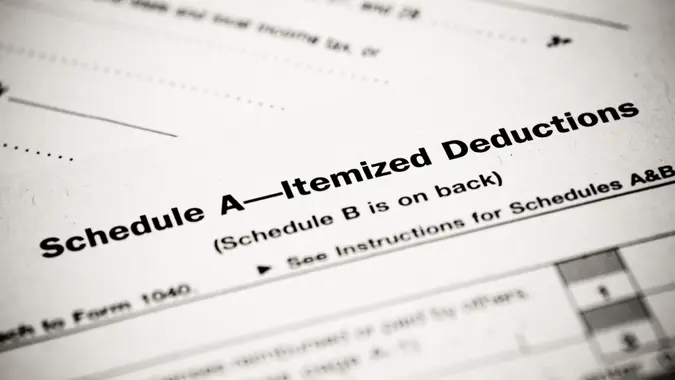
Charitable contributions, either in the form of a cash donation or an “in-kind” donation (i.e., you donate clothing to your local Goodwill) can be deducted from your tax return if you itemize deductions and file a Schedule A. This type of filing is typically only if you have large medical expenses and/or own a home where you have interest deductions, and differs from a Schedule C, which is what self-employed people and independent contractors file to itemize their deductions.
6. If You Lost Money on Stocks
If you have taxable investment accounts that are not retirement accounts with investments in stocks, bonds or mutual funds, and any of your investments have lost value throughout the year, this could actually help you get more money back from the government. For example, if you sold a bad stock in 2025, you can take the loss and offset any gains or capital gains that may come out of some of your other investments, which is known as tax-loss harvesting.
Final Take To GO: Why a Tax Refund Isn’t Always Good News
While one or more of these options may lead to a bigger tax refund, it isn’t because your CPA has been really creative with your overall tax situation, but rather because you have withheld more than you needed to out of your paycheck. Though it would be nice if these refunds were just checks from the IRS for being a good citizen, what is really happening is that you’ve given the government an interest-free loan.
On the flipside, if you think you might have spent any extra money from your paycheck if you saw it in your bank account throughout the year, look at a tax refund as a kind of forced savings. Likewise, if you use your tax refund to achieve a major goal, such as funding an IRA or a child’s college fund, then that “interest-free loan” to the government may not be such a bad thing.
Caitlyn Moorhead contributed to the reporting for this article.
More From GoBankingRates