Jamie Dimon Says These 3 Factors Will Alter the Economy in 2026
 Written by
Sean Bryant
Written by
Sean Bryant
 Edited by
Rebekah Evans
Edited by
Rebekah Evans

Commitment to Our Readers
GOBankingRates' editorial team is committed to bringing you unbiased reviews and information. We use data-driven methodologies to evaluate financial products and services - our reviews and ratings are not influenced by advertisers. You can read more about our editorial guidelines and our products and services review methodology.

20 Years
Helping You Live Richer

Reviewed
by Experts

Trusted by
Millions of Readers
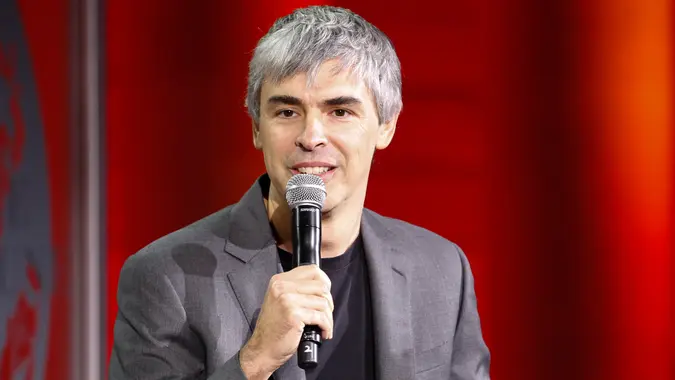
JPMorgan Chase CEO Jamie Dimon is once again urging investors not to get too comfortable.
And, yes, while the U.S. economy has shown surprising resilience post-COVID, Dimon warned that a recession “could happen in 2026” despite this all and stresses that he prefers to hope for the best and plan for the worst, per Visionary CIOs.
He said the following three factors that are set to collide and reshape the economy over the next year or two.
Inflation and Deficits
Dimon’s first concern is that the current environment is “all inflationary,” according to the Stanford Institute for Economic Policy Research (SIEPR).
He doesn’t mince words about what’s keeping prices stubbornly high, pointing to Washington’s ballooning deficits, insanely high real estate and asset values and billions in pandemic-era cash that continues to circulate. All of which keeps upward pressure on prices.
It doesn’t help that there are currently trade tensions between several countries, plus a Congress that’s seemingly stuck in perpetual gridlock, which is more noticeable than ever after the longest government shutdown in U.S. history.
But in other words, instead of returning to the ultra-low rates of the 2010s, the U.S. may be settling into a period where borrowing simply costs more, not because the Fed wants it that way, but because the underlying conditions demand it.
Dimon has also repeatedly warned that inflation may get “stuck” around 3% or higher, preventing the Federal Reserve from slashing interest rates as deeply as markets expect, as reported by Markets.com.
Geopolitics and Policy Mistakes
Tariffs and trade wars are inflationary, adding cost to goods and disrupting supply chains. Rising geopolitical tensions and the need for greater defense spending are another source of long-term inflation pressure.
On the domestic side of things, Dimon is critical of anti-business policies and heavy regulation, saying that if they continue, the U.S. could drift more toward a “European-style economic decline” with weaker growth and fewer opportunities.
The Unknown Effect of AI Productivity
Dimon is one of the most vocal large-bank CEOs talking about the transformative potential of artificial intelligence (AI), arguing that AI is not a bubble (per Business Insider) and will eventually reshape “every application, every job, every customer interface,” by shortening the workweek to just 3.5 days, as reported by Fortune.
This may sound exciting and wonderful, but the road to 2026 is paved with expensive risks. The “AI Supercycle” needs trillions in capital expenditure for data centers and energy grids.
JPMorgan is already spending around $2 billion a year on AI, according to The NY Post — using hundreds of use cases that boost efficiency in areas like risk management and software engineering.
Dimon and other leaders see AI as a powerful growth engine, but they also have acknowledged it will disrupt jobs and change wage patterns, which could feed back into both inflation and politics.
Are We Heading Towards a Recession?
What’s going to happen in 2026? That is the million-dollar question. Dimon has often reminded audiences that forecasting turning points is “very complex” and that most people only recognize them in hindsight.
Still, there is something to be said about the current state of the economy and how likely it is to recover.
And then, throw AI into the mix. Now you have a disruptive force that could either cushion the blow or accelerate the very instability economists are worried about.
Need a little extra breathing room in your budget? MoneyLion, a sister company of GOBankingRates, is giving away $2,000 a day through Jan. 24, 2026. Sign up here and see if a cash boost is in your future.
Editor’s note on political coverage: GOBankingRates is nonpartisan and strives to cover all aspects of the economy objectively and present balanced reports on politically focused finance stories. You can find more coverage of this topic on GOBankingRates.com.
More From GOBankingRates