Why Your Zip Code May Matter More Than Your Salary
 Written by
John Csiszar
Written by
John Csiszar
 Edited by
Amen Oyiboke
Edited by
Amen Oyiboke

Commitment to Our Readers
GOBankingRates' editorial team is committed to bringing you unbiased reviews and information. We use data-driven methodologies to evaluate financial products and services - our reviews and ratings are not influenced by advertisers. You can read more about our editorial guidelines and our products and services review methodology.

20 Years
Helping You Live Richer

Reviewed
by Experts

Trusted by
Millions of Readers
When it comes to financial well-being, your income is only part of the story. Government data from the Bureau of Economic Analysis and the U.S. Treasury Department, among others, shows that the ZIP code where you live can influence your financial success as much as, or even more than, your salary.
That’s because what matters most for financial security is not income itself, but the amount of money you have left after covering expenses.
Here’s a look at how housing costs, taxes, insurance and the local cost of living can outweigh income differences, making location a powerful driver of financial success.
Housing Costs
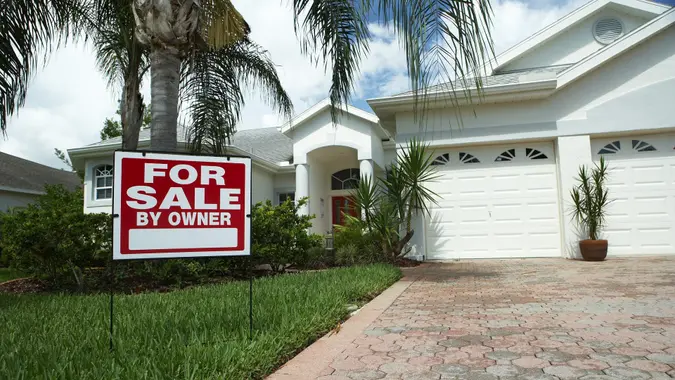
Housing is usually the largest monthly expense for U.S. households. But the cost of housing can vary widely from state to state. In fact, according to the Bureau of Economic Analysis, some states are still relatively affordable, including Mississippi and Arkansas. Others, including California, are priced well above the national average.
A troubling trend in housing costs is that in more than 90% of U.S. counties, according to U.S. Treasury data, both rent and home prices have grown faster than median incomes in recent decades. This mismatch means that even in ZIP codes where housing costs are relatively low, they are still rising relative to incomes. However, lower-cost ZIP codes still have an advantage over higher-cost areas when it comes to affordability.
Here’s how the ZIP code discrepancy matters in real-world terms: Imagine two workers earning the same salary, with one living in a high-cost metro area such as San Francisco and the other in a lower-cost city in the Midwest. Even if their earnings are equal, the Midwestern worker will likely spend less on rent or a mortgage, leaving more money for savings, investments or discretionary spending.
Taxes
Taxes are sometimes overlooked by Americans, but that’s unfortunate because they can play a major role in how much disposable income you actually have. Just as with housing costs, taxes can vary greatly by state and even local jurisdictions, so it’s important to understand the specific rules in your ZIP code.
Even if you earn a high gross wage, taxes can leave you with less disposable income than someone who earns less in a low-tax state. In addition to income taxes, sales taxes and property taxes can each take a share of your income. The key is balancing your income with the total taxes you pay to determine how much money you are really taking home in your ZIP code.
Insurance
In recent years, insurance costs, which used to be a minor add-on, have skyrocketed in many areas. Thanks to the effects of climate-related disasters and the increasing severity of hurricanes and wildfires, homeowners and property insurance premiums are now a major expense.
As reported in the San Francisco Chronicle, for example, new data shows that homeowners in parts of California are now paying far higher premiums than just a decade ago, making homeownership more expensive in high-risk ZIP codes.
The Guardian reports a broad shift in insurance markets overall, with national analyses revealing that those in high climate-risk regions may pay significantly more for coverage. These added costs for the essential protection of your home and possessions are now an important factor in determining the true take-home pay in various ZIP codes.
Everyday Cost of Living
When the Bureau of Labor Statistics releases the Consumer Price Index, the inflation it reports is a national average. The price for day-to-day essentials like groceries, utilities, healthcare and transportation all vary by ZIP code, sometimes by a considerable amount.
Regional price parity data from the Bureau of Economic Analysis shows that states with higher housing costs also typically have higher everyday expenses. This isn’t true across the board, of course, but it is a general correlation. And if the cost of your day-to-day expenses for things like food, utilities and healthcare is high, it means that your income won’t stretch as far.
The Bottom Line
Taken together, housing, taxes, insurance and local prices make one thing clear: Your ZIP code affects the true value of your salary. A higher paycheck in a costly area can result in a lower overall standard of living than a more modest income in a less expensive region.
This doesn’t mean salary isn’t important. It is. But financial success isn’t just about earning more — it’s about maximizing what you keep and stretching it as far as possible.
Before prioritizing a raise or accepting a job offer in a high-cost city, consider how much of that money you will actually have left at the end of the month. In many cases, the answer may surprise you.
More From GOBankingRates