I Asked ChatGPT To Predict When the Next Market Crash Will Be: Here’s What It Said
 Written by
Jordan Rosenfeld
Written by
Jordan Rosenfeld
 Edited by
Molly Sullivan
Edited by
Molly Sullivan
Commitment to Our Readers
GOBankingRates' editorial team is committed to bringing you unbiased reviews and information. We use data-driven methodologies to evaluate financial products and services - our reviews and ratings are not influenced by advertisers. You can read more about our editorial guidelines and our products and services review methodology.

20 Years
Helping You Live Richer

Reviewed
by Experts

Trusted by
Millions of Readers
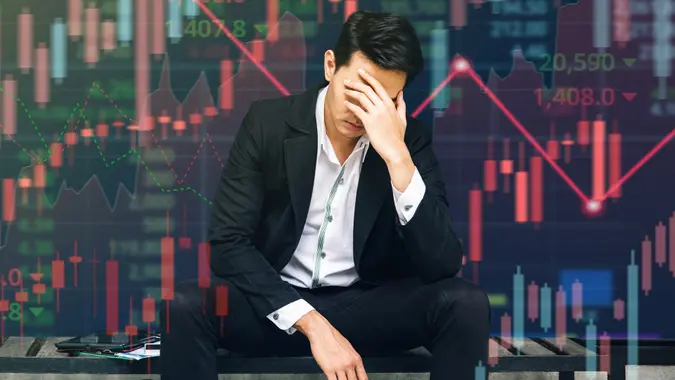
Despite living in tough economic times — with skyrocketing costs of living happening at the same time as the stock market struggles — it’s hard not to anticipate a market crash.
While there are indicators investors can look at to gauge whether a crash may be coming, nobody has a crystal ball. Still, I decided to ask ChatGPT if it could predict the next market crash, in hopes of being better prepared. Here’s what it said.
Recognizable Patterns To Watch For
ChatGPT was quick to tell me that a precise prediction isn’t possible and that it would never give a specific date anyway. But it did say that market crashes tend to follow recognizable patterns.
Market crashes usually don’t come out of nowhere, ChatGPT explained. They often happen after stock prices get ahead of reality. This occurs when investors bid up shares based on optimism, trends or future expectations that haven’t yet shown up in company profits or the broader economy — something that could arguably be happening in parts of the AI-driven market right now.
Another common pattern is rising interest rates, which make borrowing more expensive. That can quietly push investors and companies into taking on more risk than they realize or intend.
Often, only a small group of large stocks is holding the market up while many others struggle beneath the surface, ChatGPT noted. Warning signs get ignored until a sudden event exposes the weakness.
Why Crashes Feel ‘Predictable’ After the Fact
While market crashes can seem surprising at the time, they are often clear in hindsight, ChatGPT said. That’s because markets tend to look “overconfident, expensive and complacent about risk” right before a crash.
So why don’t people see the signs ahead of time? According to ChatGPT, when markets are doing well, rising prices make people feel confident, not cautious. Warning signs get explained away instead of taken seriously. It’s only after things fall apart that those same signals suddenly look obvious.
Further Signs of an Impending Crash
Instead of predicting when a crash will happen, ChatGPT said it can identify conditions that increase crash risk. Those conditions typically include:
- Elevated stock valuations relative to earnings
- High interest rates stressing debt-heavy companies
- Tightening credit or reduced liquidity
- Economic slowdowns or weakening earnings
- Investor behavior shifting from optimism to fear
ChatGPT’s Best Guess
While it’s impossible to predict exactly when the next market crash will happen, current conditions suggest risk is higher than usual, ChatGPT said. Stock prices remain elevated compared to historical averages, borrowing costs are still relatively high after years of easy money and markets appear less forgiving of bad news.
At the same time, economic growth has slowed but not collapsed, which ChatGPT described as making the situation more fragile rather than outright dire. In short, today’s economic period resembles some past periods that preceded downturns, but there is no clear trigger or timeline pointing to an imminent crash.
Windows of Vulnerability
Even with economists watching all the indicators closely, ChatGPT stressed that markets remain unpredictable and that world events and global politics can shift conditions quickly. More importantly, it said that markets don’t crash on schedules but during periods of fragility. Those “windows of vulnerability” can last for months or even years.
The Question Investors Should Ask
In reality, preparing for a market crash looks much like smart investing at any time of year. Instead of asking, “When will the next crash happen?” ChatGPT urged investors to ask, “How exposed am I if it happens tomorrow?” That means avoiding overconcentration in individual stocks, maintaining solid emergency funds and resisting emotional financial decisions.
Working with a financial advisor can also help. As ChatGPT summed it up, preparation matters more than prediction.
More From GOBankingRates