I’m an Accountant: The Biggest Tax Misunderstanding I See Among the Middle Class
 Written by
Josephine Nesbit
Written by
Josephine Nesbit
 Edited by
Amen Oyiboke
Edited by
Amen Oyiboke
Commitment to Our Readers
GOBankingRates' editorial team is committed to bringing you unbiased reviews and information. We use data-driven methodologies to evaluate financial products and services - our reviews and ratings are not influenced by advertisers. You can read more about our editorial guidelines and our products and services review methodology.

20 Years
Helping You Live Richer

Reviewed
by Experts

Trusted by
Millions of Readers
Many middle-class households believe they have a solid grasp on how their taxes work, especially if they’ve been filing for years without a problem. But according to accountants, one common misunderstanding continues to come up year after year.
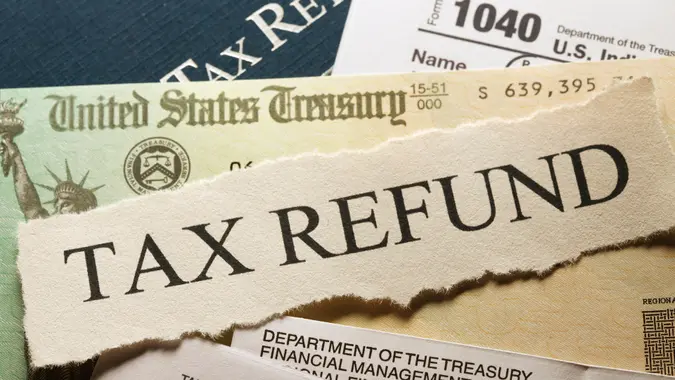
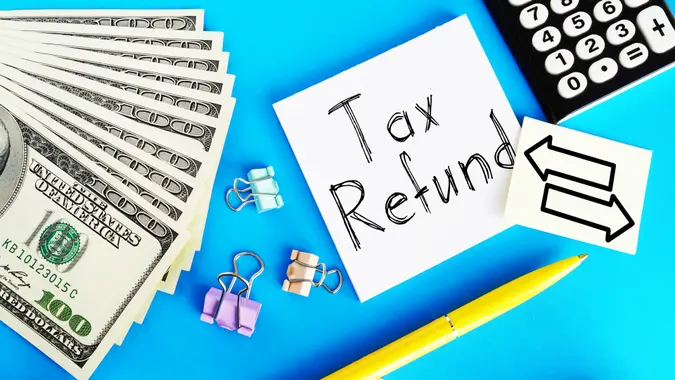
There are plenty of tax misconceptions out there, but one of the biggest misunderstandings among the middle class is that a large refund means you did your taxes correctly.
A Large Refund Means Everything Was Correct
“The most common misunderstanding I see among middle-class taxpayers is the belief that a large refund means you did your taxes right,” Gene Bott, CPA, tax advisor and partner at Tax Hive, wrote in an email.
Many taxpayers celebrate large refunds, but it’s not necessarily a good thing. According to Bott, a tighter refund shows that you’re managing your finances better than most.
“If you were managing your taxes perfectly, you would actually have no refund at the end of the year,” he said. “This means you keep your money in your pocket rather than lending it to the government on a short-term basis.”
How To Keep More of Your Money Throughout the Year
“Many taxpayers are better off with larger refunds because they help with financial discipline, but for the disciplined taxpayer, it’s better to keep their funds in their own pocket,” Bott said.
If you’re an employee, one way to keep more of your money throughout the year is to adjust your W-4 withholding to match your tax liability. Employers typically withhold income tax from your paycheck and pay it to the IRS on your behalf. But if you’re self-employed and don’t pay taxes through withholding, you have to pay estimated tax.
The IRS recommends adjusting your withholding amount to avoid any surprises during tax season. Too little can lead to a tax bill or even a penalty, while too much means you won’t have access to that money until you receive your tax refund.
You can use the IRS Tax Withholding Estimator, although it has not been updated to reflect certain provisions in the One, Big, Beautiful Bill Act (OBBBA), to estimate your federal income tax liability.
If you need to make adjustments, you can request a new W-4 form and submit it to your employer’s payroll or HR department. If you’re self-employed, you can use the tool or speak with your CPA about adjusting how much you pay in estimated tax each quarter.
More From GoBankingRates