5 Ways To Plan Now for a Possible Economic Downturn
 Written by
Andrew Lisa
Written by
Andrew Lisa
 Edited by
Levi Leidy
Edited by
Levi Leidy

Commitment to Our Readers
GOBankingRates' editorial team is committed to bringing you unbiased reviews and information. We use data-driven methodologies to evaluate financial products and services - our reviews and ratings are not influenced by advertisers. You can read more about our editorial guidelines and our products and services review methodology.

20 Years
Helping You Live Richer

Reviewed
by Experts

Trusted by
Millions of Readers
With the possibility of a recession increasingly likely in 2023, many consumers may be wondering how they can financially protect themselves and their assets from unforeseen circumstances. While consumers can do little by way of changing inflation, they can take the necessary steps now to protect themselves in the event the economy takes a turn for the worse. Use these tips for financial planning during an economic downturn.
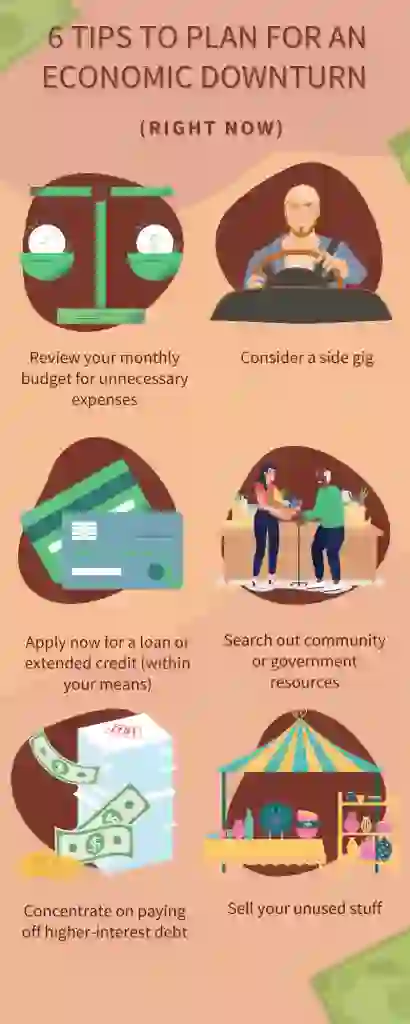
Review Your Monthly Budget for Unnecessary Expenses
Mobile finance tracking apps such as Mint and Simplifi — and likely your bank and credit card providers — use simple charts and other visual aids to reveal the categories that account for most of your monthly spending.
With economic trouble looming on the horizon, it’s now more important than ever to take a moment at the end of each month and look back in your budget for opportunities to trim the fat. One of the best ways you can cut spending, for example, is by eating at home.
Consider a Side Gig
Economic downturns bring higher unemployment rates and more people competing for fewer jobs. By building up a side hustle now, you can develop an alternative income stream in case your job becomes a casualty of an impending recession — and you can amass a financial cushion while you’re still employed.
“A side hustle can help you to build up your savings,” said Oscar Rodriguez, a financial blogger and founder of OssieRodriguez.com. “When you have extra money coming in from a side hustle, you can funnel it into a savings account or use it to pay down debt. This can leave you in a much better financial position if you encounter an unexpected expense or job loss.”
Concentrate on Paying Off Higher-Interest Debt
When things are good and the economy is expanding, experts often recommend the snowball debt repayment method. That’s when you concentrate on paying your smallest debt first to score an easy win, then move up to the next smallest amount of debt, and so on.
When the market turns south and the economy begins to contract, however, you should reverse course and use the avalanche method. This strategy puts every available dollar into paying down the debt with the highest interest rate while paying only the minimum on all your others — and so on.
This way, you’ll have the most toxic debt under control and save time and money on interest.
Sell Your Unused Stuff
Yard sales gave generations of people the simultaneous benefits of collecting cash while decluttering — and you can do the same without strangers traipsing around your property at 5 in the morning.
If you have designer or luxury clothing and accessories, give resale apps such as Poshmark or Tradesy a try.
Nextdoor and OfferUp are excellent choices for selling stuff fast to local buyers without having to worry about shipping. Meta Marketplace and CPlus for Craigslist can put your stuff in front of millions of potential buyers from across the country and the world. If you’re offloading a big-ticket item like a pool table, eBay is probably still your best bet.
Search Out Community or Government Resources
If you’re already financially struggling, some programs and organizations can help you survive the coming downturn. USA.gov is a good place to start looking for them. A website maintained by the federal government, it’s filled with information on finding assistance with paying your rent or mortgage, buying food, paying for broadband, avoiding default on student loans, avoiding homelessness and paying for funerals.
USA.gov also has information on programs like the Supplemental Assistance Nutrition Program (SNAP or food stamps), Medicaid, the Children’s Health Insurance Program (CHIP) and Temporary Assistance for Needy Families (TANF, or welfare).
USA.gov also has a state-by-state list of resources and contacts to help you find aid where you live.
More From GOBankingRates