Warren Buffett Says Money ‘Would Go Down’ in a Major War — What Investors Should Know
 Written by
Heather Altamirano
Written by
Heather Altamirano
 Edited by
Nick Friedman
Edited by
Nick Friedman
Commitment to Our Readers
GOBankingRates' editorial team is committed to bringing you unbiased reviews and information. We use data-driven methodologies to evaluate financial products and services - our reviews and ratings are not influenced by advertisers. You can read more about our editorial guidelines and our products and services review methodology.

20 Years
Helping You Live Richer

Reviewed
by Experts

Trusted by
Millions of Readers
With the Iran conflict ramping up, Americans are concerned about what this means for their finances. According to Warren Buffett, the dollar will drop, so look elsewhere for assets that hold their value better than cash.
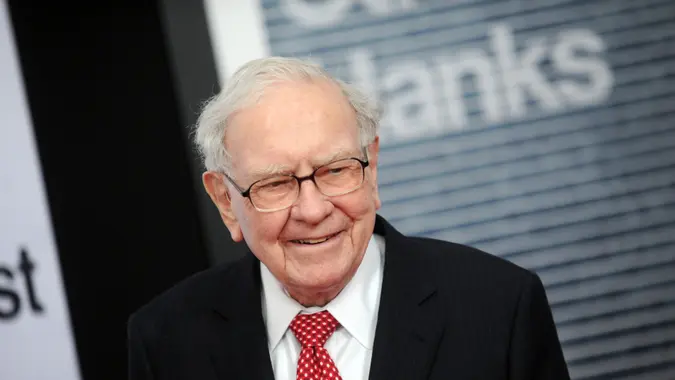
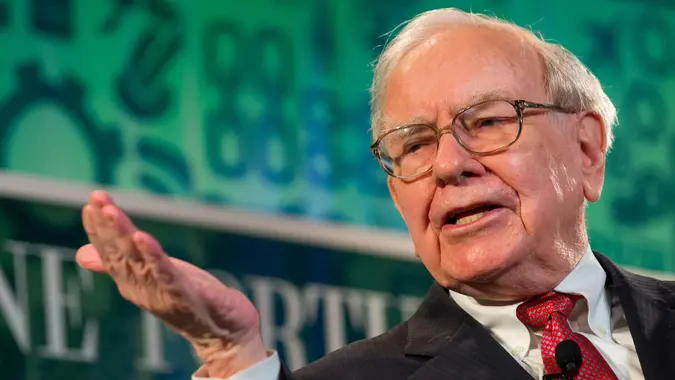
“The one thing you could be quite sure of is if we went into some very major war, the value of money would go down,” Buffett said in a 2014 CNBC interview. “That’s happened in virtually every war that I’m aware of. Dollars are going to be worth less, so that money won’t buy you quite as much.”
Instead, Buffett has long argued that owning “productive assets” is more valuable during war. Finance experts explain.
War Is Expensive
The economic toll the cost of war takes can run into the trillions, according to data from Brown University. The funding comes from higher taxes, borrowing and printing more money, which puts pressure on the economy.
“When borrowing expands and central banks support liquidity, the supply of money rises relative to available goods and services,” said James Comblo, partner at Prosperity Capital Advisors.“That action tends to produce inflation and inflation erodes purchasing power.”
Inflation and Investing
Big wars usually mean huge government spending.
“When more money floods the system, inflation tends to show up and cash quietly loses buying power,” said Danny Ray, founder of PinnacleQuote.
“That’s why Buffett prefers productive assets: businesses, farmland and real estate can generate income and often keep pace as prices rise,” he explained.
War can also create volatility and investment opportunities. While major conflicts temporarily disrupt markets, Comblo said economies adapt and recover once the uncertainty passes.
“The opportunity isn’t usually found in predicting the next headline,” he said. “It’s found in maintaining disciplined exposure to productive assets while others are reacting emotionally. Volatility is uncomfortable, but volatility is also where long-term returns are often earned.”
What the Iran Situation Specifically Means for Investors
Oil prices usually rise first when tensions escalate in an oil-producing region, affecting everything from transportation costs to groceries. But according to Comblo, the more important question for most investors isn’t what oil does next week — it’s whether the geopolitical event is a structural shift or a temporary disruption.
“The investors who suffer most during these periods are usually those who abandon long-term plans in response to short-term fear,” he said.
Buffett’s broader point, Comblo added, is that over time productive assets have historically outpaced inflation in ways that holding cash alone cannot.
“Money may buy less during inflationary periods, but ownership of productive assets — that generate real earnings and cash flow — adjusts,” Comblo explained.
Have an Emergency Fund
While long-term investing matters, short-term stability is essential.
“In times of crisis, the first thing to remember is not to panic with your investments,” said Eric Mangold, certified wealth strategist (CWS), founder of Argosy Wealth Management. “Having an emergency fund of three to six months of living expenses set aside is vital.”
The overall takeaway: hold enough liquidity to be safe, but build long-term wealth in assets that produce value.
Editor’s note on political coverage: GOBankingRates is nonpartisan and strives to cover all aspects of the economy objectively and present balanced reports on politically focused finance stories. You can find more coverage of this topic on GOBankingRates.com.
More From GoBankingRates