Types of Accounts You Should Have No Matter Your Income
 Written by
Brooke Barley
Written by
Brooke Barley
 Edited by
Zuri Anderson
Edited by
Zuri Anderson
Commitment to Our Readers
GOBankingRates' editorial team is committed to bringing you unbiased reviews and information. We use data-driven methodologies to evaluate financial products and services - our reviews and ratings are not influenced by advertisers. You can read more about our editorial guidelines and our products and services review methodology.

20 Years
Helping You Live Richer

Reviewed
by Experts

Trusted by
Millions of Readers
Did you know that, no matter how much money you have, solely having a checking account won’t cut it? Yes, a checking account is a good start, but there are other financial accounts experts recommend you have.
Even if you don’t think you have enough money to warrant these accounts, here is why you should get them anyway.
Checking Account
Starting with the basics: For those who don’t even have a checking account, it’s a must. Usually, they’re free to open, so take advantage of that. And though it might be tempting to have an online-only bank, you might want to think about banking somewhere with physical locations.
“While there are online checking accounts, having a local bank gives you more flexibility, especially when you may need cash or a cashier’s check,” Jay Zigmont, the founder of Childfree Trust, said.
Already having a checking account? You’re not off the hook. Some experts recommend you have two checking accounts.
“To keep budgeting easy and understandable, I would recommend having two [checking accounts], one to be used in depositing income and the other one to be used in depositing bills or recurring payments,” according to Jason Vaught, the director of content and marketing at SmashBrand.
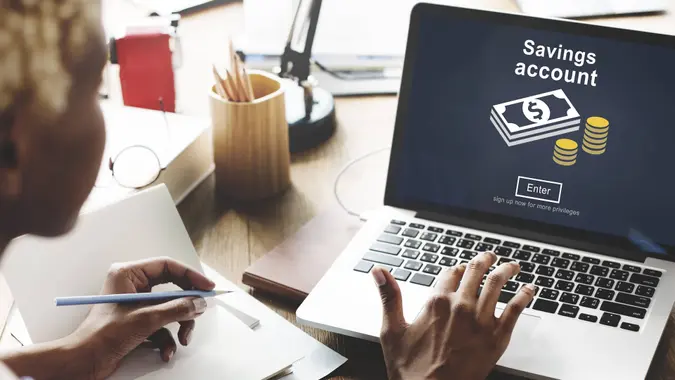
High-Yield Savings Account
A savings account is a good start, but to really maximize your money, experts recommended getting a high-yield savings account (HYSA).
“A HYSA keeps your short-term savings safe, and earns you a higher rate of interest than a bank account,” Vaught explained.
He recommended having at least three to six months of spending in your HYSA to cover you in case of emergencies or job loss. Zigmont added that although he said to have a physical bank for your checking account, that’s not necessary for HYSA’s.
“The best rates for HYSAs tend to be with online banks,” he noted.
Retirement Accounts
Checking accounts and HYSA’s help you in the present and near future, while retirement accounts protect your distant future. Many employers offer retirement account options, which Zigmont said is an easy way to start saving for your golden years.
“If your employer offers a 401(k) or 403(b) account, that is your first go-to for a retirement account,” he shared.
If your employer doesn’t offer some sort of retirement account, Zigmont advised your next best bet is to start an individual retirement account (IRA). When it comes to contributing, Vaught said that consistency is more important than the amount.
“Constant discipline will pay off in a retirement account. Small contributions can be cumulative over time particularly when matched by employers or deposited automatically,” he concluded.
More From GOBankingRates