What They’re Not Telling You About the AI Bubble, According to Graham Stephan
 Written by
Jordan Rosenfeld
Written by
Jordan Rosenfeld
 Edited by
Brendan McGinley
Edited by
Brendan McGinley

Commitment to Our Readers
GOBankingRates' editorial team is committed to bringing you unbiased reviews and information. We use data-driven methodologies to evaluate financial products and services - our reviews and ratings are not influenced by advertisers. You can read more about our editorial guidelines and our products and services review methodology.

20 Years
Helping You Live Richer

Reviewed
by Experts

Trusted by
Millions of Readers
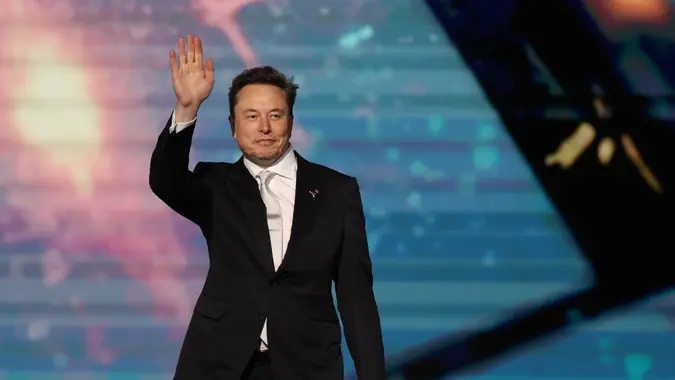
As AI becomes more embedded in daily life and dominates stock market headlines, a growing fear is taking hold, according to financial YouTuber Graham Stephan: an AI bubble that feels overdue for a correction. Such anxiety often follows periods of soaring valuations and increasingly concentrated market gains.
In a recent video, Stephan broke down the real risks, why most investors misunderstand bubbles, and how to protect your money no matter which direction 2026 takes.
The Market Is More Concentrated Than Most Investors Realize
Stephan opened by warning that the market is becoming dangerously top-heavy. He pointed out that “the top 10 companies now make up a record 42% of the entire S&P 500″ while “the bottom 50% are completely negative for the year.” Pair that with job losses accelerating at the fastest pace since 2003, and the backdrop looks far less stable than the AI euphoria suggests.
This unevenness is a classic early warning sign that often appears in speculative bubbles.
Most People Lose Money in Bubbles for This Reason
Stephan emphasized that trying to time the AI boom is not just unrealistic, it’s dangerous. Investors who chase hot trends almost always repeat the same mistake: buying high and selling low.
To illustrate, he highlighted the case of the Magellan Fund under Peter Lynch, which delivered extraordinary returns between the late 1970s and 1990. Even as the fund earned roughly 29% annually, the average investor lost money because they bought after strong years and sold during downturns.
The lesson, Stephan said, is that long-term consistency beats reactive trading. “Your odds of getting any higher than the market average is so small that 90% of actively managed funds failed to outperform the S&P 500 over a 15-year period.”
Market Returns Are Wildly Unpredictable
Most investors assume the market produces “average” returns, but Stephan said that averages rarely happen in real time, especially during hype cycles like AI.
He noted, “The market has only gone up 8% to 12% in a year five times since 1926. That’s it.” Instead, markets typically swing far above or below the average from year to year. Double-digit gains or losses are more common than a steady, predictable climb.
That unpredictability is why he repeatedly stresses that long-term strategies win out.
Why the AI Bubble Could Still Keep Rising
Even if AI stocks are overvalued, that doesn’t mean a crash is imminent. Bubbles don’t burst on logical timelines. Stephan pointed to loose monetary policy, high liquidity and rapid money printing as forces that can push valuations higher than fundamentals would justify.
He said a “great melt-up” is possible if the Fed lowers rates and capital flows back into equities. At the same time, relentless AI enthusiasm may extend the cycle further than skeptics expect.
In fact, bubbles can last longer than anyone predicts, he said.
What Investors Aren’t Being Told
According to Stephan, the most important truth “they don’t tell you” is that markets are cyclical. Because no one can reliably predict which environment comes next, investors need portfolios built to withstand rising prices, falling prices, strong growth and weak growth.
This is the philosophy behind Ray Dalio‘s All-Weather Portfolio, which spreads investments across assets designed to perform differently depending on economic conditions. As Stephan summarized it, “There’s a best-performing asset that’s going to go up while everything else is going down.”
The Catch: All-Weather Portfolios Are Struggling
However, parts of Dalio’s original model don’t work as well today. Stephan said decades of declining bond yields have left “a significant part of your portfolio … not keeping pace with inflation or even going down in value.” Gold has lagged long-term stock returns, too.
In an economy dominated by tech and AI enthusiasm, he warned that investors relying on older allocation strategies may not get the cushion they expect when volatility strikes.
The New Twist That Involves Bitcoin
Stephan pointed to research suggesting that adding even a very small amount of bitcoin can meaningfully boost returns without dramatically raising risk. He cited findings that “a 2% allocation … increased your overall returns to 16.86%,” and that holding bitcoin for more than two years has historically led to positive results.
Bitcoin isn’t a replacement for traditional investing, he added, but a tiny slice may give a portfolio extra resilience during unpredictable, AI-driven swings.
Simple Rules To Follow in an AI Bubble
Stephan said the smartest way to navigate an AI bubble is to avoid emotional decision-making and stick to a few fundamentals:
- Think long-term: Stock market returns are never average until you look at it from a multi-decade perspective.
- Don’t overload on AI stocks: “The more likely you are to make money, the more likely you are to also lose it.”
- Be skeptical of hype: Safe, boring investments often outperform hot trends.
- Avoid timing the market: “You’re 66% more likely to make more money investing right now than waiting.”
- Check your risk level: If you’re losing sleep, your investments may be too aggressive.
What It All Means for 2026 Investors
Looking ahead, Stephan said 2026 could bring a correction, or a surprising surge, depending on interest rates, liquidity and investor behavior. With either outcome possible, the smartest move is to stay diversified across stocks, crypto, treasuries and metals, and remain consistently invested.
In his view, the real winners of the AI bubble won’t be the gamblers chasing fast gains but “the people who just keep buying, are properly diversified and look at the math instead of having their emotions take over.”
More From GOBankingRates