3 Aspects of Trump’s State of the Union Address That Could Impact Your Wallet
 Written by
John Csiszar
Written by
John Csiszar
 Edited by
Cory Dudak
Edited by
Cory Dudak
Commitment to Our Readers
GOBankingRates' editorial team is committed to bringing you unbiased reviews and information. We use data-driven methodologies to evaluate financial products and services - our reviews and ratings are not influenced by advertisers. You can read more about our editorial guidelines and our products and services review methodology.

20 Years
Helping You Live Richer

Reviewed
by Experts

Trusted by
Millions of Readers
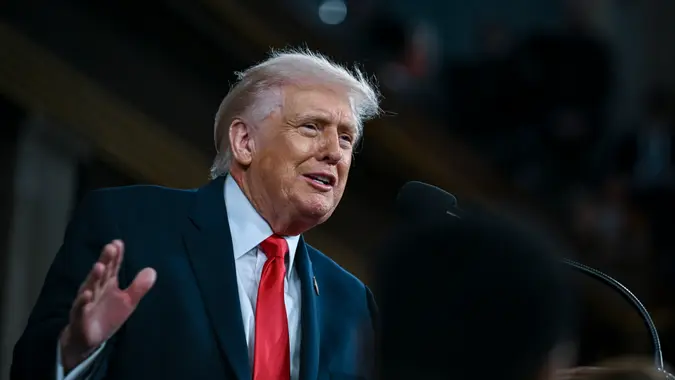
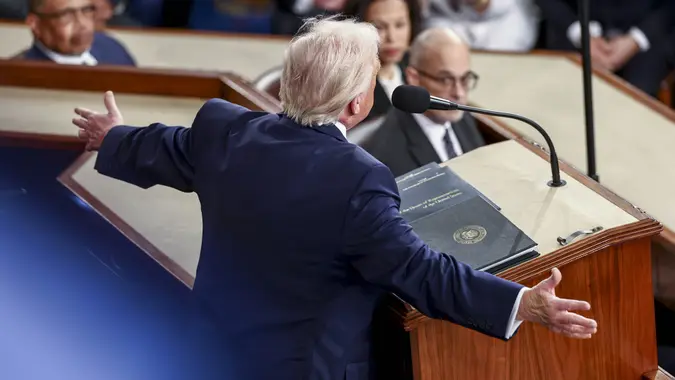
President Trump’s State of the Union address focused on tax changes on tips and overtime pay, tariffs on imports and prescription drug pricing reforms. All of these policies, if enacted, could directly affect take-home pay and consumer prices in 2026.
While many of these ideas could affect households financially, most would still require congressional action before taking effect. Let’s take a deeper dive into what the president addressed, as well as the implications for your wallet if policies are enacted.
1. Taxes on Tips, Overtime and Social Security
Taxes were a frequent topic in the president’s SOTU speech. Specifically, the president once again called for eliminating federal income taxes on tips and overtime pay. He also endorsed reducing taxes on Social Security benefits, a reiteration of his No Tax on Social Security campaign pledge in 2024.
However, it should be pointed out that these proposals were presented as policy goals as opposed to detailed legislative plans. Therefore, as of now, no specific timelines or bill language have been thoroughly outlined.
What to do: If you earn any income from tips, overtime or Social Security, you could potentially save money on taxes. However, similar proposals have been discussed in Congress previously. While the president referred to them once again in his SOTU address, that does not necessarily push them closer to becoming law.
2. Tariffs and Consumer Prices
Tariffs made big headlines on Feb. 20 when the Supreme Court overturned the legality of some of the Trump administration’s tariffs. The president struck back with a new 15% tariff rate on many goods.
In his SOTU speech, the president again defended tariffs as an economic strategy, suggesting they result in big revenue gains for the U.S. Treasury that benefit the average American. However, a report from the Federal Reserve Bank of New York found U.S. importers and consumers are the ones who have borne most of the recent costs.
What to do: Consumer prices on electronics, appliances and vehicles can fluctuate in response to tariff policy shifts. If you’re planning to make a big purchase, shopping around and comparing prices has never been more important, as some retailers absorb tariffs while others pass them on to consumers.
3. Prescription Drug Pricing
President Trump has made it a priority to reduce prescription drug pricing, and referenced his TrumpRX platform as helping him reduce drug costs “from the highest price in the entire world to the lowest.”
Data from the Kaiser Family Foundationshows prescription affordability remains a significant issue, particularly for seniors and those with chronic conditions.
What to do: TrumpRX and various prescription drug discount programs may help reduce costs, so it pays to compare insurance pricing with what you’d have to pay using alternate platforms. However, experts have noted many discounted prices reflect existing manufacturer coupons, cheaper generic alternatives are often available and most insured patients may see limited benefit. It’s also important to keep in mind that purchases made outside insurance typically do not count toward deductibles or out??’of??’pocket maximums.
The Bottom Line
Proposed policies must still move through Congress before becoming law. Until then, focus on controllable financial steps, such as maintaining emergency savings and monitoring large purchases.
Editor’s note on political coverage: GOBankingRates is nonpartisan and strives to cover all aspects of the economy objectively and present balanced reports on politically focused finance stories. You can find more coverage of this topic on GOBankingRates.com.
More From GOBankingRates