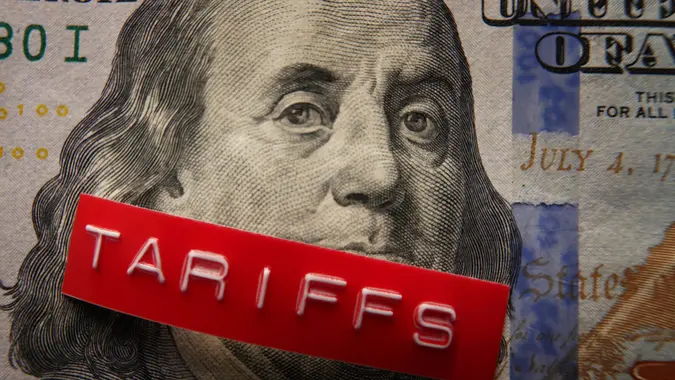
Trump’s Tariffs: 6 Popular Food Items That Increased in Price Since April
 Written by
Tobi Opeyemi Amure
Written by
Tobi Opeyemi Amure
 Edited by
Angela Corry
Edited by
Angela Corry

Commitment to Our Readers
GOBankingRates' editorial team is committed to bringing you unbiased reviews and information. We use data-driven methodologies to evaluate financial products and services - our reviews and ratings are not influenced by advertisers. You can read more about our editorial guidelines and our products and services review methodology.

20 Years
Helping You Live Richer

Reviewed
by Experts

Trusted by
Millions of Readers
President Donald Trump’s broad 2025 tariff campaign is now clearly visible in grocery aisles, reshaping prices on everything from beef to bananas. According to a Yale Budget Lab analysis, higher import duties across goods are adding about $2,800 in annual costs for the average household. Another Budget Lab research estimates food prices alone climbed 1.6% from Trump’s April 2 tariff package and 2.8% when all 2025 tariffs are included.
While the Bureau of Labor Statistics shows overall “food at home” prices up 3.7% year over year through November, some individual staples have risen much faster. For a better perspective, let’s look at some everyday food items and how they’ve been priced since April.
Beef
Beef has become one of the clearest examples of how Trump’s tariffs have filtered into everyday food prices. Reuters reported that by September, ground beef prices were nearly 13% higher and steak prices up almost 17% compared with a year earlier. The change is partly because of the tariffs but also about tight cattle supplies, which amplified any new trade frictions.
The Consumer Price Index reported that meats, poultry, fish and eggs as a group were up 4.7% year over year through November, well above overall food inflation. For shoppers since November, that has meant higher sticker prices for steaks and burgers, with deals that are rarer and less generous.
Canned Goods
Canned goods have been hit indirectly through Trump’s higher tariffs on aluminum and steel, which raise packaging costs across the board. CNBC reports that doubling Section 232 tariffs on metals from 25% to 50% has pushed up prices for items like canned vegetables and sauces. For example, NielsenIQ shows substantial jumps in average canned product prices as metal costs filter into grocery shelves, per the report.
For households since April, that has meant canned staples no longer provide the same inflation relief they offered earlier in the pandemic era.
Dairy Products
Dairy prices have climbed more moderately than meat but still show clear upward pressure during Trump’s tariff campaign. Bureau of Labor Statistics data show dairy and related products up about 1.6% year over year through April. This means households are paying hundreds to thousands more annually for everyday items, including milk, cheese and yogurt.
The Budget Lab’s model suggests food prices overall rose about as much in the months after April’s tariffs as they had during the entire previous year. For dairy buyers, that has translated into modest but persistent increases since April, especially on branded products and specialty cheeses with higher import content.
Fruits and Vegetables
Fresh fruits and vegetables have delivered one of the few relatively bright spots, though tariffs still leave a noticeable imprint beneath the surface. According to the Bureau of Labor Statistics, fruit and vegetable prices are up just.1% year over year through November, even as overall “food at home” climbed. Yale’s Budget Lab, however, finds that fresh produce rose 2.2% from Trump’s April 2 tariff package and 4% once all 2025 tariffs are accounted for.
CNBC’s chart package also highlights oranges and other imported fruits as categories where tariffs helped nudge prices higher despite competitive supply chains. Since April, many shoppers have seen better luck stretching budgets with seasonal domestic produce, while imported off??’season items feel noticeably more expensive.
Bananas
cost increases after the tariffs and highlighted bananas as one category where inflation appeared despite historically stable pricing.
that banana prices were up roughly 7% by September, even as overall food inflation cooled slightly. According to the Yale Budget Lab, fresh produce as a whole still looks better than meat, rising 2.2% from the April 2 policy and 4% when all 2025 tariffs are counted. That means bananas have increased faster than the broader produce category, turning a classic budget fruit into a modest contributor to higher grocery bills.
Coffee
Coffee has been pulled directly into the tariff crossfire, even though the United States does not grow much of its own supply. Reuters reports that Trump’s administration imposed and then partially rolled back tariffs on imported coffee as inflation concerns mounted late in the year.
Policy reversals will not erase the earlier price impact immediately because roasters and retailers are locked in higher cost contracts after April. CNBC notes that tariffs generally take months to fully show up in consumer prices as inventories cycle, implying more price increases could still be coming for coffee. For coffee drinkers, that translates into pricier bags at the supermarket and rising menu prices at cafés, even as some import duties quietly recede.
More From GOBankingRates