Ramit Sethi: 8 Biggest Money Regrets (And What To Do Instead)
 Written by
Ashley Donohoe
Written by
Ashley Donohoe
 Edited by
Zuri Anderson
Edited by
Zuri Anderson
Commitment to Our Readers
GOBankingRates' editorial team is committed to bringing you unbiased reviews and information. We use data-driven methodologies to evaluate financial products and services - our reviews and ratings are not influenced by advertisers. You can read more about our editorial guidelines and our products and services review methodology.

20 Years
Helping You Live Richer

Reviewed
by Experts

Trusted by
Millions of Readers
Even if you earn a decent income, make progress toward financial goals and manage your money relatively well, you’re not immune to making financial decisions that lead to regret or lost money. In many cases, this happens when you’re fearful or don’t consider your whole financial picture.
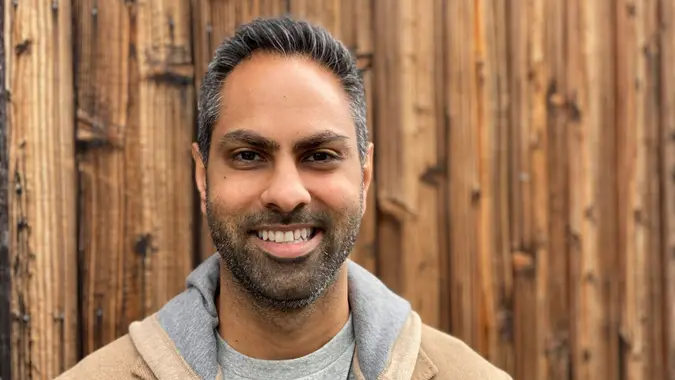
In a recent video, money expert Ramit Sethi discussed eight of the biggest money regrets he has heard from people over the years. He also recommended how to avoid these regrets or get out of trouble if you’ve already made mistakes.
Not Investing Earlier
Whether out of fear or the desire to enter the market at the perfect time, many people make the mistake of delaying investing. When they look back at how their money could have compounded over the years, they feel regretful.
Since the time your money sits invested is important, Sethi advised beginning now, even if that means you’re contributing just a small amount each month. You can always bump up that amount once you have more margin in your budget from lowered expenses or a higher income.
For inspiration, consider that this compound interest calculator showed that even $100 per month at 7% interest would leave you with around $113,000 in 30 years.
Buying a Big House
While you might see your house as a smart investment, some people underestimate the full cost and regret it. Sethi discussed a couple who traded their $2,300 rent payment for a $2,600 mortgage payment, which was more like $3,500 after other costs. They struggled to cover expenses and save.
If you’re in this situation, Sethi recommended, “Run the numbers, and if they don’t work, you need to consider your options, including selling.”
And if you haven’t bought a home yet, save yourself from potential regret and assess affordability based on the whole cost. A common guideline is not spending more than 28% of your pre-tax income on housing. Like Sethi, you might find that renting is better for now.
Losing To Crypto and Other Gambles
Whether you jump on the newest crypto coin or fall for get-rich-quick schemes on social media, chasing fast wealth can lead to regrets over lost money. Sethi explained that many people don’t realize the difference between speculating and investing and don’t diversify enough.
If you do opt for speculative investments, consider Sethi’s advice to limit these to 5% to 10% of your portfolio and ensure the rest of your investments are well diversified. He also explained that a more boring approach is reliable for building wealth.
Sethi said, “It’s built on consistent fundamental habits, like automating your savings, investing in diversified low-cost funds and giving it the ultimate blessing — the blessing of time.”
Taking on Too Much Debt
A WalletHub report noted that debt averaged $154,152 per U.S. household in Q3 2025. Since debt makes it harder to budget, save and invest, it’s not surprising that it’s a common regret. Plus, many people continue digging themselves deeper into debt and feel stuck.
Sethi recommended smart strategies to stop running up debt, including discontinuing credit card use and not financing home renovations. He also said it’s important to make a plan to pay off your debt, especially high-interest balances, and avoid future debt once you’re out.
Not Saving for Big Purchases or Life Events
Whether it’s a house, wedding, vacation or another major purchase, many people don’t plan properly, which can lead them into debt or financial distress.
Sethi said, “Stop not setting aside money for things that are predictably going to happen to you because you think you’re a special snowflake and it will magically work itself out — it won’t.”
Rather than feeling guilty over past money decisions, which is often unproductive and doesn’t lead to change, take the forward-looking approach Sethi recommended. Consider your short- to long-term goals and automate savings transfers so you’ll have the cash when you need it.
Not Knowing How To Spend Money
Even if you’re a six-figure earner or net worth millionaire, you might feel guilty using the cash you’ve got for specific goals or luxuries, such as a vacation or even a fancy coffee.
Sethi explained that this common regret can stem from money scripts heard during childhood, a scarcity mindset or an unhealthy view that denying yourself indicates virtue. He advised looking at your finances and understanding money psychology so you can “live a rich life.”
Not Teaching Kids About Money
Sethi said, “Many parents are not comfortable with their own relationship with money, so when it comes to their kids, they unconsciously pass on the same beliefs to them.”
While some parents skip the money talk since they think it’s unimportant for kids, others might teach a scarcity mindset, which can lead to poor financial decisions as adults. Sethi discussed the importance of working on your own habits so you can show your kids how to use money positively, such as buying healthy groceries.
Besides demonstrating good financial management, you can use free educational resources, such as the FDIC’s Money Smart lesson plans.
Letting Their Partner Do Everything
In some relationships, one partner takes the role of the “money person,” but the other actually pays the bills. This can lead to conflicts over concerns, which the money person might brush off.
Since this arrangement can lead to stress and resentment, Sethi recommended having both partners manage the finances equally. This ensures both are aware and have power.
More From GOBankingRates