Spending Less May Be the Secret to Happiness, Even If You’re a Billionaire
 Written by
Kristopher Kane
Written by
Kristopher Kane
 Edited by
Molly Sullivan
Edited by
Molly Sullivan

Commitment to Our Readers
GOBankingRates' editorial team is committed to bringing you unbiased reviews and information. We use data-driven methodologies to evaluate financial products and services - our reviews and ratings are not influenced by advertisers. You can read more about our editorial guidelines and our products and services review methodology.

20 Years
Helping You Live Richer

Reviewed
by Experts

Trusted by
Millions of Readers
While many of us labor under the belief that there’s no such thing as too much money, the ultimate way out of the rat race may be deciding you don’t need to run as fast or as far to find the exit. What if the real secret to happiness and contentment lay not in an endless loop of earning more and buying more, but instead relied on finding satisfaction and fulfillment in what you have or can more easily attain?
Morgan Housel, a prominent financial advisor and author of “The Psychology of Money,” offered a simple solution. In his view, the key to untroubled living is appreciating what you have instead of constantly striving for what you don’t.
Wanting Even More
In Housel’s recent New York Times bestseller, “The Art of Spending Money,” the author explained that wealth is relative. He used the example of something most of us rely on every day: a car.
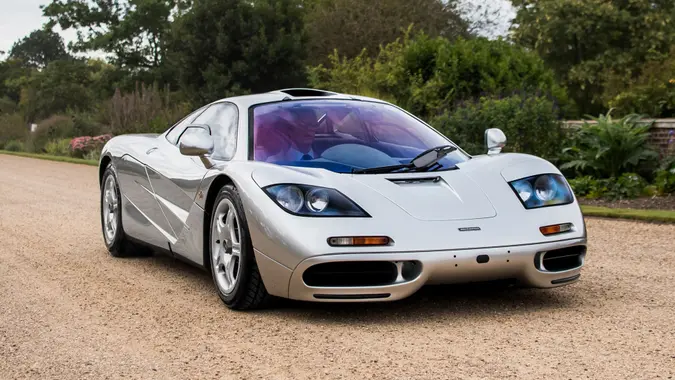
“When you’re young, you dream about having a car — any car,” he wrote. “When you get a $10,000 car, you dream of the $20,000 car. When you get a $20,000 car, you dream of the $50,000 car.” It’s a never-ending cycle that can result in the exact opposite of what you might expect. Instead of contentment, you’re stuck in a loop of unfulfilled desire. In Housel’s words, “If you get the $50,000 car, you dream of the $100,000 car. If you get the $100,000 car, you dream of having several $100,000 cars.”
The Enemy Within — And How To Beat It
Housel feels this need for more is largely due to dopamine, a neurotransmitter responsible for sparking anticipation and desire. On a neurological level, the brain doesn’t want the specific object you think you want. Rather, it is primed merely to want. The reward becomes less desirable nearly the moment you attain it.
The key to getting out of the loop, Housel said, is to be satisfied with what you have. “Wanting less can have the same impact on your well-being as gaining more money.”
He used the example of an ordinary person, content with their lot in life and genuinely happy, all because of their ability to appreciate what they have. He contrasts that with the plight of a billionaire who wakes up anxious every morning, constantly obsessed with money and envious of anyone who has more. Who, Housel asked, would you rather be?
Life vs. Lifestyle
Constantly wanting more is such a common phenomenon among the wealthy that it’s got a catchy name: lifestyle creep. It’s what causes even wealthy celebrities to spend beyond their means, wanting a bigger private jet and a larger fleet of luxury cars than those people they see as competition. While it may seem counterintuitive that you can be miserable in a mansion and happy in a hovel, in Housel’s view, it’s that dichotomy that’s so critical.
One of the people in his life who mastered contentment was his wife’s grandmother, whom he called “financially poor, but psychologically rich.” Her secret was enjoying the things already present in her life instead of focusing on what was absent. “The gap between what she had and what she wanted was smaller than some people’s with 100 times as much money as she had,” Housel said. “Once you see someone master that equation, you’ll never think about wealth the same.”
More From GOBankingRates