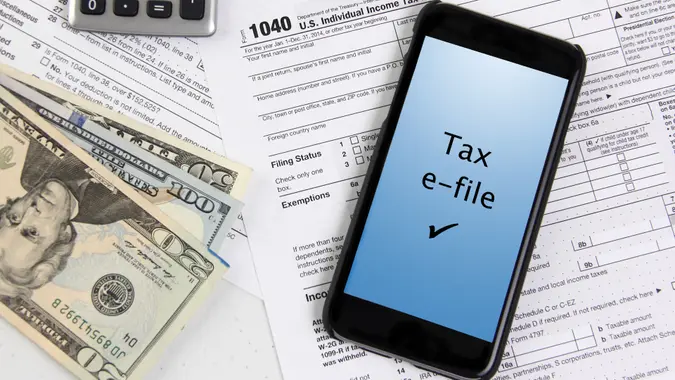
High Earners: These 6 Tax Planning Moves Matter More Than Deductions
 Written by
Jordan Rosenfeld
Written by
Jordan Rosenfeld
 Edited by
Molly Sullivan
Edited by
Molly Sullivan
Commitment to Our Readers
GOBankingRates' editorial team is committed to bringing you unbiased reviews and information. We use data-driven methodologies to evaluate financial products and services - our reviews and ratings are not influenced by advertisers. You can read more about our editorial guidelines and our products and services review methodology.

20 Years
Helping You Live Richer

Reviewed
by Experts

Trusted by
Millions of Readers
When your income climbs into the high six figures, tax season starts to hit different. The usual advice about looking for every deduction often doesn’t lead to the big breaks taxpayers may be looking for. For many high earners, the real savings comes from making smarter year-round decisions about timing, structure and long-term strategy.
Tax and finance experts offered six suggested moves to help high earners keep taxes lower.
1. Don’t Chase Deductions
At higher income brackets, many deductions and credits phase out, shrink in value or get limited by other rules, according to Lisa Greene-Lewis, tax expert and spokesperson for TurboTax. That makes chasing small write-offs far less impactful than most people assume.
Julian B. Morris, a CFP and principal at Concierge Wealth Management, agreed, adding that high earners don’t actually have a deduction problem — “they have a coordination problem.” The higher your income, the less impactful “a few thousand dollars off schedule A is,” he said.
2. Max Out Retirement Contributions and Think Beyond Pretax
For high earners, retirement contributions are foundational because they lower taxable income while taking advantage of the market to build long-term wealth.
Greene-Lewis said high earners should plan to maximize their retirement contributions year-round, not just at tax time. You can contribute up to $24,500 for single filers, $32,000 for those 50 and over, and $35,750 if you are ages 60 to 63 to your 401(k) plan in 2026.
Gene Bott, a CPA and partner at Kevin O’Leary’s Tax Hive, also highlighted the long-term value of Roth strategies. Someone relying only on a traditional 401(k) in retirement may face higher taxes than expected. By using backdoor Roth conversions, “they can spread the tax impact across three sources of income, one of which is non-taxable, and they can significantly improve their ability to make targeted tax decisions even in retirement.”
3. Time Income, Bonuses and Equity Carefully
Greene-Lewis stressed that the timing of additional income, such as bonuses or stock compensation, can bump you up to another tax bracket. If a bonus might push you into a higher bracket, “you can ask your employer to defer the additional income into the next year,” she said.
This applies to stock and real estate sales, too, Morris said. “One poorly timed equity sale can erase years of careful deduction planning.”
4. Use Advanced Strategies, Not Just Write-Offs
Higher incomes can give people access to more sophisticated tools, but they require proactive management, Bott said. High earners should focus on “leveraging charitable contributions, optimizing retirement strategies and entity structures, enhancing their compensation and benefits packages, and using diversified business options to minimize their tax bill.”
Without enlisting these tools, high earners are all but guaranteed to pay more taxes.
5. Don’t Ignore Payroll Elections and IRMAA Thresholds
Small oversights can lead to much larger or unexpected costs, the experts warned. For example, “Crossing an IRMAA (income-related monthly adjustment amount) threshold by a few thousand dollars can cost thousands in Medicare premiums,” Morris said.
Greene-Lewis added that as income grows, many people forget to adjust withholding. If you expect to owe, “you can pay quarterly estimated tax payments to avoid big tax hits and penalties for under payment.”
6. Think in Decades, Not Tax Seasons
Coordination and strategy are keys to not overpaying in taxes. Morris said, “High earners don’t need more deductions, they need a strategy that spans years…”
The best approach is thinking not just about this year’s taxes, but “about managing your next 20 years of taxable income events.”
More From GoBankingRates