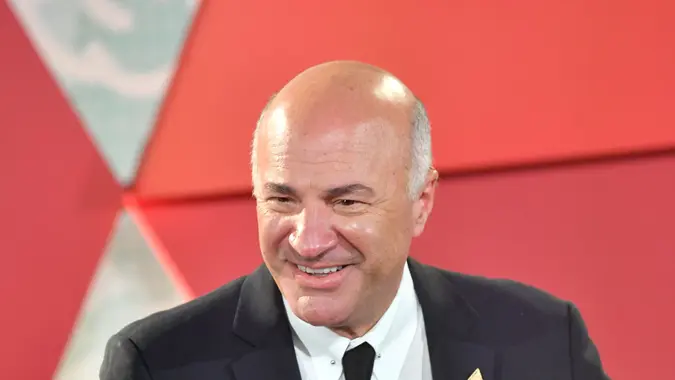
Ramit Sethi Shares 3 Simple Steps To Quickly Build a $1,000 Emergency Fund
 Written by
Gabrielle Olya
Written by
Gabrielle Olya
 Edited by
Molly Sullivan
Edited by
Molly Sullivan

Commitment to Our Readers
GOBankingRates' editorial team is committed to bringing you unbiased reviews and information. We use data-driven methodologies to evaluate financial products and services - our reviews and ratings are not influenced by advertisers. You can read more about our editorial guidelines and our products and services review methodology.

20 Years
Helping You Live Richer

Reviewed
by Experts

Trusted by
Millions of Readers
Many Americans have nothing — or next to nothing — saved for an emergency. A recent GOBankingRates survey found that 19% have no savings, 21% have between $1 and $250, and 11% have between $250 and $500.
When you’re starting from $0, building up a $1,000 emergency fund may seem impossible — but it can actually be done pretty quickly if you make a few simple moves and stay disciplined. Ramit Sethi, money expert and host of “How To Get Rich,” shared the steps anyone can take to quickly save $1,000.
Step 1: Cut Your Biggest Discretionary Expense
The first thing Sethi recommended is to look at your monthly spending and determine the discretionary expense you spend the most on, whether it’s dining out, streaming services or making impulse purchases on Amazon.
“Take your biggest discretionary expense — for 99% of you, this is eating out — and cut it in half immediately,” he said in an Instagram post. “Now, here’s the key. Don’t just cut it in half — immediately send that money to your savings account.”
If you’re spending $400 a month on going out to eat or ordering in, that means you would send $200 to your savings account right away.
“Let me tell you something shocking — when I ask people how much they think they eat out, and then we actually calculate the numbers, reality is they spend three times more than they actually thought,” Sethi said.
That’s why doing just this one step can significantly boost your emergency fund.
Step 2: Automate Your Savings
Next, set up a monthly automatic transfer from your checking to your savings account for whatever that amount from step one is. This ensures your emergency fund continues to grow.
Step 3: Pay Yourself First From Every Paycheck
The final step is to “pay yourself first” every time you get paid.
“Go into your savings account and instruct it to automatically pull 5 to 10% of your take-home pay every single month,” Sethi said.
This will prevent you from spending the funds unnecessarily.
“You do these three things, you’re going to already have $1,000 in a matter of weeks,” Sethi said. “Now, of course, $1,000 is not enough for an emergency fund, but this is going to get you set up and started.”
More From GOBankingRates