Advertiser Disclosure
GOBankingRates works with many financial advertisers to showcase their products and services to our audiences. These brands compensate us to advertise their products in ads across our site. This compensation may impact how and where products appear on this site. We are not a comparison-tool and these offers do not represent all available deposit, investment, loan or credit products.
25 Dumb Things To Stop Buying in 2026
Written by
Travis Woods
Edited by
Cory Dudak

Commitment to Our Readers
GOBankingRates' editorial team is committed to bringing you unbiased reviews and information. We use data-driven methodologies to evaluate financial products and services - our reviews and ratings are not influenced by advertisers. You can read more about our editorial guidelines and our products and services review methodology.
20 YearsHelping You Live Richer
Reviewed by Experts
Trusted by Millions of Readers
With a new year comes, of course, new year’s resolutions — the promises we make to ourselves to work out more, eat better, spend less and essentially break our worst habits to have a better year. Many of those bad habits tend to be financial.
Are you trying to spend more responsibly in 2026? Save more money? Make the right purchases (or avoid the wrong ones)? GOBankingRates reached out to a number of financial sources to find, quite simply, all the dumb things you need to stop buying in the new year. As we wave goodbye to 2025, here are 25 things to stop wasting your money on.
1. Tempting Deals
“Stop buying things just because they’re a good deal,” Melanie Musson, finance expert with Clearsurance and Quote, suggested. “If you don’t need something, you’re not going to suddenly need it because it costs $1 instead of $5. Stick to purchasing the things you need or responsibly want.”
2. Clothes at Full Price
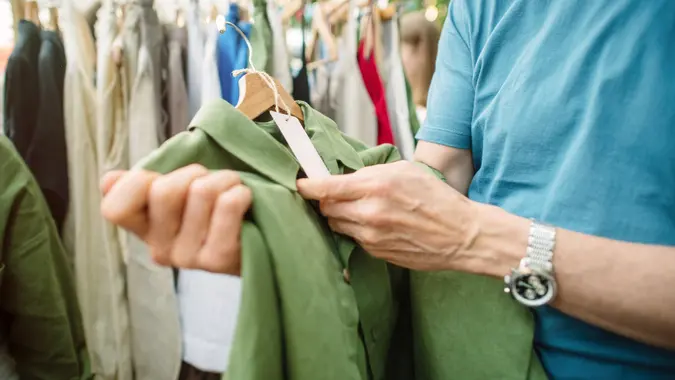
Musson also made clear new clothes at full price are a wasteful expenditure. “The clothes on the rack right now will be steeply discounted in three months,” she noted. “If you can’t wait that long, you can wait for a store sale where you can save somewhere around 20%.”
3. Name-Brand Groceries
Musson noted name-brand grocery items can be an unnecessarily expensive purchase in 2026. “Store brands are comparable in quality in name brands, and you’re probably not going to notice a difference between the two in your baked goods and dinners.”
4. Lunches Out
“Stop grabbing lunch out,” Musson insisted. “It’s convenient, but $10 spent on lunch twice a week adds up to hundreds of dollars a year.”
5. Fad Beverages
Every year seemingly brings a wave of novelty-flavored drinks, which Musson suggested shoppers nix. “Stop buying special sodas,” she advised. “Soft drink shops are the latest craze, and you can spend $5 or more on a soda. These treats add up when they become habits.”
6. Extended Warranties
Julien Brault, the founder of MooseMoney, told GOBankingRates extended warranties for cheap electronics and appliances are a waste, because they “usually cost close to the cost of a replacement.” In addition, most never break within the period of the warranty.
7. Cheap Clothes
“That $10 shirt feels like a bargain until it shrinks, fades or rips after two washes, and you’re back to buying another one,” Brault warned, making clear not every clothing discount is worth chasing after. “Fast fashion clothing and accessories push constant micro-purchases that add up to more than a few quality items would cost. You end up spending more to own a closet of things you don’t trust.”
8. Premium Gas
Americans already pay what feels like a great deal at the pump — there’s no need to pay even more, Brault noted. “If your car is designed for regular fuel, premium gas doesn’t magically make it faster, it just makes every fill-up more expensive,” he said. “Those small price differences at the pump stack up across a year. You’re paying luxury prices for something you can do without.”
9. Health Trends
It seems we’re inundated daily with commercials, social media posts and emails about what Brault described as “a new power, gummy or capsule,” Brault noted, with each “promising better sleep, glowing skin or instant focus.” Ultimately, he said, most people wind up with a packed cabinet of miracle products left unused.
10. Dollar Store Splurges
Brault also warned against overspending at dollar stores just because the individual items there are so cheap. “Grabbing just a couple of things from the dollar store feels harmless,” he said, “but those unplanned extra trinkets, decor and random containers pile up quickly. Individually, they’re cheap, but collectively, they can put a strain on your budget.”
11. Trendy Beauty Products
It can be easy to want to chase after “every new foundation, mascara or serum that broke the internet” any particular week, but Brault warned “when you buy every hyped product out of curiosity, you end up with drawers full of half-used bottles that didn’t transform your life.”
12. Seasonal Knick-Knacks
“Buying fresh candles, pillows and knick-knacks every time a holiday or special dinner comes around keeps you in a never-ending spending cycle,” Brault attested. “Seasonal trends change fast, but your credit card bill hangs around.”
13. Clothing for One-Time Events
Before buying a specialty outfit for a wedding or holiday party, keep in mind that such outfits “usually spend the rest of their lives in the back of the closet,” per Brault. “You’re paying full price for something whose cost-per-wear is essentially the price of the event itself.”
14. Pricey Bottled Water
We all need water, but thanks to inexpensive home filtration systems, expensive bottled water isn’t a necessity. “Bottled water is mostly branding and plastic,” Brault stated. “Over a year, that habit turns into hundreds of collars poured into something you already have access to.”
15. Excess Snacks
“Filling your pantry with snacks for guests you rarely host, or moods you don’t really have,” can be a big waste, according to Brault. “You should spend money on what you genuinely enjoy, not on what you imagine you might want someday. It’s a small but constant leak in your grocery budget.”
16. Food Delivery Apps
As Yahoo Finance recently pointed out, food delivery apps might make dining at the end of a hard day convenient, but they can also increase the cost of a typical meal by 80% due to delivery fees and additional app markups.
17. Luxury Vacations
Everyone needs a break at some point, but consider a staycation as opposed to flying somewhere else for your big yearly vacation. Yahoo Finance reported airline tickets are up 25% year-over-year.
18. Expensive Concerts
Air travel isn’t the only luxury expenditure outpacing inflation. Yahoo Finance noted a concert ticket that cost $91.86 in 2019 now costs at least $122.84.
19. New Cars
In 2019, the average new car price per Kelley Blue Book was $38,948. In 2025, that average price leapt to $50,000. Inflation, supply chain shortages and the ever-present threat of tariffs have wildly increased the cost of new cars, making used vehicles a far more (financially) attractive option.
20. The ‘McMansion Trap’
When shopping for a new home, it’s critical not to spend more than you have. Yahoo Finance reported many new homebuyers overspend when buying a house, with 9% of Gen Z homebuyers and 86% of millennial buyers regretting the house they purchased.
Home ownership is so increasingly expensive that splurging on what Yahoo called the “McMansion trap” of large and tempting houses can lead to financial ruin.
21. Gourmet Coffee
Lifestyle website The Evergreen Home explored how the cost of gourmet coffee every morning adds up quickly. Turn that trendy cup of Joe you have every morning into a weekly treat instead.
22. Phone Upgrades
Unless your current phone is cracked or broken, the tempting yearly upgrade to a new model is truly unnecessary. Skip it and save.
23. Paper Towels and Napkins
As The Evergreen Home noted, reusable rags and cloth napkins can keep your house clean without purchasing more and more after every little spill. While paper cleaning products may not seem expensive, their costs add up more than you might think.
24. Workout Gear You Won’t Use
The urge to get in shape is a good one, but sometimes it leads to overbuying workout accessories you won’t actually use. Before splurging on a new set of running shoes or a specific weight set, begin working out with what you have to discover what you do and don’t need to add to your regular routine.
25. Fitness Memberships You Won’t Use
Similar to unnecessary workout gear, be careful not to purchase a gym membership if you don’t know for sure you’ll use it enough to justify its cost. It could be just as easy to work out at home with a YouTube tutorial than a gym membership or trainer.
Share This Article:
You May Also Like
Warren Buffett's 7 Rules for Saving Money on Everyday Expenses Without Sacrificing Comfort
December 26, 2025
8 min Read
Cut These 5 Things So Your First 20 Days of Work Each Month (More Than) Covers Your Bills
December 26, 2025
8 min Read
Make your money work for you
Get the latest news on investing, money, and more with our free newsletter.
By subscribing, you agree to our Terms of Use and Privacy Policy. Unsubscribe at any time.

Thanks!
You're now subscribed to our newsletter.
Check your inbox for more details.

Sending you timely financial stories that you can bank on.
Sign up for our daily newsletter for the latest financial news and trending topics.
For our full Privacy Policy, click here.
Looks like you're using an adblocker
Please disable your adblocker to enjoy the optimal web experience and access the quality content you appreciate from GOBankingRates.
- AdBlock / uBlock / Brave
- Click the ad blocker extension icon to the right of the address bar
- Disable on this site
- Refresh the page
- Firefox / Edge / DuckDuckGo
- Click on the icon to the left of the address bar
- Disable Tracking Protection
- Refresh the page
- Ghostery
- Click the blue ghost icon to the right of the address bar
- Disable Ad-Blocking, Anti-Tracking, and Never-Consent
- Refresh the page