The Best Vehicles To Buy When Dealers Are Clearing Inventory
 Written by
Laura Beck
Written by
Laura Beck
 Edited by
Molly Sullivan
Edited by
Molly Sullivan

Commitment to Our Readers
GOBankingRates' editorial team is committed to bringing you unbiased reviews and information. We use data-driven methodologies to evaluate financial products and services - our reviews and ratings are not influenced by advertisers. You can read more about our editorial guidelines and our products and services review methodology.

20 Years
Helping You Live Richer

Reviewed
by Experts

Trusted by
Millions of Readers
Dealerships don’t like cars sitting on their lots for too long. When inventory starts gathering dust, that’s when you can actually negotiate.
Auto expert Chris Pyle from JustAnswer explained exactly how to spot the vehicles dealers are most motivated to move and how much you can realistically expect to save.
Used Cars Hiding in the Back Are Your Best Bet
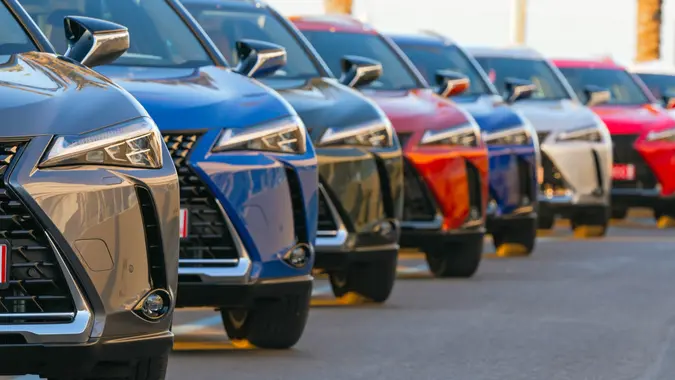
The vehicles parked front and center at dealerships aren’t the deals. Those are the ones they want to sell at full markup. Pyle said to check out the cars not in the front row.
Ask the salesperson how long a specific vehicle has been sitting there. The longer it’s been on the lot, the more motivated they are to move it. Look at cars that might be less appealing to other buyers because of color, features or minor cosmetic issues that don’t actually affect how it drives.
Don’t be afraid to make a lowball offer just to see what happens. Pyle explained that a dealer might have planned to make $5,000 profit on a sale but would be willing to come down to just $1,000 in profit to get the car gone.
Which Cars Last Longest? Ranking 32 Brands
New Cars Follow Different Rules
The same concept applies to new vehicles that have been sitting too long, but dealers will hold onto them longer than used inventory. They have more invested and can afford to wait.
The timing matters more with new cars. Manufacturers issue rebates when the next year’s model is about to arrive, which typically happens around October. Those rebates come off the MSRP for the customer, but the dealer still makes good money on the sale.
Mid-summer and early fall are when dealers become more willing to negotiate. They know the clock is ticking before new inventory shows up and their current stock becomes last year’s model.
Dealers Need To Make Money, but You Decide How Much
Pyle was realistic about dealer profits. They have to make money or they close their doors. But you get to decide how much they make off you.
The minimum profit most dealers will accept is around $2,000 to $3,000. That’s the floor, not the starting point for negotiation.
The Invoice Paperwork Strategy Actually Works
Here’s a move Pyle said you can make: Tell the dealer you’re willing to buy the car today for $2,000 over their cost if they’ll show you the invoice proving what they paid the manufacturer.
Some dealers will do it. Some won’t. The worst they can say is no, but asking forces them to either show their cards or explain why they won’t. Either way, you learn something about how motivated they are to sell.
Inventory That Sits Gets Discounted
The fundamental rule is simple: Time works against dealers. Every day a car sits on the lot costs them money in financing, insurance and opportunity cost from tying up capital.
Used cars gathering dust in less visible spots are easier targets for negotiation than shiny new arrivals. New cars approaching the end of their model year become more negotiable as fall arrives and dealers want space for incoming inventory.
What This Means for Buyers
If you’re shopping for a used vehicle, walk past the front row and head to the back of the lot. Ask how long specific cars have been there and make offers that seem almost insulting. You might be surprised what gets accepted.
If you’re buying new, wait until mid-summer or early fall when dealers are most motivated to clear space. Look for current-year models that have been sitting since spring.
And remember Pyle’s point about dealer profit: They need to make something, but you don’t have to accept their first, second or even third number. The longer the car has been sitting, the more room there is to negotiate.
More From GOBankingRates