Are Coins a Safe-Haven Asset? What Experts Say for 2026
 Written by
Vance Cariaga
Written by
Vance Cariaga
 Edited by
Jenna Klaverweiden
Edited by
Jenna Klaverweiden
Commitment to Our Readers
GOBankingRates' editorial team is committed to bringing you unbiased reviews and information. We use data-driven methodologies to evaluate financial products and services - our reviews and ratings are not influenced by advertisers. You can read more about our editorial guidelines and our products and services review methodology.

20 Years
Helping You Live Richer

Reviewed
by Experts

Trusted by
Millions of Readers
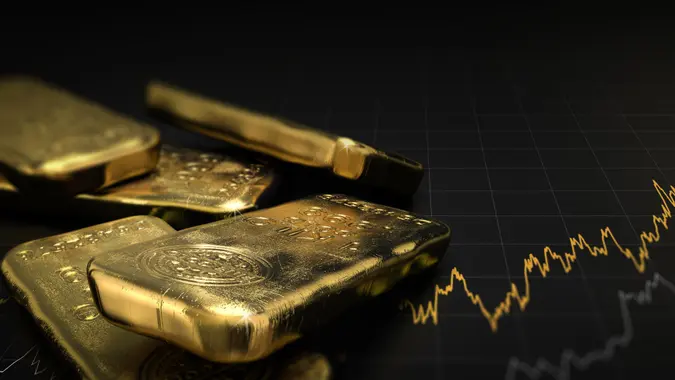
Gold and silver prices surged to new highs early in 2026 as investors looked for ways to hedge against stock market volatility and an uncertain geopolitical environment. The same dynamics might make coins a good investment, as well.
Are coins considered a safe-haven asset in 2026? Here’s what experts have to say.
Also see the five most valuable American coins still in circulation.
What the Past Tells Us
If the past is any indication, this might be a good time to invest in collectible coins. When gold and silver prices move higher, rare coins “tend to follow suit” over the next nine to 18 months, according to Dr. Mike Fuljenz, president of Universal Coin & Bullion in Beaumont, Texas.
What’s more, coins typically maintain their value even when gold and silver markets become more volatile.
“That was especially true when rare coins reached previously unattained highs following the bullion and rare-coin market increases from 1976 to 1980 and from 1986 to 1990,” Fuljenz told GOBankingRates. “Why this occurred in the past is that most gold and silver bullion buyers purchased their bullion from rare coin dealers and are introduced to the numismatic market.”
About 1 in 8 of those bullion buyers became rare coin buyers at his company. “This greatly expands the demand for rare coins, resulting in increased prices for select coins in the rare coin market,” Fuljenz said.
The Market in 2026
If you’re thinking about starting a coin collection, now is a “great time” to do so, said Laura Sperber, co-founder of Legend Numismatics in Lincroft, New Jersey.
“I believe rare coins are still cheap when you consider their potential value,” Sperber told GOBankingRates. “I do not know of any other collectible that has the liquidity of rare coins. You can still buy rarities — coins with fewer than 50 to 100 known survivors — in top condition for under $25,000.”
Even “classic rarities” worth more than $1 million have the potential to keep rising in value, Sperber said — and she should know. She has personally bought and sold some of the most famous and valuable coins on behalf of clients, including a 1794 silver dollar that was purchased for $10 million and sold eight years later for a record-setting $12 million.
“The recent rise of gold and the popularity of apps such as Whatnot have brought much attention to rare coins,” Sperber said. “As demand increases, so do the prices.”
What To Buy
If you have the money, Fuljenz recommended investing in rare gold coins with a “significant component of gold value.”
Examples include the $20 Liberty Gold Coin (1850-1907), which can range in price from less than $2,000 to hundreds of thousands of dollars, and the $20 Saint Gaudens Gold Double Eagle Coin, which sells for around $5,400 and up on some dealer sites.
For silver coins, Sperber recommended Proof coins struck from 1860 to 1915 in Proof 65 or Proof 66 grade. She also suggested “building a Mint State 65 gold type set of 12 different designs and denominations in MS65 or better.”
No matter what you purchase, it’s a good idea to purchase coins that have been authenticated and graded by the Professional Coin Grading Service or CAC Grading Service.
Editor’s note: This article is for informational purposes only and does not constitute financial advice. Investing involves risk, including the possible loss of principal. Always consider your individual circumstances and consult with a qualified financial advisor before making investment decisions.
More From GOBankingRates