The Investment Mistake That Hurts Most During Economic Volatility
 Written by
Sean Bryant
Written by
Sean Bryant
 Edited by
Jenna Klaverweiden
Edited by
Jenna Klaverweiden
Commitment to Our Readers
GOBankingRates' editorial team is committed to bringing you unbiased reviews and information. We use data-driven methodologies to evaluate financial products and services - our reviews and ratings are not influenced by advertisers. You can read more about our editorial guidelines and our products and services review methodology.

20 Years
Helping You Live Richer

Reviewed
by Experts

Trusted by
Millions of Readers
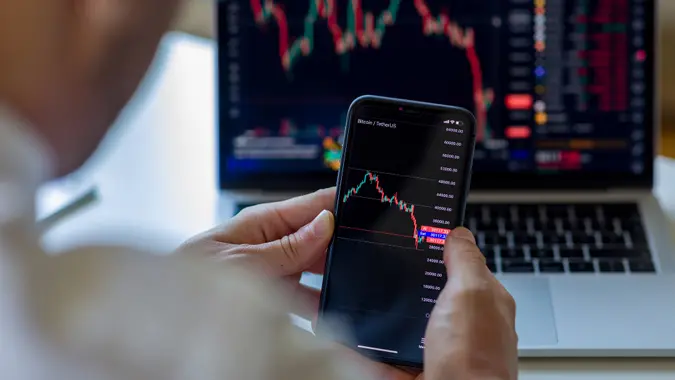
Stock market swings are a normal part of investing. While it can be scary to watch your portfolio drop by several percentage points in a single day, putting emotions into your investment decisions often has worse consequences.
Let’s look at why making emotional investment decisions hurts the most during economic volatility.
Losses From Panic-Selling
The stock market is influenced by a variety of factors, including interest rates, inflation, unemployment and foreign policy. Just one bad report or overseas conflict could temporarily send the market into a decline, which can cause panic and fear. Letting these emotions drive your decisions to offload investments can lead to losses from selling at low points.
“If an investor has a true financial plan guiding their actions and investment decisions, market volatility should not be a reason to throw that plan out the window,” said John Foard, CFP, co-founder of Crown Advisors. “Panic selling, trying to time the market and completely abandoning your long-term plan will do more damage than short-term market swings.”
Missed Return Opportunities
When you panic-sell investments, you miss return opportunities. Let’s look at an example. In 2022, the S&P 500 declined by 19.44%. However, the S&P rose by 24.23%, 23.31% and 16.39% in 2023, 2024 and 2025, respectively. If you sold investments out of fear and never reentered the market, you would have missed out on significant gains.
“Studies show that when you miss the 10 best days of the market (when selling or going to cash due to discomfort with market volatility) your returns are significantly diminished,” Foard said. “This can and will create a situation where your portfolio will not keep up with the level of returns you need to accomplish retirement goals, let alone inflation.”
Avoiding Emotional Investing
Emotional investing is far too common during economic volatility.
Even though investing gurus and economists might be predicting poor performance in the near future, that doesn’t mean you should make emotional investment decisions. Instead, think about your long-term goals or consult with a financial advisor.
Editor’s note: This article is for informational purposes only and does not constitute financial advice. Investing involves risk, including the possible loss of principal. Always consider your individual circumstances and consult with a qualified financial advisor before making investment decisions.
More From GOBankingRates