I Compared Prices Before and After Trump’s Tariffs: Here’s What Changed
 Written by
Heather Altamirano
Written by
Heather Altamirano
 Edited by
Rebekah Evans
Edited by
Rebekah Evans
Commitment to Our Readers
GOBankingRates' editorial team is committed to bringing you unbiased reviews and information. We use data-driven methodologies to evaluate financial products and services - our reviews and ratings are not influenced by advertisers. You can read more about our editorial guidelines and our products and services review methodology.

20 Years
Helping You Live Richer

Reviewed
by Experts

Trusted by
Millions of Readers
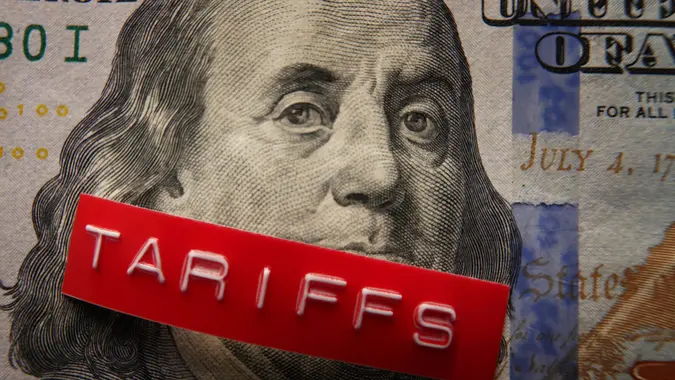
For years, Americans have been hit hard in the wallet with soaring prices thanks to inflation and the lingering effects of the pandemic. While President Donald Trump campaigned on lowering costs, especially at the grocery store, prices have crept up due to his global tariff policy. According to the White House, Trump’s tariffs are to “protect American workers” and bolster the United States’ standing in the global economy.
But the data shows Americans are actually paying more for essential and everyday items than before the tariffs. According to the Yale Budget Lab’s, “State of U.S. Tariffs” report, the average household shells out an extra $2,400 annually in higher prices as a result. Here’s what changed.
Food Prices Have Gone Up, Not Down
Many shoppers are experiencing significant sticker shock when checking out at the grocery store. The U.S. Bureau of Labor Statistics (BLS) reported that overall “food at home” prices were up 3.1% year over year through the end of December.
Many staples are drastically rising, putting a significant dent in consumers’ bank accounts. For example, beef prices have increased by over 16% (per BLS), coffee prices have climbed nearly 20% (per BLS) and shoppers have paid more than 6% for fruits and seafood, according to the Pricing Lab Tracker.
However, it’s important to note that while beef prices have gone up, tariffs are not the sole reason. Imports, especially from Brazil, are down due to tariffs, but the industry faces other challenges, including smaller herd sizes and drought, NPR reported.
Household Electricity Bills Are Skyrocketing
Energy costs have also sharply increased, according to figures from the U.S. Energy Information Administration (EIA). The average U.S. residential electricity prices jumped to 17.47¢ per kWh by mid-2025, up more than 6% from mid-2024.
Analysts say tariffs on steel, aluminum and other grid materials may have contributed to higher infrastructure costs, which are passed on to consumers, resulting in higher utility bills for Americans, according to Utility Dive.
Clothing and Accessories: Tariffs Push Prices Higher
Another way tariffs have affected Americans is by raising clothing prices by more than 15%, according to the Pricing Lab Tracker. Imported items jumped nearly 18%, while domestically produced clothing saw a smaller increase of roughly 7%.
Carpets and Floor Coverings: Tariffs Drive Steep Increases
For anyone building a house or remodeling, carpets and flooring have seen tremendous price increases. For imported items, costs are surging by nearly 49% relative to pre-tariff levels and domestic items are climbing by about 41%, according to the Pricing Lab Tracker.
Do Research Before Making a Big Purchases
There’s no telling when or if prices will drop, so before making a large purchase, Eric Mangold, certified wealth strategist (CWS) and founder of Argosy Wealth Management, suggested doing your homework first.
“Research pre- and post-tariff prices to determine whether it remains prudent to proceed,” he said. “For example, kitchen cabinets were hit with a 25% tariff, so if you were thinking about renovating your kitchen, you should know how much more it will cost you.”
Trump’s tariffs have a clear impact on everything from basic household needs to refreshing your closet and sprucing up your home. Understanding how tariffs affect purchases can help you plan your budget accordingly and avoid paying more than expected.
Editor’s note on political coverage: GOBankingRates is nonpartisan and strives to cover all aspects of the economy objectively and present balanced reports on politically focused finance stories. You can find more coverage of this topic on GOBankingRates.com.
More From GOBankingRates