Mark Cuban’s Most Outdated Piece of Advice (But Can It Still Work?)
 Written by
Kerra Bolton
Written by
Kerra Bolton
 Edited by
Rebekah Evans
Edited by
Rebekah Evans
Commitment to Our Readers
GOBankingRates' editorial team is committed to bringing you unbiased reviews and information. We use data-driven methodologies to evaluate financial products and services - our reviews and ratings are not influenced by advertisers. You can read more about our editorial guidelines and our products and services review methodology.

20 Years
Helping You Live Richer

Reviewed
by Experts

Trusted by
Millions of Readers
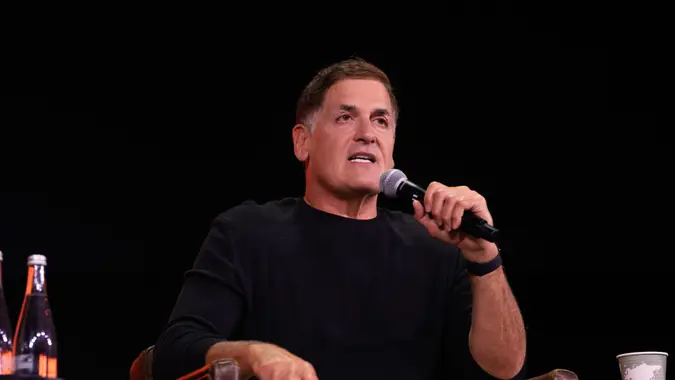
Mark Cuban has long shared straightforward money rules, from avoiding debt to investing in yourself.
However, one of his earliest rules feels especially out of sync with today’s economy: “Live like a student.” It made sense when rent was $600 and ramen cost a quarter, but times and prices have changed. Still, could that old-school advice hold new relevance today? Find out below.
What Cuban Meant by ‘Live Like a Student’
In his early interviews and books, Cuban urged young professionals to spend as if they were still in college — sharing apartments, cutting luxuries and saving aggressively.
The point wasn’t deprivation but discipline: controlling lifestyle inflation to build wealth faster. It’s classic billionaire pragmatism, delay gratification now, reap freedom later. For decades, that message resonated because modest sacrifices could still yield big financial leaps.
Why It Doesn’t Fit the Current Economy
The problem? The math doesn’t add up anymore. According to National Association of Realtors (NAR), housing costs have doubled in many cities since the 1990s, student loans are heavier and essentials like groceries and healthcare swallow paychecks.
Even entry-level workers have seen some progress. According to the Economic Policy Institute, real wages for young adults have grown 9.1% since 2020, faster than for older workers. However, those gains haven’t translated into stability.
Rent, health care and food prices keep rising faster than paychecks. For many, “living like a student” isn’t a strategy for saving. It’s a necessity for survival. What once sounded frugal now feels out of touch with median wages and real-world costs.
The Emotional Cost of Extreme Frugality
Younger generations already trim luxuries — skipping vacations, side-hustling weekends, delaying families. Constant austerity can backfire, breeding burnout and resentment instead of financial resilience.
Financial educators stress that balanced, steady saving works better than extreme deprivation. Guidelines like Fidelity’s 50/15/5 rule encourage allocating portions of income to essentials and savings so people can build stability over time without constantly sacrificing quality of life.
Building a healthy relationship with money requires space for joy and rest, not just spreadsheets and sacrifice. Cuban’s ethos of discipline still matters, but mental and emotional sustainability count just as much in today’s hustle culture.
How To Update Cuban’s Advice
Unlike Cuban’s early days, modern “student living” looks different: streaming instead of cable, used cars instead of new leases, meal-planning instead of takeout. The updated rule isn’t “live like a student” — it’s “live strategically.”
Automate savings, limit fixed costs and invest early in skills that raise earning power. That could mean earning a certification, learning AI tools to stay employable or building a side business that compounds over time. They are all modern equivalents of Cuban’s ‘invest in yourself’ mantra.
It’s not about ramen noodles; it’s about staying flexible while your income grows.
The Core Lesson Still Holds
Strip away the nostalgia and Cuban’s advice points to timeless wisdom: don’t let lifestyle creep outpace income. In a high-cost world, true wealth still comes from intentional choices — knowing when to spend, when to save and when to bet on yourself. The slogan may be outdated, but the mindset still works.
Even as the economy evolves, the deeper takeaway remains: financial independence is about awareness. Cuban’s old mantra may need updating, but its spirit still challenges Americans to think critically about how much is enough.
More From GOBankingRates