One Simple Move That Lets You Save Twice as Much as Others for Retirement
 Written by
Rafaela Stalbalk Klose
Written by
Rafaela Stalbalk Klose
 Edited by
Zuri Anderson
Edited by
Zuri Anderson

Commitment to Our Readers
GOBankingRates' editorial team is committed to bringing you unbiased reviews and information. We use data-driven methodologies to evaluate financial products and services - our reviews and ratings are not influenced by advertisers. You can read more about our editorial guidelines and our products and services review methodology.

20 Years
Helping You Live Richer

Reviewed
by Experts

Trusted by
Millions of Readers
As 2026 begins many people are rethinking what financial security really looks like.
New year goals often center on spending less or trying harder to save but research from behavioral economists shows that lasting progress usually comes from structural changes rather than willpower alone. Studies from the National Bureau of Economic Research consistently find that people save more when retirement contributions are automatic rather than voluntary.
Retirement saving is often framed as a test of discipline. Skip small indulgences. Start earlier. Be more aggressive. In reality one simple structural move stands out. It is the change that can help some people save roughly twice as much as others for retirement over time.
That move is automatic retirement saving through payroll.
GOBankingRates breaks down what makes this simple strategy so beneficial for your retirement planning.
How Does Automatic Retirement Saving Work?
Research from the National Bureau of Economic Research shows that workers enrolled in automatic retirement plans accumulate significantly higher balances over time than those who must opt in manually even when income levels are similar. Participation rises sharply under automatic enrollment and contributions tend to remain steady because most people stick with default settings once they are in place.
Automatic saving works because it removes friction. When contributions are deducted from a paycheck before money reaches a checking account they do not compete with groceries rent or everyday spending. Saving becomes the baseline rather than a choice that has to be reconsidered each month.
The long-term impact can be substantial even at modest income levels. Consider two workers earning $60,000 a year. One contributes 5% when possible and pauses during tighter months. The other is automatically enrolled at 6% and stays consistent. Over 30 years assuming average market returns the automatic saver can end up with far more simply because contributions never stop and compound without interruption.
Data from Vanguard supports this pattern. Its annual How America Saves report shows that workers who save through automatic payroll deductions not only participate at higher rates but also contribute a larger share of income over time. Contributions continue through market swings because the process does not depend on confidence or timing.
Adding Employer Match to the Equation
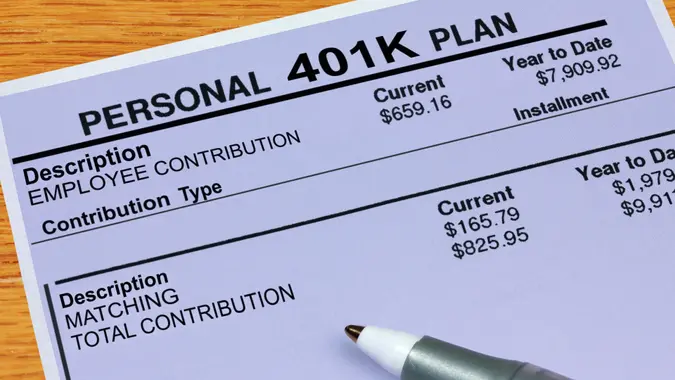
Employer matches further widen the gap. A match is part of compensation yet many workers fail to capture the full amount available. According to Fidelity, employees who contribute enough to receive the full employer match often accumulate close to double the retirement savings of those who do not. The difference comes from consistent contributions combined with employer dollars rather than higher risk or complex strategies.
Default contribution levels also matter. Many plans start employees between 3% and 6%. While that helps people begin saving it may not be enough on its own. T. Rowe Price suggests that saving 10% to 15% of income over a full career including employer contributions improves the likelihood of maintaining lifestyle in retirement. Automatic escalation features that increase contributions gradually help workers move toward those levels without sudden pressure on take-home pay.
Final Take To GO
Automatic saving supports financial wellness beyond account balances. The American Psychological Association notes that financial stress is often driven by uncertainty and decision fatigue rather than income alone. Removing repeated decisions can reduce anxiety and create a greater sense of stability.
For workers without access to a workplace plan the same principle still applies. Many banks and brokerages allow automatic transfers to IRAs timed with paydays. Saving immediately when income arrives prevents money from being absorbed into everyday spending before it has a chance to grow.
More From GOBankingRates