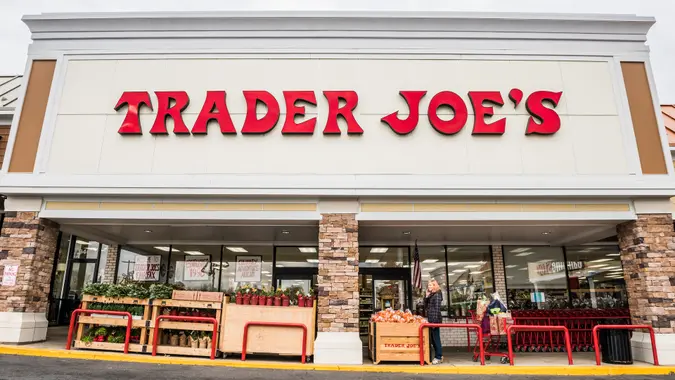
How Much the Average American Should Aim To Spend on Groceries in 2026
 Written by
Laura Beck
Written by
Laura Beck
 Edited by
Molly Sullivan
Edited by
Molly Sullivan

Commitment to Our Readers
GOBankingRates' editorial team is committed to bringing you unbiased reviews and information. We use data-driven methodologies to evaluate financial products and services - our reviews and ratings are not influenced by advertisers. You can read more about our editorial guidelines and our products and services review methodology.

20 Years
Helping You Live Richer

Reviewed
by Experts

Trusted by
Millions of Readers
Setting a grocery budget feels impossible when prices keep climbing. One month you’re spending $400, the next it’s $600, and suddenly you’re wondering if you’re doing something wrong or if food really just costs this much now.
The truth is somewhere in the middle. Groceries are expensive, but there are realistic benchmarks you can use to figure out if you’re on track or overspending.
What the Average American Actually Spends
The average U.S. household spends about $504 per month on groceries, according to Bureau of Labor Statistics data. But that number doesn’t tell the whole story because it lumps together single people, couples, families of six and more.
When you look at individual spending, the picture gets clearer. Recent data shows Americans spend around $370 per month per person on groceries. Some surveys report even higher numbers, with people spending closer to $940 per month per household.
Location matters too. If you live in Hawaii, Alaska or California, your grocery bill is likely significantly higher than someone in the Midwest. Households in Hawaii spend over $1,500 monthly on groceries, while households in states like West Virginia spend around $770 to $850, according to Beehive Meals.
What You Should Actually Aim To Spend
The USDA publishes monthly food plans that show what a nutritious, home-cooked diet should cost at different budget levels. These plans are broken into four tiers: thrifty, low-cost, moderate-cost and liberal.
For 2026, here’s what the USDA moderate-cost plan looks like:
A single adult should aim for about $328 to $388 per month depending on age and gender. A couple can expect to spend around $800 monthly. A family of four including two adults and two older children should budget approximately $1,500 per month.
Those numbers assume you’re cooking at home and not eating out. If you want a tighter budget, the USDA thrifty plan for a family of four comes in around $1,000 per month.
Why 2026 Numbers Matter
Food prices aren’t done climbing. The USDA projects grocery prices will increase another 2.3% in 2026. That’s slower than the big jumps we saw in 2022 and 2023, but it still means your dollar won’t stretch as far.
Since February 2020, grocery prices have jumped 29% cumulatively. Certain items will cost more than others. Eggs, beef and non-alcoholic beverages have seen some of the steepest price hikes recently. If your grocery shopping relies heavily on those foods, budget a bit more.
How To Know If You’re Overspending
Compare your current spending to the USDA moderate plan for your household size. If you’re spending 20% to 30% more than that benchmark, there’s probably room to cut back.
Signs you might be wasting money include throwing out spoiled food regularly, buying a lot of prepackaged convenience items, shopping without a list or making multiple grocery trips per week instead of planning ahead.
Also, check where you shop. You can save money by choosing store brands over name brands and shopping based on weekly sales. If you’re always grabbing the premium products at an expensive store, switching to a discount grocer like Aldi or Costco could save hundreds monthly.
Setting Your 2026 Budget
Start with the USDA moderate plan as your baseline. Adjust up or down based on where you live, dietary restrictions and how much you realistically cook at home.
Track what you actually spend for a month before making changes. You might be surprised where the money goes. Once you know your starting point, set a realistic target that’s 10% to 20% lower and work toward it gradually.
Remember that the goal isn’t to eat poorly or feel deprived. It’s to spend intentionally so your grocery budget doesn’t quietly eat up money you need for other financial goals.
More From GOBankingRates