8 Reasons Grocery Prices Are Still Going Up
 Written by
Rafaela Stalbalk Klose
Written by
Rafaela Stalbalk Klose
 Edited by
Brendan McGinley
Edited by
Brendan McGinley
Commitment to Our Readers
GOBankingRates' editorial team is committed to bringing you unbiased reviews and information. We use data-driven methodologies to evaluate financial products and services - our reviews and ratings are not influenced by advertisers. You can read more about our editorial guidelines and our products and services review methodology.

20 Years
Helping You Live Richer

Reviewed
by Experts

Trusted by
Millions of Readers
Groceries aren’t getting cheaper, they’re just slowing down the rate at which they’re getting more expensive.
According to data from the U.S. Bureau of Labor Statistics, prices for several everyday grocery staples remain elevated. Coffee prices were nearly 20% higher in December 2025 than a year earlier, while ground beef prices increased 15.5% over the same period.
Even as shoppers respond by buying more store brands, swapping premium items for lower-cost options and hunting for promotions, grocery bills continue to climb. Below are eight main reasons grocery prices remain stubbornly high and why meaningful relief has been slow to arrive.
1. Tariffs and Trade Policies Add Hidden Costs
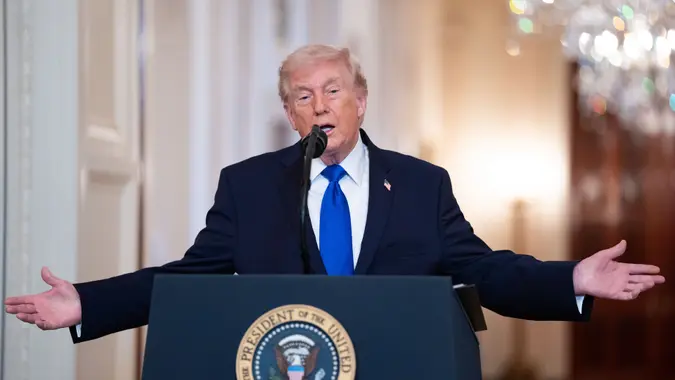
Trade policy continues to affect grocery prices in ways that are not always obvious to shoppers. Because the U.S. relies heavily on imported foods, tariffs on food products and on materials like steel and aluminum raise costs across the supply chain. According to Reuters, President Trump’s broad tariffs on imported goods, including higher-than-usual tariffs on coffee imports and tariffs on fruits such as bananas, increased the cost of bringing these products into the United States. Those higher import costs were largely passed on to retailers and consumers, contributing to higher grocery prices seen in consumer price data and economic analyses.
2. Extreme Weather Is Pushing up Specific Foods
Weather-related disruptions remain a major driver of price increases for certain staples. According to the U.S. Department of Agriculture, severe drought conditions in 2022 affected key beef-producing regions in the central U.S., drying up pasture and driving up the cost of cattle feed. Faced with higher feed prices and poor grazing conditions, many ranchers reduced herd sizes, including selling cows typically kept for breeding. That herd reduction tightened beef supplies nationwide, contributing to higher beef prices that have persisted at grocery stores. Similar pressures have affected coffee and produce, where drought and extreme heat in major growing regions have reduced yields and raised costs.
3. Slower Inflation Still Means Higher Prices
When inflation cools, prices are not falling, they are simply rising more slowly. Grocery costs illustrate this clearly. According to NPR, government forecasts still expect food-at-home prices to increase in 2026, even as the pace of inflation moderates. Those increases are building on an already elevated baseline. Bureau of Labor Statistics data cited by NPR show grocery prices are nearly 30% higher than they were at the start of the pandemic. Against that backdrop, even modest annual increases of 2% or 3% can feel significant for households already stretched by higher housing, energy and healthcare costs.
4. Pandemic-Era Costs Became Permanent
According to reporting from the Baker City Herald, many cost pressures triggered during the COVID-19 pandemic became structural rather than temporary. Labor shortages, higher transportation expenses and supply chain disruptions that began in 2020 never fully eased. Instead of returning to pre-pandemic levels, those higher operating costs were absorbed into food pricing models, keeping grocery prices elevated years later.
5. Labor Shortages Are Driving up Food Costs
Labor constraints continue to affect food prices from farm to store. According to Bloomberg, worker shortages across agriculture, food processing, meatpacking and transportation have slowed production and raised wages. Pandemic-related disruptions and tighter immigration rules compounded those shortages, while Brexit further strained labor availability in parts of the global food system. Higher labor costs at each stage of production are typically passed along to wholesalers, retailers and ultimately consumers.
6. Transportation and Fuel Costs Add to Grocery Bills
Food prices are influenced by more than what happens at the farm or in the store. According to the U.S. Department of Agriculture’s Economic Research Service, higher fuel and transportation costs raise wholesale prices for many foods, especially fresh fruits and vegetables shipped long distances. Refrigeration, fuel surcharges and logistics bottlenecks all add to final shelf prices, increasing what shoppers pay at checkout.
7. Packaging and Production Inputs Cost More
According to NPR, higher costs for packaging materials such as steel and aluminum continue to put pressure on grocery prices. Tariffs on imported metals have raised the cost of producing cans and other food packaging. Because many food manufacturers rely on these materials, those higher packaging costs are often passed directly to consumers rather than absorbed by producers.
8. Demand Has Stayed Strong
]Grocery prices have also remained elevated because consumer demand has not weakened significantly. According to the BBC, households continue to prioritize spending on food even as overall inflation slows, particularly for everyday staples that are difficult to cut back on. That steady demand gives producers and retailers less incentive to lower prices, helping keep grocery costs higher than many shoppers expect.
More From GOBankingRates