Suze Orman: This Overlooked Health Insurance Detail Could Cost You Thousands in 2026
 Written by
Laura Beck
Written by
Laura Beck
 Edited by
Jenna Klaverweiden
Edited by
Jenna Klaverweiden
Commitment to Our Readers
GOBankingRates' editorial team is committed to bringing you unbiased reviews and information. We use data-driven methodologies to evaluate financial products and services - our reviews and ratings are not influenced by advertisers. You can read more about our editorial guidelines and our products and services review methodology.

20 Years
Helping You Live Richer

Reviewed
by Experts

Trusted by
Millions of Readers
Most people know what their health insurance premium costs every month. According to Suze Orman, that’s the easy part. The number that can blindside a household is the one hiding in the fine print.
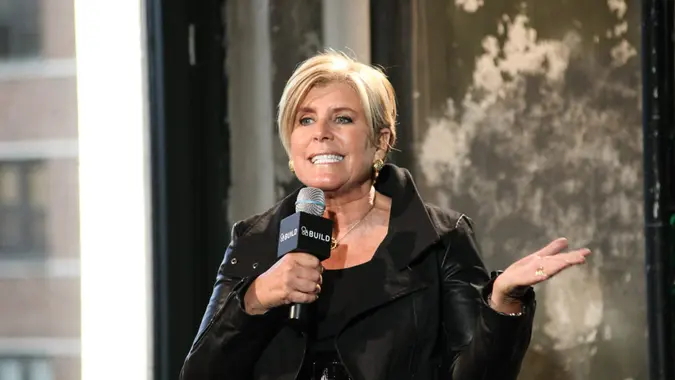
In a recent LinkedIn article, the bestselling personal finance author and host of the “Women & Money” podcast zeroed in on a detail she said too many people fail to plan for: their maximum out-of-pocket cost, or MOOP.
Also see the 10 simplest ways to slash healthcare costs in 2026.
What the MOOP Actually Means
Your MOOP is the most you’ll pay out of pocket in a given year for covered in-network care, after premiums. Deductibles, copays and coinsurance all count toward it. Once you hit it, your insurance covers the rest for that calendar year.
The problem, Orman said, is that most people have no idea what their number actually is and haven’t set aside the cash to cover it if a bad year hits.
The 2026 Numbers You Need To Know
The limits vary depending on what kind of coverage you have.
For people with employer-sponsored or ACA marketplace plans, the maximum allowable MOOP for an individual in 2026 is $10,600, or $21,200 for family coverage. Many employer plans set their own lower limits around $4,500 for an individual, but Orman said you need to check your specific plan rather than assume. For family plans, it also matters whether the MOOP applies per person or to the family as a whole.
For Medicare Advantage enrollees, the MOOP can run as high as $9,250 for in-network care in 2026. Even if your plan caps it at half that amount, you could still be looking at more than $4,000 in a single year.
For those on Original Medicare, Orman repeated her standing advice: A Medigap supplemental policy is not optional. Original Medicare covers 80% of Part B expenses with no cap on what you owe for the remaining 20%. Without a Medigap policy, a serious illness or injury can leave you with an open-ended bill.
Why Two Years of Coverage Matters
Orman’s guidance goes beyond just knowing your MOOP number. She said households should have enough in emergency savings to cover that maximum for at least two consecutive years, and her reasoning is practical.
Medical events don’t follow a calendar, she explained. An injury late in the year can push you to your annual limit, and then care that continues into January starts the clock over again for a brand-new year. Two bad years back to back can mean hitting your MOOP twice.
Orman pointed to research showing that serious accidents requiring hospitalization left households significantly more likely to carry medical debt 18 months later, and that debt often landed on credit cards charging 20% interest or more. In fact, according to a 2025 KFF poll, 62% are worried about affording health costs, while 61% are worried about unexpected medical bills.
What To Do Right Now
Orman’s advice was straightforward: Find out your household’s exact MOOP exposure today, and then be honest about whether your emergency savings can actually cover it.
If the answer is no, that’s the gap to start closing. To build up an emergency fund, the Consumer Financial Protection Bureau advised setting a goal, making consistent contributions, monitoring your progress and celebrating successes.
Knowing your premium is a good start. Knowing the worst-case number your plan can hand you in a single year is what actually protects you.
More From GOBankingRates