The Tax Refund Myth That’s Costing Americans Money
 Written by
Andrew Lisa
Written by
Andrew Lisa
 Edited by
Zuri Anderson
Edited by
Zuri Anderson

Commitment to Our Readers
GOBankingRates' editorial team is committed to bringing you unbiased reviews and information. We use data-driven methodologies to evaluate financial products and services - our reviews and ratings are not influenced by advertisers. You can read more about our editorial guidelines and our products and services review methodology.

20 Years
Helping You Live Richer

Reviewed
by Experts

Trusted by
Millions of Readers
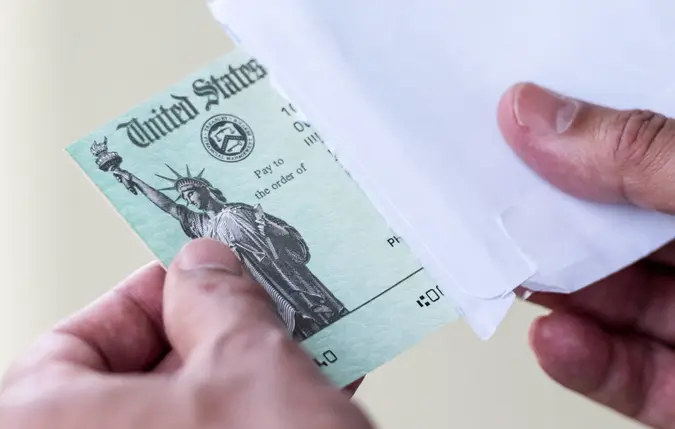
The most recent IRS data shows that the average 2026 tax refund is $3,623 as of mid-March, up from $3,271 at the same time in 2025. That’s a year-over-year increase of 10.8%, a fact that many publications are reporting — and taxpayers are interpreting — as good news. After all, who wouldn’t want an annual windfall to grow by double-digits?
However, the trend reveals that millions of Americans are engaging in long-term financial mismanagement by treating large tax refunds as a win. GOBankingRates spoke to experts who explained why the perception that bigger refunds are better is a dangerous money myth that can rob your wealth and hold you back.
It’s Not Free Money, It’s Your Money
Tax refunds are the repayment of excessive withholdings automatically deducted from wage earners’ take-home pay. Every extra dollar withheld is one that isn’t invested or, even worse, one that’s borrowed.
Taxpayers who received the average $3,623 refund in 2026 forfeited more than $300 of their rightful income every month in 2025, which the U.S. Treasury used to fulfill its own obligations instead of those who earned it fulfilling theirs.
“Large tax refunds are not a good thing because it means you gave the government an interest-free loan for 12 months,” said financial analyst Brennan Kolar, founder of Atlas CPA Index. “If that money had remained with the taxpayer, it could have earned interest in a high-yield savings account or a different investment.”
The Found Money Myth
The danger of the myth is that since withholdings are automatically deducted, it feels like money you found when it comes back to you, not money you lost. So, not only was that $300 per month not growing in an emergency fund or brokerage account all year, but people are more likely to treat it frivolously at refund time.
“Behaviorally, we tend to treat large refunds more like bonuses and spend them down more quickly than stable wage income disbursed over time,” said Cole Williams, certified financial planner (CFP) and founder of Vessel Financial Planning.
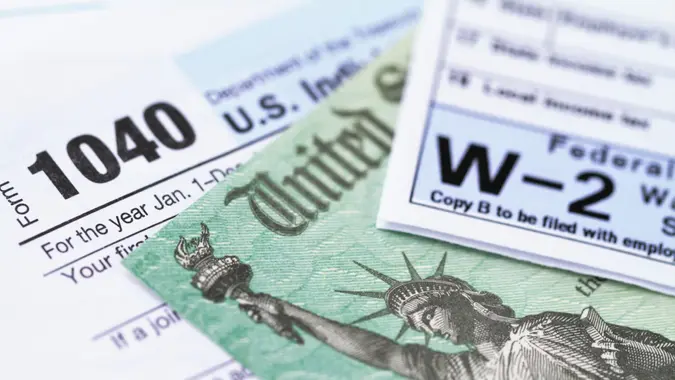
If You Receive Form W-2, File Form W-4
Both experts agreed that the hard part is to break out of the bigger-is-better refund psychology. Once you vow to keep your maximum possible take-home pay, the remedy is comparatively simple: Use Form W-4 to adjust your payroll withholdings to get your tax bill as close to zero as possible.
“By adjusting your W-4, you can reduce the amount of tax withheld from your paycheck, so it matches what you owe more closely,” Kolar said. “That extra money can then be invested so that it works for you throughout the year instead of sitting stagnant until your refund is received.”
The IRS Tax Withholding Estimator makes it simple to find the right amount, which can change annually.
“Recheck it whenever your situation changes, such as starting a new job, having a child, etc.,” said Kolar.
More From GOBankingRates