5 Investment Mistakes Smart Seniors Avoid in a Volatile Market
 Written by
Vance Cariaga
Written by
Vance Cariaga
 Edited by
Jenna Klaverweiden
Edited by
Jenna Klaverweiden

Commitment to Our Readers
GOBankingRates' editorial team is committed to bringing you unbiased reviews and information. We use data-driven methodologies to evaluate financial products and services - our reviews and ratings are not influenced by advertisers. You can read more about our editorial guidelines and our products and services review methodology.

20 Years
Helping You Live Richer

Reviewed
by Experts

Trusted by
Millions of Readers
Volatility is a fact of life for investors, and something they will never be able to completely avoid or control. What you can control is how you react.
Smart investors develop strategies that can help them maximize gains during rising markets and minimize losses during down ones. Part of that strategy is to avoid common investment mistakes. This is important for all investors, but especially for retirees and other seniors who can’t afford to take a big financial hit.
Here are five investment mistakes that smart seniors avoid in a volatile market.
1. Obsessing Over Intraday Price Movements
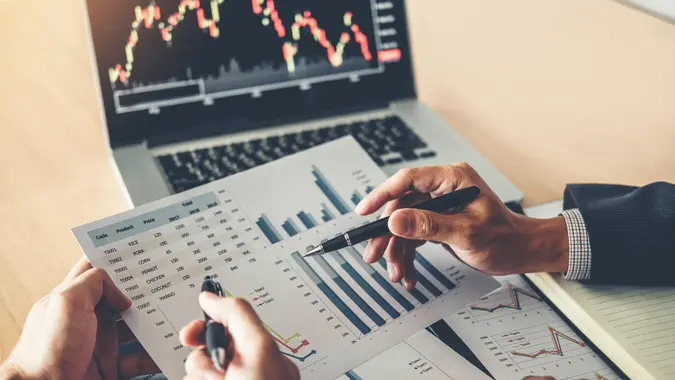
One of the most common mistakes investors make is spending too much time watching the intraday performance of their assets, according to Vince Stanzione, founder and CEO of First Information and author of “The Millionaire Dropout.”
This happens a lot during volatile markets. Retired seniors are especially susceptible because they have more time on their hands to watch prices go up and down. “Don’t check your prices every five minutes,” Stanzione told GOBankingRates. “Switch off alerts — once a day is plenty.”
2. Not Putting Money Into ETFs
Exchange-traded funds (ETFs) are an ideal asset for riding out volatile markets because they let you spread your money around. Smart senior investors should keep at least part of their money in ETFs.
“Using ETFs helps you diversify so one stock doesn’t cause your whole portfolio to sink,” Stanzione said. “For example, a Gold Mining ETF means you’re not exposed to just one stock.”
3. Putting Too Much Money Into Cash Accounts
Moving your money out of stocks, funds and similar investments and into cash accounts might seem like a good idea. This is a common move by many seniors, but the smart ones resist the urge.
It’s important to not confuse “safe” with “cash,” said Chad Cummings, an attorney and CPA at Cummings & Cummings Law who previously worked in finance and tax.
“I see seniors park $500,000 in a bank sweep earning less than inflation, then panic when property taxes, insurance, and HOA special assessments spike or when the bank goes under,” Cummings said. “I ladder Treasuries or high-quality fixed income to match known cash calls instead of leaving everything exposed to stealth purchasing-power loss. Remember, inflation is still a major problem, and frankly, shows no signs of abating anytime soon.”
4. Not Having an Exit Plan
Knowing when to get out of a particular investment is just as important as knowing when to get in. The smart ones have an exit plan and stick to it, per Stanzione.
“My wealth hasn’t been made from buying stocks — it’s from knowing when to sell,” he said. “Having a stop-loss or target makes the process easier. Simple charts using a 200-day moving average can give you a guide. If the stock or ETF goes below that line, you sell.”
5. Ignoring Real Estate Costs
Senior investors often consider their homes and other real estate holdings a safe haven from stock market volatility. But that can be a mistake if you don’t weigh the costs of those holdings against their potential value.
“I do not allow clients to forget the real estate balance sheet,” Cummings said. “Seniors over-concentrate in a single property, then face rising insurance premiums, HOA dues, flood exclusions, and surprise assessments after storms or deferred maintenance. Even when a house is owned free-and-clear, it should be treated as an ongoing liability, not an asset.”
Editor’s note: This article is for informational purposes only and does not constitute financial advice. Investing involves risk, including the possible loss of principal. Always consider your individual circumstances and consult with a qualified financial advisor before making investment decisions.
More From GOBankingRates