Money Market Account vs. Money Market Fund: What’s the Difference?
 Written by
Joshua Rodriguez
Written by
Joshua Rodriguez
 Edited by
Nupur Gambhir, CFHC™
Edited by
Nupur Gambhir, CFHC™

Commitment to Our Readers
GOBankingRates' editorial team is committed to bringing you unbiased reviews and information. We use data-driven methodologies to evaluate financial products and services - our reviews and ratings are not influenced by advertisers. You can read more about our editorial guidelines and our products and services review methodology.

20 Years
Helping You Live Richer

Reviewed
by Experts

Trusted by
Millions of Readers
They sound almost identical — but a money market account and a money market fund are two very different financial products. One is a savings account. The other is an investment. Choosing the wrong one for your goals could mean missing out on returns, losing federal protection on your deposits, or getting caught off guard by withdrawal limits. Here’s what you need to know.
What Is a Money Market Account?
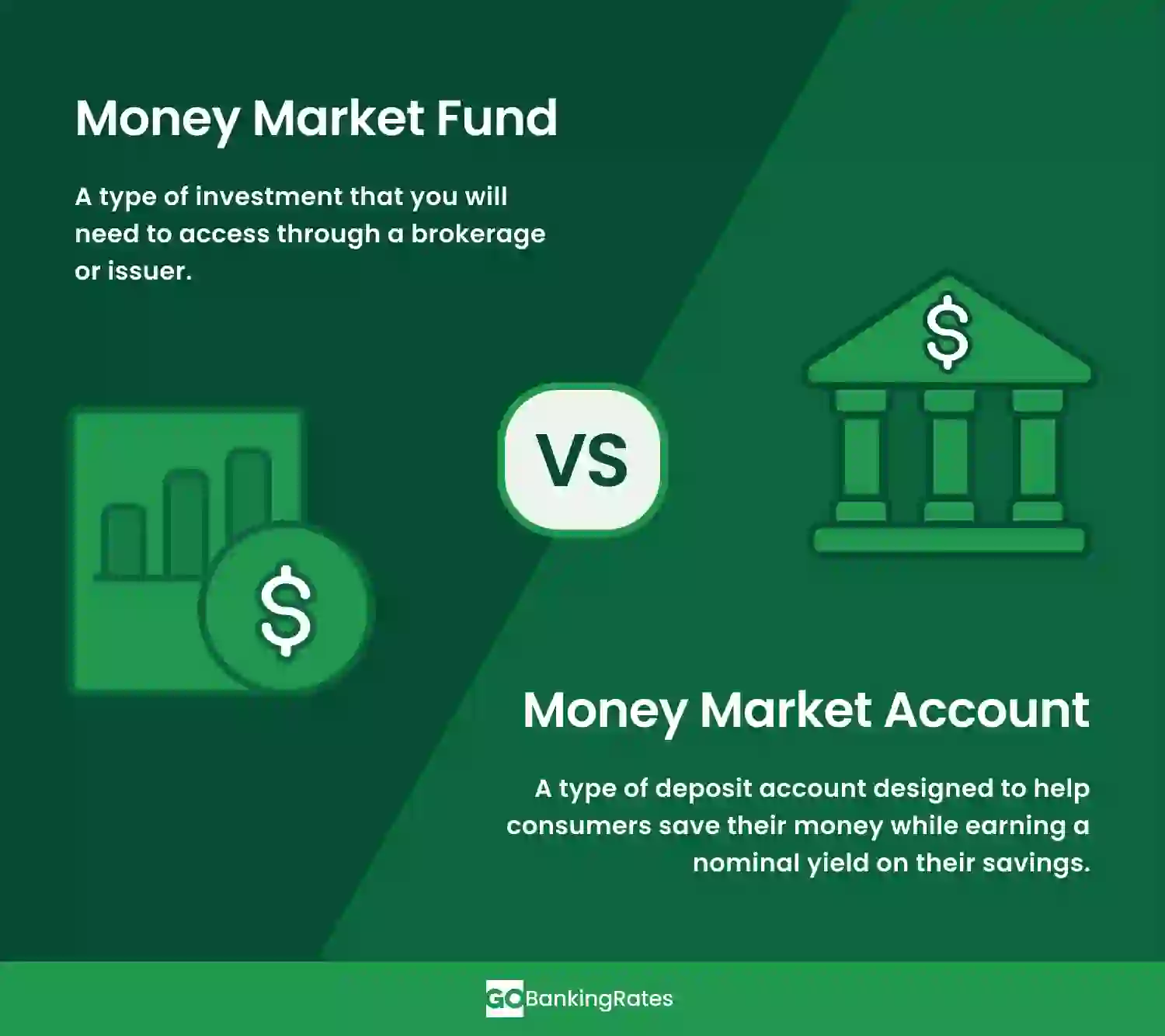
A money market account is a type of savings deposit account offered by banks and credit unions. It works similarly to a regular savings account but typically pays a higher yield.
Key features:
- FDIC or NCUA insured up to $250,000 per depositor
- Often comes with a debit card and check-writing privileges
- Higher yields than traditional savings accounts
- Some banks limit withdrawals to six per month — exceeding that may trigger a fee
- Minimum balance requirements often apply
Because it’s a deposit account, your money is federally protected and easy to access. It’s a safe place to park cash you might need in the near term.
What Is a Money Market Fund?
A money market fund is a type of mutual fund — an investment product, not a bank account. These funds typically invest in short-term debt securities, which keeps risk low relative to other investments. But low risk isn’t the same as no risk.
Key features:
- Not FDIC or NCUA insured — no federal protection on your balance
- Typically pays higher yields than money market accounts
- No debit card or check writing — you access funds by selling your investment through a brokerage
- No limit on how often you can access your money
- Low minimum investment requirements
Money market funds are often used as a temporary holding place for cash inside a brokerage account — somewhere to keep uninvested funds earning a return while you decide what to do next.
Key Differences Between Money Market Accounts vs. Money Market Funds
The differences between these two accounts are related to accessibility, earnings, risk and insurance. Check out the chart below to learn more about the differences between money market accounts vs. money market funds.
| Feature | Money Market Account | Money Market Fund |
|---|---|---|
| Insurance | FDIC or NCUA up to $250,000 | None |
| Access to funds | Limited withdrawals at many banks | Unlimited |
| Debit card | Yes | Sometimes |
| Check writing | Yes | No |
| Yield | Higher than traditional savings | Typically higher than MMA |
| Risk | Very low | Low, but not zero |
Pros and Cons of Money Market Accounts
Here are the benefits and drawbacks of money market accounts:
Pros
- Federally insured up to $250,000
- Higher yields than traditional savings accounts
- Debit card and check-writing access
- Easy to open at most banks and credit unions
Cons
- Many banks limit withdrawals to six per month
- Minimum balance requirements often apply
- Fees may kick in if you fall below the minimum balance
Pros and Cons of Money Market Funds
Money market funds have their own set of benefits and drawbacks to know:
Pros
- Typically pay higher yields than money market accounts
- No withdrawal limits
- Low minimum investment requirements
- Relatively low risk compared to other investments
Cons
- No FDIC or NCUA insurance
- Risk of loss — your balance is not guaranteed
- Returns may not keep pace with inflation over time
When To Choose a Money Market Account
A money market account makes sense if you want a safe, insured place to keep your savings and still earn a competitive yield. It’s a good fit if you:
- Prefer the simplicity of a bank account over an investment product
- Want federal deposit insurance on your balance
- Don’t need to make frequent withdrawals
- Are building an emergency fund or saving toward a near-term goal
When To Choose a Money Market Fund
A money market fund is better suited for investors who are comfortable with a small degree of risk in exchange for potentially higher returns. Consider it if you:
- Are looking for slightly better yields than a bank account can offer
- Already have a brokerage account and want to put uninvested cash to work
- Have a higher risk tolerance and don’t need federal insurance
- Want a temporary home for cash before making longer-term investment decisions
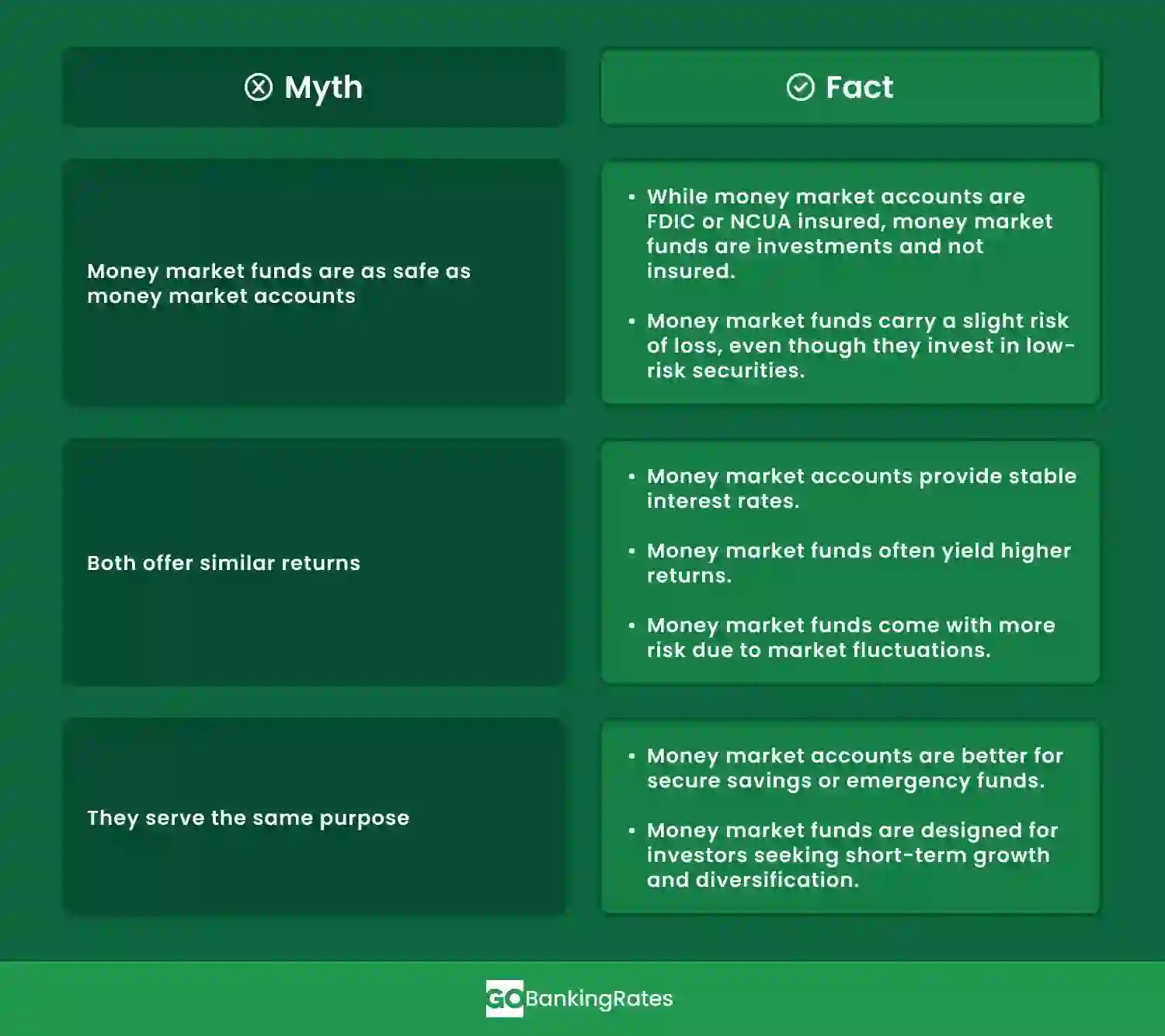
Common Misconceptions About Money Market Accounts and Money Market Funds
There are some common misconceptions about these accounts you should know:
Which One Is Right for You?
You don’t necessarily have to choose just one. Many people use both — a money market account for their emergency fund and accessible savings, and a money market fund inside a brokerage account for cash they’re holding between investments.
The right choice comes down to three questions: How important is federal insurance to you? How often will you need to access the money? And how comfortable are you with investment risk?
FAQ
Here are the answers to some of the most frequently asked questions regarding money market accounts and money market funds.- Is a money market account safer than a money market fund?
- Money market accounts are federally insured by the FDIC or NCUA, providing a guarantee of up to $250,000 per depositor. Money market funds, being investment products, are not insured and carry a risk of loss.
- Can I lose money in a money market fund?
- Yes. While money market funds are low-risk investments, they are not risk-free. Market fluctuations or changes in interest rates can lead to a loss of principal.
- Are money market accounts good for long-term savings?
- Money market accounts are ideal for short-term goals or emergency funds. For long-term savings, consider certificate of deposit accounts or retirement accounts.
- How do money market funds compare to mutual funds?
- Money market funds focus on low-risk, short-term securities. Other mutual funds often have higher risk and potential returns.
- Do money market accounts have withdrawal limits?
- Yes, many money market accounts limit the number of withdrawals you can make.
Lydia Kibet contributed to the reporting for this article.
Our in-house research team and on-site financial experts work together to create content that’s accurate, impartial, and up to date. We fact-check every single statistic, quote and fact using trusted primary resources to make sure the information we provide is correct. You can learn more about GOBankingRates’ processes and standards in our editorial policy.
- Consumer Financial Protection Bureau. 2023. "What is a money market account?"
- Federal Reserve. 2020. "Federal Reserve Board announces interim final rule to delete the six-per-month limit on convenient transfers from the "savings deposit" definition in Regulation D."
- Fidelity. "What are money market funds?"