Don’t Lose This Home Energy Tax Break — How To Claim Up To $2,000 Before It’s Gone
 Written by
Stephanie Mickelson
Written by
Stephanie Mickelson
 Edited by
Amen Oyiboke
Edited by
Amen Oyiboke

Commitment to Our Readers
GOBankingRates' editorial team is committed to bringing you unbiased reviews and information. We use data-driven methodologies to evaluate financial products and services - our reviews and ratings are not influenced by advertisers. You can read more about our editorial guidelines and our products and services review methodology.

20 Years
Helping You Live Richer

Reviewed
by Experts

Trusted by
Millions of Readers
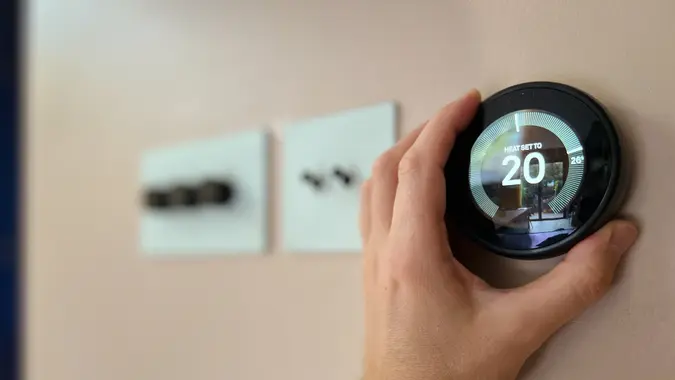
The Energy Efficient Home Improvement Credit will no longer be available after the end of 2025, but it’s not all bad news. There’s still time to take advantage of this tax break before it’s gone. And even if you miss out this year, states are offering rebate programs that can help offset the cost of energy-efficient upgrades like heat pumps, smart thermostats, insulation and water heaters.
GOBankingRates asked DR Richardson, the CEO and co-founder of Elephant Energy, for his insights on the best way to claim the tax credit and where to find other incentives.
What Is the Energy Efficient Home Improvement Credit?
As part of the Inflation Reduction Act of 2022, the Energy Efficient Home Improvement Credit (25C) allowed homeowners to claim 30% of the purchase price — up to $2,000 — as a credit on their owed taxes. You could only take advantage of this credit, however, if you owed money on your federal taxes. If you received a refund or didn’t owe anything, you wouldn’t benefit from this credit.
The One Big Beautiful Bill Act, passed in July 2025, eliminated this credit for any energy-efficient improvements installed after Dec. 31, 2025.
How To Claim Up to $2,000 in Tax Credits
If you’re planning to install a heat pump and take advantage of the $2,000 in tax credits before the end of the year, Richardson said the first thing you should do is, “Call Elephant Energy or your local contractor and try to get on the schedule.”
He said his company is doing everything it can to install as many projects as possible through the end of the year to help customers take advantage of the 25C tax credit. “If most businesses in the space are like ours,” he said. “There’s very, very few spots available before the end of the year.”
If you move quickly, you may be able to get in touch with your local contractor and start the process — especially if you’ve already been in contact, received estimates and they’re just waiting for your go-ahead.
Even if you don’t qualify for this tax credit in time, there’s still some good news.
State Energy Efficiency Rebates Are Still Available
In addition to the federal tax credits, the IRA also provided for state-run home efficiency incentive programs — the Home Efficiency Rebate Program (HOMES or HER) and the Home Electrification and Appliance Rebate Program (HEAR). Some states, Richardson said, “continue to have that federal funding available, and the One Big Beautiful Bill did not get rid of that funding.” He noted that “it’s federally funded, but it’s a state-by-state program.”
Both programs offer a direct rebate to homeowners for certain energy-efficient home upgrades. The rebate amount depends on modeled energy savings, income level and state-specific guidelines.
The best part about this rebate, according to Richardson, is that “it’s a direct cash rebate. It’s even better than a tax credit.” The amount you qualify for is taken off your bill. After the installation is complete, your IRA-registered contractor will submit your project details to receive the funds.
To determine rebate requirements and amounts, visit your state energy office’s website.
Utility Companies and Manufacturers Also Offer Incentives
Your local utility company may also offer incentives for installing a heat pump. DSIRE, NC Clean Energy Technology Center provides an interactive map, so you can click on your state and scroll to the bottom of the page to filter by financial incentives to see who offers them.
More From GOBankingRates