The 4 Utility Costs That Catch Households Off Guard Each Year
 Written by
Jordan Rosenfeld
Written by
Jordan Rosenfeld
 Edited by
Molly Sullivan
Edited by
Molly Sullivan
Commitment to Our Readers
GOBankingRates' editorial team is committed to bringing you unbiased reviews and information. We use data-driven methodologies to evaluate financial products and services - our reviews and ratings are not influenced by advertisers. You can read more about our editorial guidelines and our products and services review methodology.

20 Years
Helping You Live Richer

Reviewed
by Experts

Trusted by
Millions of Readers
Utility bills are one of the few regular monthly payments that can swing dramatically without any obvious lifestyle change.
“Electricity is the one that surprises people the most, because it can jump fast and it is not just about how much power you use,” said Roi Cahana, founder of SlashPlan, which helps households compare electricity plans. He also pointed out that retail electricity prices have been trending up, and the U.S. Energy Information Administration (EIA) expects them to keep increasing through 2026. This means the same habits will cost more over time.
While there are many moving parts, here are several utility costs that catch households off guard and what you can do to stay ahead of increases.
1. Weather-Related Electricity Bills
Electricity usage is often driven by weather. Even a few weeks of extreme heat or cold can push households into higher pricing tiers.
Air conditioning costs in locales with extreme weather surprise homeowners every year, especially new residents, said Chris Hays, owner of Local Roots AC and Plumbing. For example, in Phoenix, where he’s based, “People see a $150 winter electric bill and assume summer will be $200 to $250. Then June hits and they’re staring at $400 to $600 bills.”
Cahana pointed out that “many plans are not truly ‘flat rate,’ so the price can change based on how or when you use power.”
The takeaway is simple: Don’t assume your bills will stay the same.
2. Infrastructure-Related Utility Increases
Extreme weather doesn’t just raise bills in the moment. Repairs, grid upgrades and emergency infrastructure costs are often passed back to customers months or years later through higher rates.
“Extreme weather can strain the power grid and make prices spike,” Cahana said. “After big events like that, utilities often spend more to repair and strengthen poles, wires and equipment, and those costs can show up later as higher delivery charges on the bill.”
“People often experience a weather-related outage and mistakenly think their bill will be lower,” said Gary Gray, co-founder of CouponChief. “The truth is the utility companies will not absorb the added costs of repairs. They’ll fold the costs into future rates.”
3. Tiered Pricing and Thresholds
Many households assume utility bills rise gradually with usage. In reality, most utilities rely on tiered pricing structures that sharply increase costs once a threshold is crossed, often without clear alerts, Hays said.
“A plan can look cheap at one usage level but become expensive just a little above or below it,” Cahana said. “For example, a plan might be great at a 1,000 kWh usage level, but if you use 800 kWh you lose a bill credit and your effective rate can double.”
Gray likened these bills more to a staircase than a gradual increase. “You may pay 20% to 40% more per unit in that little bit of overage.”
4. Fees and Surcharges
Beyond usage, utility bills often quietly include connection fees, delivery charges, fuel pass-throughs and infrastructure surcharges that “creep in without much warning,” according to Patrick Goswitz, a real estate investor and CEO of Sell My House Fast in Knoxville TN. These costs tend to rise slowly, making them harder to notice until bills feel inexplicably high.
Most consumers only look at the advertised rate and assume that is what they will pay, Cahana noted. “The surprise is that many plans have rules that change the real price once you land above or below certain usage levels,” he said.
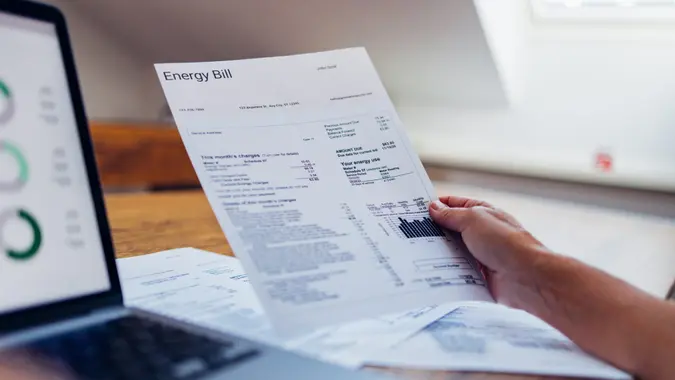
Learning to read bills more carefully can help reduce those surprises, Gray suggested.
Warning Signs Households Miss Before Bills Jump
Utility bill spikes may feel mysterious, but there are often early clues. “The biggest warning sign is that your contract end date is coming up and you have not shopped yet,” Cahana said.
Hays said rising utility bills can also signal trouble. “Creep ups of energy use, even in moderate weather, can be an indication of problems with efficiency.”
Key information is often buried in the fine print of utility bills, which means it can be easy to miss. “Most people overlook it,” Gray said.
One Step Households Can Take To Avoid Surprise Costs
While utility bills will likely continue to rise, there are ways to reduce unpleasant surprises.
“Scheduling an annual AC tune-up ahead of the peak season can pinpoint refrigerant leaks and clean dirty coils that are reducing your cooling efficiency by 15% to 20%,” Hays said.
Cahana also advised shopping based on your real past usage, “not the plan’s ‘average’ example.”
And many utility companies will come to your home for free to perform efficiency assessments, Gray said. The goal is to, “Fix the ‘leaky bucket’ that dollars are flowing out of.”
More From GOBankingRates