Food Stamps: 3 Ways Your SNAP Benefits Would Be Protected by a New Bill
 Written by
Gina Hagler
Written by
Gina Hagler
 Edited by
Chris Cluff
Edited by
Chris Cluff
Commitment to Our Readers
GOBankingRates' editorial team is committed to bringing you unbiased reviews and information. We use data-driven methodologies to evaluate financial products and services - our reviews and ratings are not influenced by advertisers. You can read more about our editorial guidelines and our products and services review methodology.

20 Years
Helping You Live Richer

Reviewed
by Experts

Trusted by
Millions of Readers
A recent bill proposed by Sen. Ron Wyden (D-Ore.) would introduce enhanced security to the cards used by low-income families buying groceries through SNAP (Supplemental Nutrition Assistance Program), a program overseen by the Department of Agriculture.
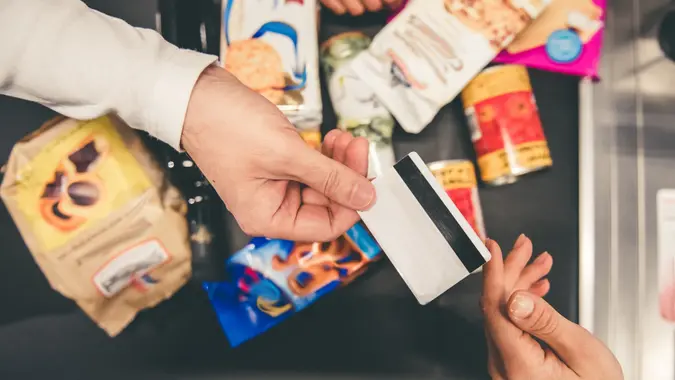
Current SNAP cards have magnetic stripes that can easily be cloned, unlike modern credit and debit cards, which have microchips designed to prevent cloning. Theft of SNAP funds was especially problematic before late 2022, when Congress authorized states to use federal funds to reimburse SNAP cardholders. Until then, most states didn’t reimburse the victims for funds stolen in this way.
Here are three ways the proposed legislation would protect your money.
Microchips
SNAP EBT cards must contain microchips that prevent cloning or skimming. This would work to curb the electronic theft of grocery funds from families who rely on these cards.
Updated Cards
The Department of Agriculture must update the cards every five years so to match the level of security of other cards, ensuring that SNAP card holders are included in card security advancements.
Replacement Cards
States must issue replacement cards for those stolen or cloned within three days, meaning that a family would not go without funds for an extended period of time.
How To Guard Against Theft
There are a few good practices you can use in the meantime to improve your overall security:
- Use PINs that aren’t easy to guess and change your PIN at least once a month, before your benefit issuance date.
- If you have reason to think you may have been skimmed, contact your local SNAP office.
- Remember that state agencies and EBT processors do not call or text asking for your PIN or card number, so never give it out.
- Check your EBT account often and change your PIN immediately if you spot suspicious purchases.
- Cover the keypad when entering your PIN on a machine.
- Download the Connect EBT app so that, if you can’t find your card, you can lock it. Better yet, unlock it only when you’re using it, keeping it locked the rest of the time.
More From GOBankingRates