The New Paycheck Risk Workers Are Overlooking
 Written by
Sarah Li Cain
Written by
Sarah Li Cain
 Edited by
Rebekah Evans
Edited by
Rebekah Evans

Commitment to Our Readers
GOBankingRates' editorial team is committed to bringing you unbiased reviews and information. We use data-driven methodologies to evaluate financial products and services - our reviews and ratings are not influenced by advertisers. You can read more about our editorial guidelines and our products and services review methodology.

20 Years
Helping You Live Richer

Reviewed
by Experts

Trusted by
Millions of Readers
Payday lending used to be the more obvious danger to your paycheck. Now, a perk that’s offered at many employers called earned wage access (EWA) is raising questions about whether it’s also a “danger.”
Sometimes referred to as on-demand or early pay, EWA is touted as a benefit to give employees faster access to the money they’ve earned.
However, consumer advocates and some regulators say that the structure and potential fees eat away at your paycheck.
What Is Earned Wage Access?
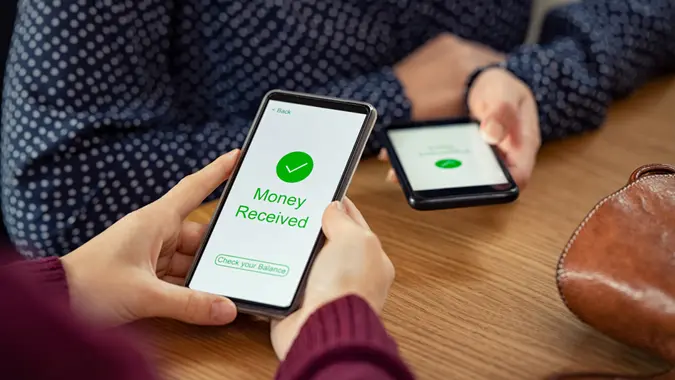
Earned wage access is a feature that allows employers to let their workers tap into their paycheck before it’s scheduled to be deposited into your account. You can usually sign up through your HR Department and make a request through an app or an online account your employer provides.
The point is that you can access your funds within days or even instantly for a fee, instead of waiting two weeks. That way, you can use the money for whatever you need, whether it’s bills or trying to get groceries.
EWA benefits have grown, with many of the largest companies offering this feature. Yes, you can find third-party ones that are targeted directly to consumers, but employer ones will deduct advance directly from your payroll.
What Many Workers May Not Fully See
EWA markets itself as not charging any traditional interest, but there may still be fees you need to pay. Some pay gives you the option to pay a small fee or “tip” to the provider or pay an expedited transfer fee to get funds immediately.
Although the amount may seem minimal, it can add up. According to reporting from the Innovative Payments Association, workers who use EWA may pay an average of around $2.59 to $6.27 each time they use it. That doesn’t sound like much, but if you use it regularly, you could be paying hundreds of dollars each year.
If your employer doesn’t offer EWA, you could go to a third-party provider which can post more risk. Reporting from the Center of Responsible Lending found that EWA providers that offer access directly to consumers resulted in higher banking fees.
In other words, if someone doesn’t have enough in their bank account by their next paycheck to pay back the money they accessed, they could pay more than their “tip.” Their bank could charge an overdraft or non-sufficient funds fee if the EWA app tries to withdraw the amount owed.
While there are clearly benefits, like less of a reliance on more predatory loans, EWA could lead workers to access their paychecks earlier more often. As such, what can feel like financial flexibility could become a reliance on EWA without fully understanding their financial behavior or the fees they may be able to avoid.
More From GOBankingRates