Get Paid To Move Abroad: 5 European Countries Offering Incentives in 2026
 Written by
Gabrielle Olya
Written by
Gabrielle Olya
 Edited by
Molly Sullivan
Edited by
Molly Sullivan
Commitment to Our Readers
GOBankingRates' editorial team is committed to bringing you unbiased reviews and information. We use data-driven methodologies to evaluate financial products and services - our reviews and ratings are not influenced by advertisers. You can read more about our editorial guidelines and our products and services review methodology.

20 Years
Helping You Live Richer

Reviewed
by Experts

Trusted by
Millions of Readers
If you’ve dreamed of moving abroad but are worried about the cost, some European countries are actively trying to make it cheaper — or even profitable — to relocate. From cash grants and tax breaks to nearly free housing, local governments are offering incentives to attract new residents and remote workers.
International Living has identified several European locations offering relocation incentives in 2026 — though most come with important conditions.
Here’s a look at the European locales that will effectively pay you to move there, and how to qualify for these programs.
Italy
If you’re willing to move to a super-remote town, you may be able to buy a house for as little as 1 euro. You may also receive subsidies for rent and energy. But here’s what you need to know about these deals:
- Buyers are usually required to renovate the property within a fixed timeframe.
- A deposit is typically required to ensure the renovation is completed.
- Additional costs often include approval fees, such as engineer’s certificates.
Some Italian regions offer large grants to attract new residents:
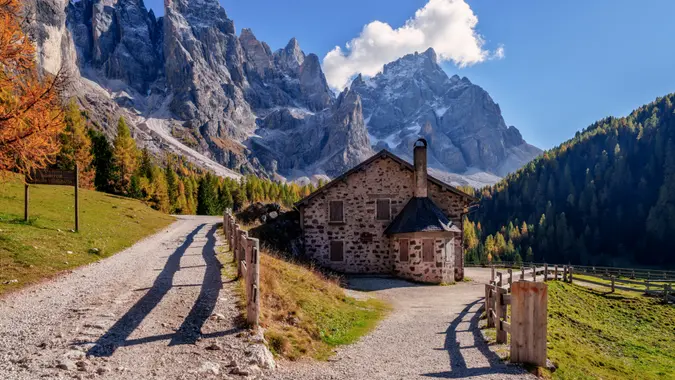
- Trentino offers grants of up to 100,000 euros, which can be used for a home purchase and/or renovation. However, you need to live in the property yourself.
- Radicondoli, a medieval town about an hour south of Florence, also offers grants and subsidies. This program requires residents to live there for at least 10 years.
Some southern municipalities and regions offer a major tax incentive: You can qualify for a 7% flat tax for 10 years. With Italy’s top marginal tax rates exceeding 40%, this represents significant savings.
Spain
Some Spanish rural towns offer incentives such as cash payments, discounted or free land, and other financial perks to people who buy property there. In return, you generally must register locally as a resident and taxpayer. You’re also required to commit to using the property as your primary residence for a set number of years.
Incentives vary by location:
- The village of Ponga in Asturias provides roughly 3,000 euros to newcomers who relocate.
- The Extremadura region targets remote workers, offering grants of up to 15,000 euros for digital nomads who move there.
Spain’s most powerful financial draw is its special expat tax incentive, commonly known as “Beckham’s Law.” This program allows eligible newcomers to pay a flat tax rate on certain employment income, up to a defined limit, for a limited time. It can also include exemptions for specific types of foreign-source income, making it especially attractive to internationally mobile professionals.
Ireland
Ireland faces a severe housing shortage, and the government is using financial incentives to bring empty properties back into use. Grants of up to 70,000 euros are available for refurbishing vacant or derelict homes to make them fit to live in. For properties on certain offshore islands, the maximum grant can increase to 84,000 euros.
There are clear conditions attached to the funding:
- The renovated property must be used as your primary residence or made available for rental.
- The home must be owned in your personal name, not through a company or other structure.
Like similar programs elsewhere, this funding is not free cash. The money is strictly intended to cover renovation and restoration costs, not personal expenses.
Greece
Some small and remote Greek islands have introduced generous relocation packages to bring in new residents and essential workers. The best-known example is Antikythera, which offers a home, a parcel of land and a monthly allowance of 500 euros. This stipend can be paid for up to five years, making it one of the most attractive local offers.
Greece also runs a less-publicized national incentive aimed at reviving depopulating areas. This program can provide up to 10,000 euros for people willing to relocate. In practice, the benefit is most commonly delivered as rent reimbursements, particularly for key professions such as teachers, doctors and nurses. It appears to be the only verified example of direct cash-style support offered at the national level.
The standout advantage for many newcomers to Greece is its special tax treatment for new residents:
- Eligible new residents can qualify for a 7% flat income tax rate.
- This preferential rate can apply for as long as 15 years.
Given Greece’s otherwise high marginal tax rates, this tax perk can be a powerful financial incentive.
Portugal
Portugal has a long track record of being open to foreign residents, particularly those willing to settle in less-populated rural regions. Through the “Emprego Interior Mais” program, qualifying participants can receive a one-time relocation grant of up to 6,000 euros.
This funding is intended to help cover moving expenses and other costs associated with relocating to the countryside. Households can receive a 20% bonus for each dependent who moves with them.
Here’s how to qualify:
- Foreign applicants must already have legal residency to qualify. In practice, this usually means holding the D8 digital nomad visa.
- The program requires that you be employed, as the D8 is income-based. The minimum income threshold for the D8 is roughly 3,500 euros per month.
While these programs won’t replace a steady income, they can significantly reduce the financial barrier to starting a new life in Europe, especially for retirees, remote workers and internationally mobile professionals.
More From GOBankingRates